Memories framed along the road less travelled
Teho Ropeyarn is one of the country’s most acclaimed First Nations artists and his latest exhibition is tinged with nostalgia as he recalls long family trips by car from his home in Injinoo on Cape York.
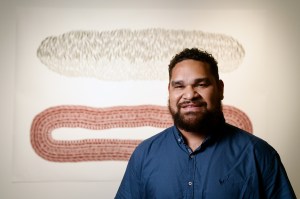
As an artist, the frame that Teho Ropeyarn was most familiar with as a boy was the back window of the family car. That window framed the landscape on long drives from his hometown of Injinoo on Cape York.
Ropeyarn is exhibiting at Onespace Gallery in South Brisbane and it’s no surprise that the road he travelled as a youngster – and still travels today – features in a major suite of works in his exhibition, Middle World: Every change a continuation, every season a story, which continues until January 24.
As Shonae Hobson writes in a catalogue essay accompanying the show: “Making the long journey from his hometown of Injinoo to Cairns, Ropeyarnm recalls childhood memories gazing out the back window of the old Troopy at the country unfolding before him. As he explains, ‘Memory is the main driver for this exhibition, reflecting on those years travelling with family, listening to Saltwater Band, The Eagles, Bee Gees and Cold Chisel on old cassettes … driving the Old Telegraph track with mum, dad and my siblings … these works capture what you saw looking out the small Troopy sliding window and seeing the country in all its vastness pass by’.”
‘In a way it was replicating those childhood trips and it was good to see all the places along the way’
Troopy is a nickname for a Toyota LandCruiser, a name that reflects its original design as a rugged, high-capacity vehicle built to transport military personnel and equipment across harsh terrain. Ropeyarn and his wife Lealin and their three children have just completed their own epic drive from Cairns to Brisbane for the exhibition – in their own Troopy.
“In a way it was replicating those childhood trips and it was good to see all the places along the way,” he says. “A lot has changed but the Bruce Highway hasn’t changed much at all.” That’s another story, of course.
You might like
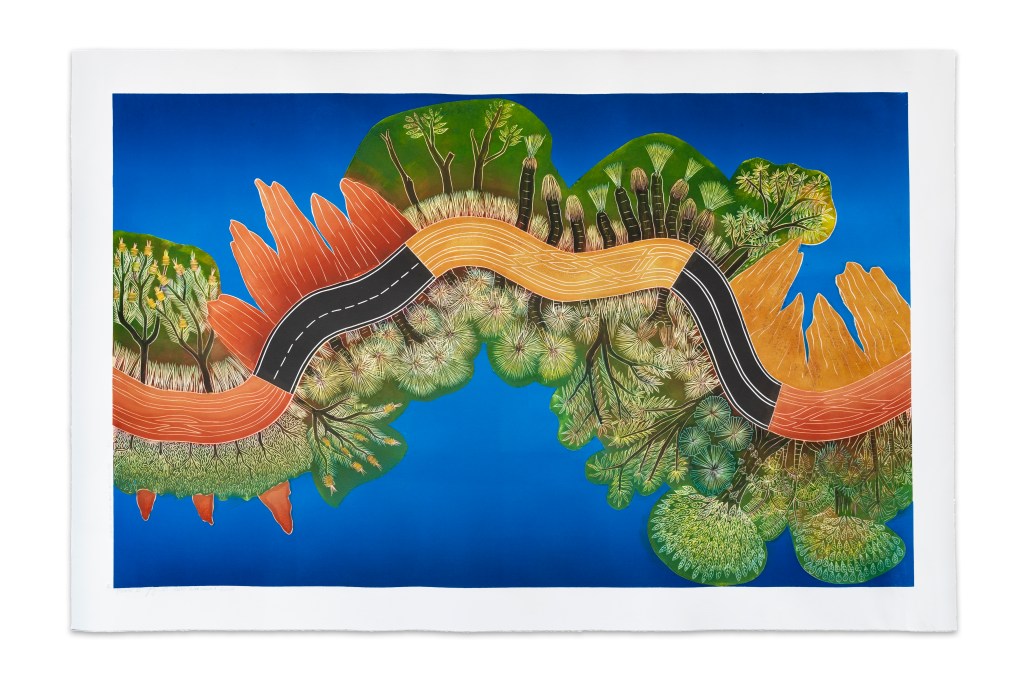
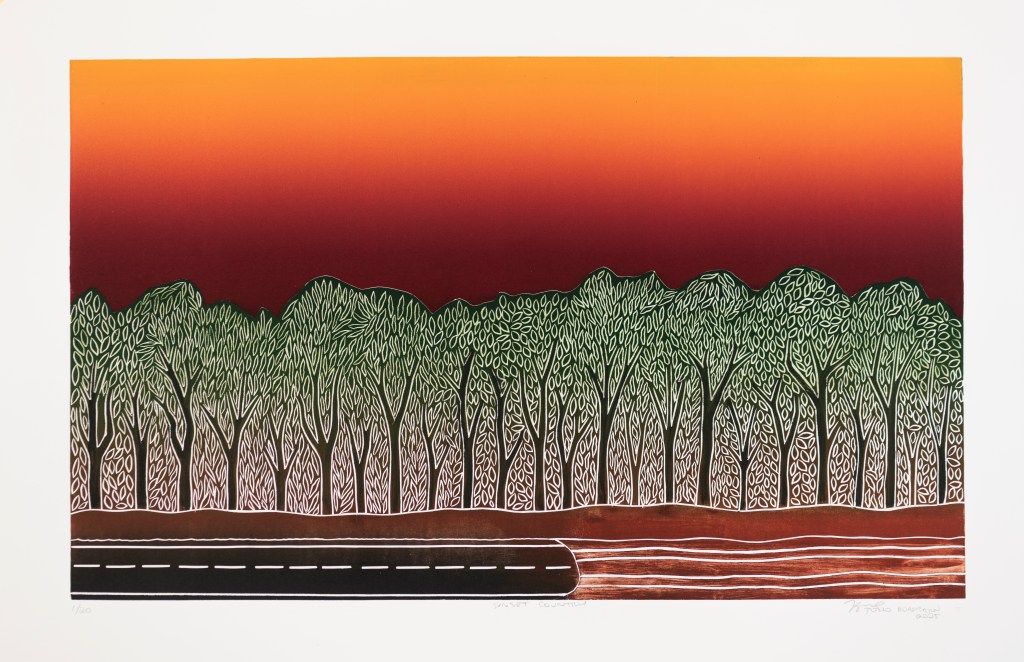
The road figures in a suite of large vinyl-cut prints and is inherent in the title of the works Cape York, Peninsula Development Road (State 1) and three other works showing the serpent-like road cutting through the centre of the scene – part-bitumen, part-dirt, with the various landscapes flanking it.
As Hobson explains in the catalogue: “The PDR remains one of Australia’s last great wilderness tracks. As the gateway to the Torres Strait, the track is known for its shifting plains of red dirt, thick bushlands and mighty river systems that flood for weeks on end during the wet season. Known as the Old Telegraph Track, the road was originally constructed to ensure communication links between remote northern communities and the rest of Australia, and completed in 1887.”
Says Ropeyarn: “It’s a sensory experience driving along that road with different elements of landscape along the way. You can see for miles at certain points along the way.”
In these works he also illustrates the transient seasons of Cape York. With organic design, Ropeyarn draws on the interface of cultural memory and time to traverse the landscape in its wet, dry and burnt states, inspired by the landscapes of Cape York Peninsula—its rugged terrains, unique geographical features and ever-shifting seasonal patterns.
Its physical and spiritual attributes have long captured the imagination and artistic output of some of Australia’s most celebrated landscape artists such as Fred Williams, Dick Roughsey and Russell Drysdale. But it is First Nations Injinoo artist Teho Ropeyarn who understands it best as Country. His beloved Country. Cape York is not a distant subject, but his home. His memories and lived experiences of travelling across this vast country form the premise of his latest body of work.
Ropeyarn is descended from the Angkamuthi and Yadhaykana clans from Injinoo on the mainland, Badu, Moa and Murray Island in the Torres Strait and the Woppaburra people of Great Keppel Island and Batchulla people of K’gari.
Subscribe for updates
This is his first major solo show in Brisbane since exhibiting in numerous major survey exhibitions in recent years such as: Too Deadly: Ten Years of Tarnanthi, (2025) Art Gallery of South Australia; The National 4: Contemporary Art Now, Carriageworks, Sydney (2023); rivus -23rd Biennale of Sydney, National Art School, (2022); and the Queen Sonja Print Award, Norway (2022).
Ropeyarn is artistic director of the Cairns Indigenous Art fair (CIAF) and worked closely with master printmaker Theo Tremblay on the exhibition. Ropayrn has worked in printmaking since 2010, continually expanding his technical and conceptual approach into various formats.
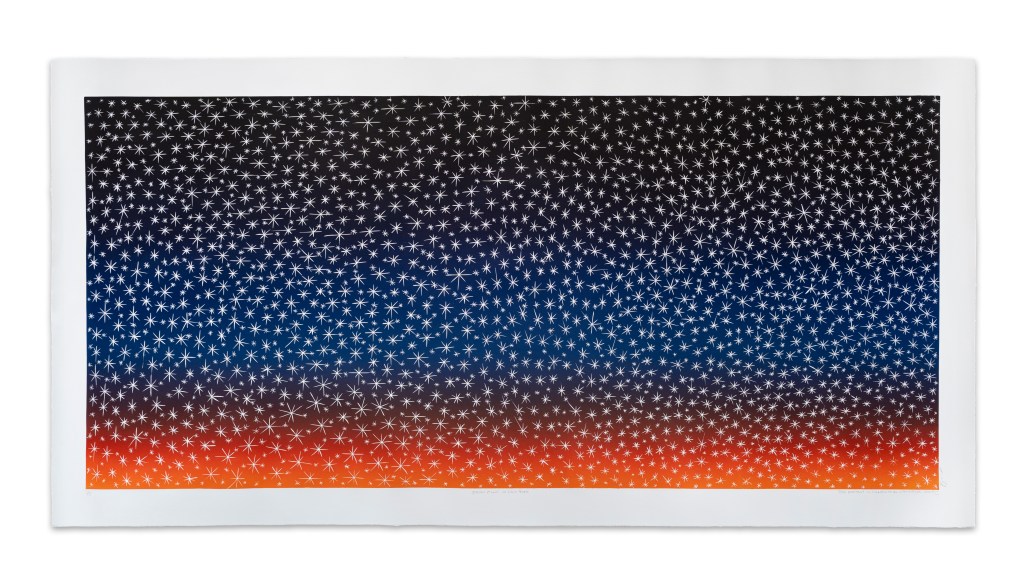
For this exhibition he worked with Tremblay exploring the possibilities or ink and pressure to create complex tonal variations and atmospheric shifts that animate each print. But the technique doesn’t overpower the work and Ropeyarn’s poetic whimsy is illuminated by the process in other works including Starry Night in Cape York (a collaboration with Manjal Brady), which shows the panoply of stars seen in the night sky up there.
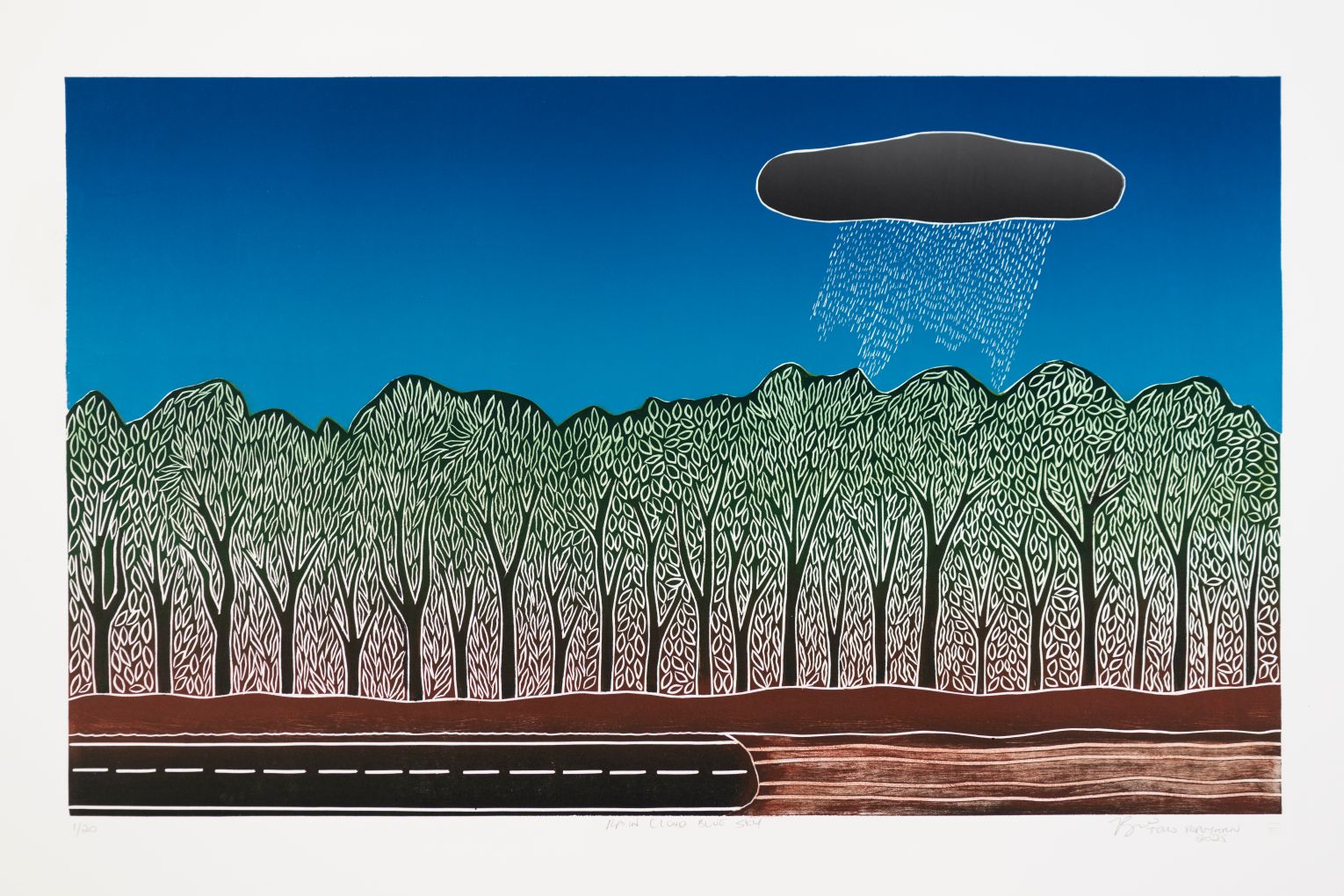
My favourites are Rain cloud blue sky (State I) and an accompanying work that depicts a solitary cloud raining on a patch of forest.
“That’s also what you see driving along,” Ropeyarn says. “A pocket of cloud in the distance and it’s just raining over there.”
Exhibiting alongside of Teho Ropeyarn in the Lounge Gallery is northern NSW-based Gadigal artist Konstantina.
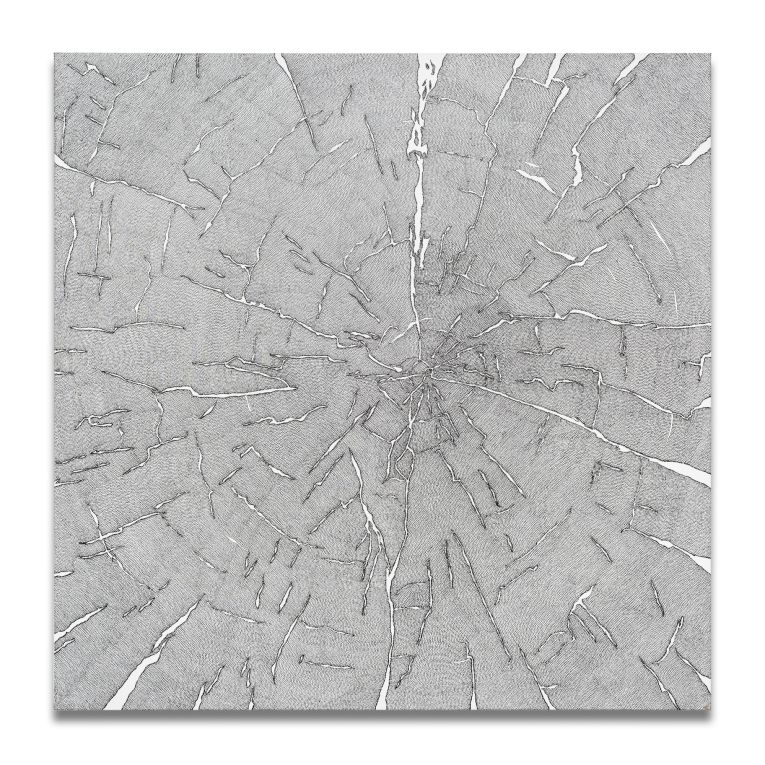
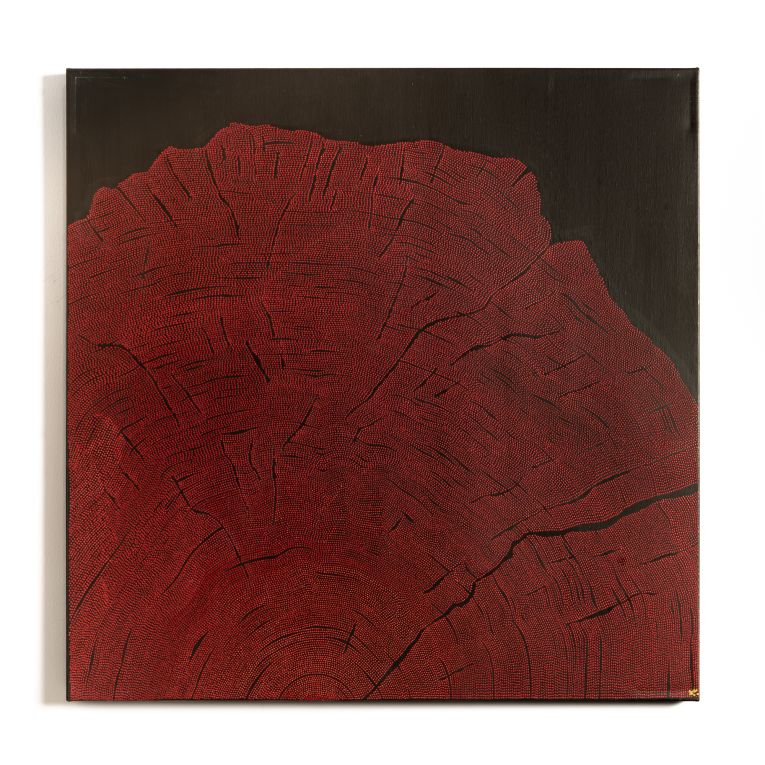
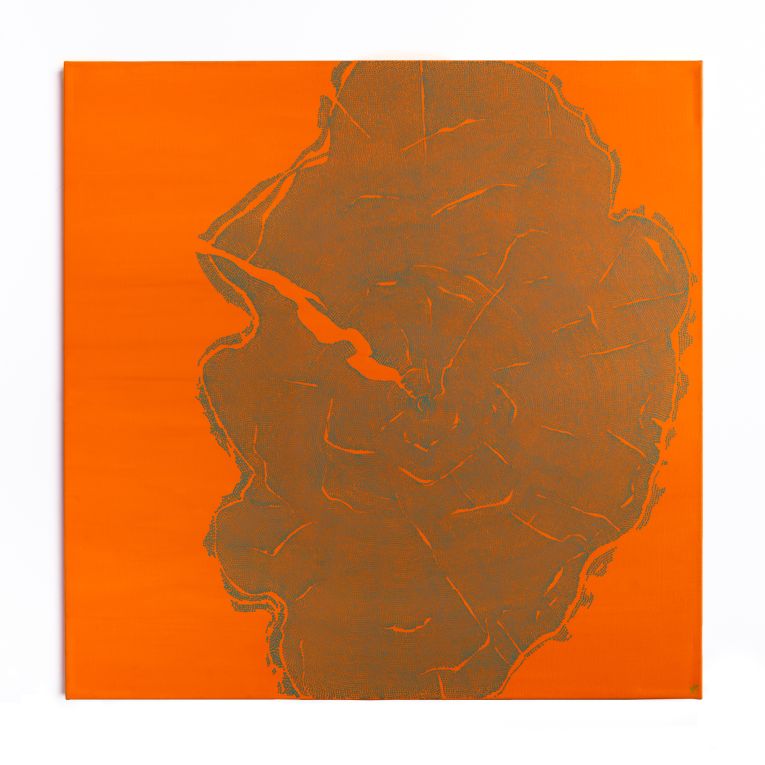
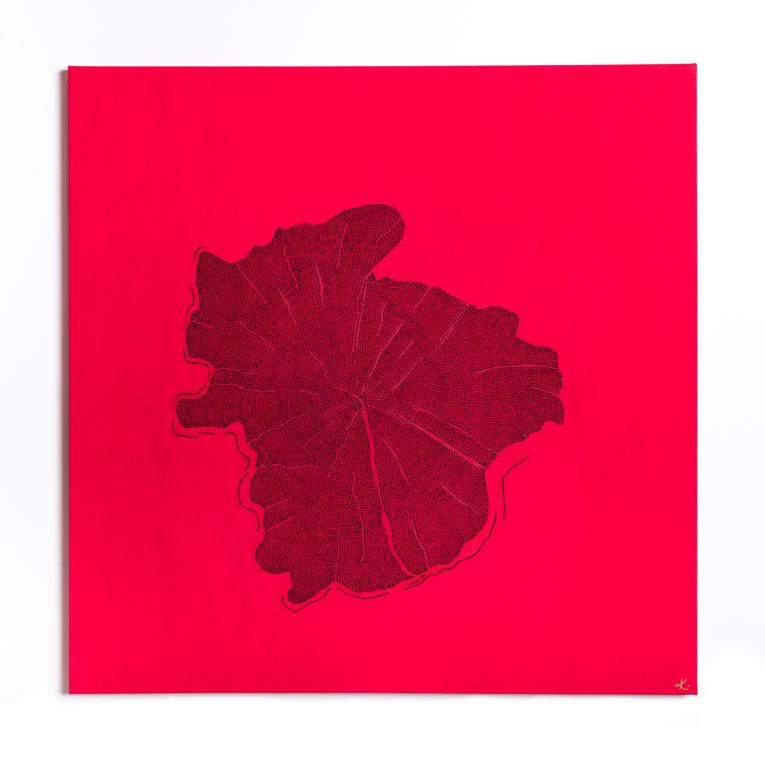
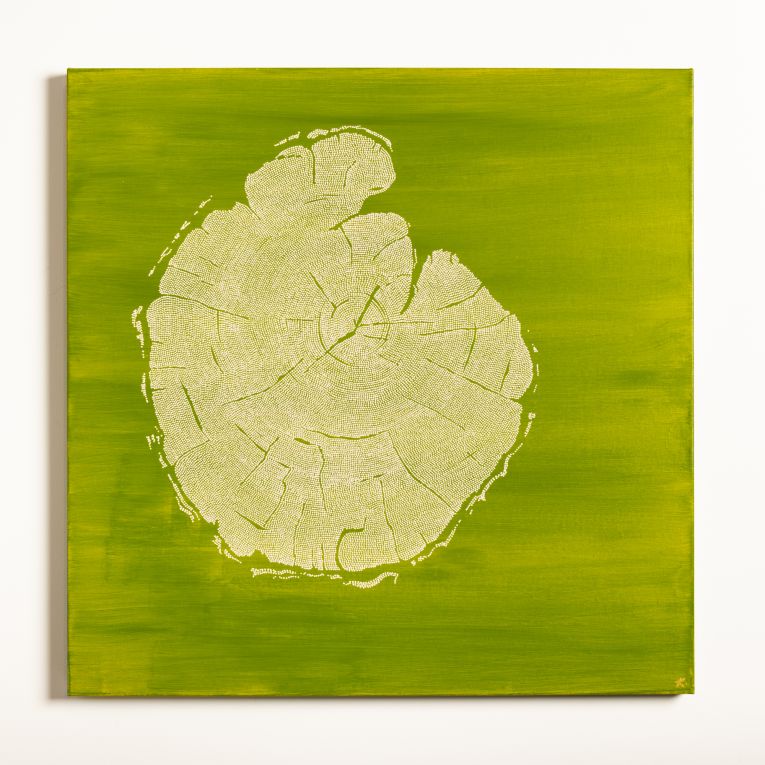
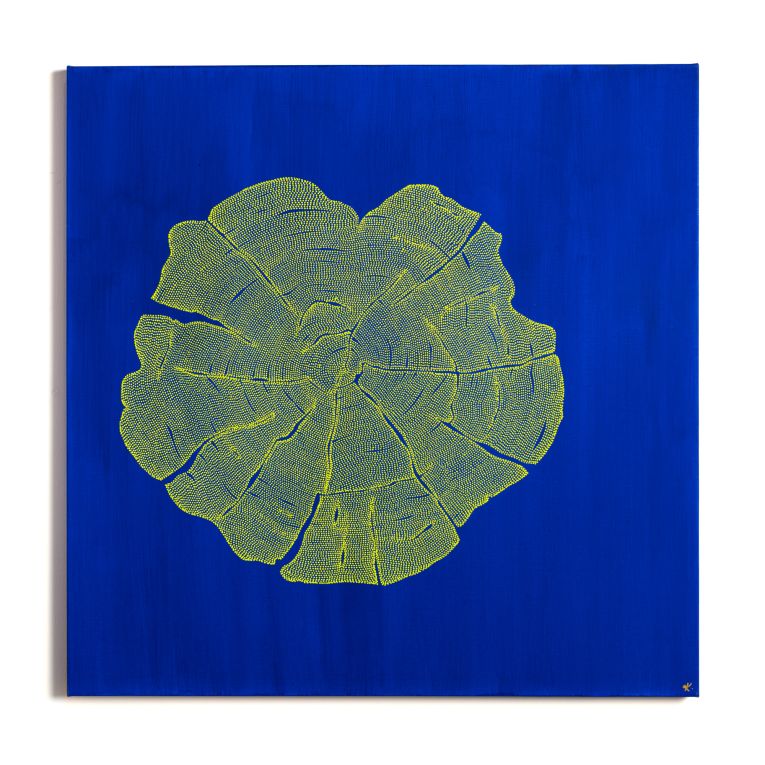
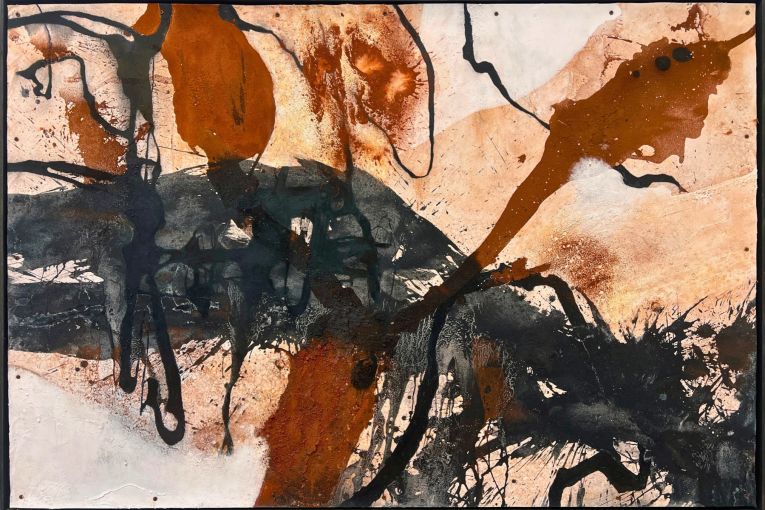
Konstantina’s Mudang Butbut exhibition features a body of acrylic paintings on linen exploring trees as metaphors for the living heart – repositories of memory, connection and resilience. Through her vibrant mark-making, Konstantina translates the language of tree growth into a visual meditation on identity, sovereignty and belonging (Decades series, pictured above).
Each work becomes a living document, painting traces of the artist’s personal and cultural histories while reflecting universal stories of endurance and renewal for First Nations people. Mudang Butbut invites viewers to reflect on the invisible threads that bind ancestry, land and the human heart through the enduring resilience of trees.
Teho Ropeyarn’s Middle World: Every change a continuation, every season a story; and Konstantina’s Mudang Butbut continue at Onespace Gallery, South Brisbane, until January 24.
Want to see more stories from InDaily Qld in your Google search results?
- Click here to set InDaily Qld as a preferred source.
- Tick the box next to "InDaily Qld". That's it.
Free to share
This article may be shared online or in print under a Creative Commons licence