From the mysterious darkness comes the colour
Queensland artist Gordon Shepherdson was one of Queensland’s most interesting artists and it only adds to the intrigue that he spent 23 years working in an abattoir.
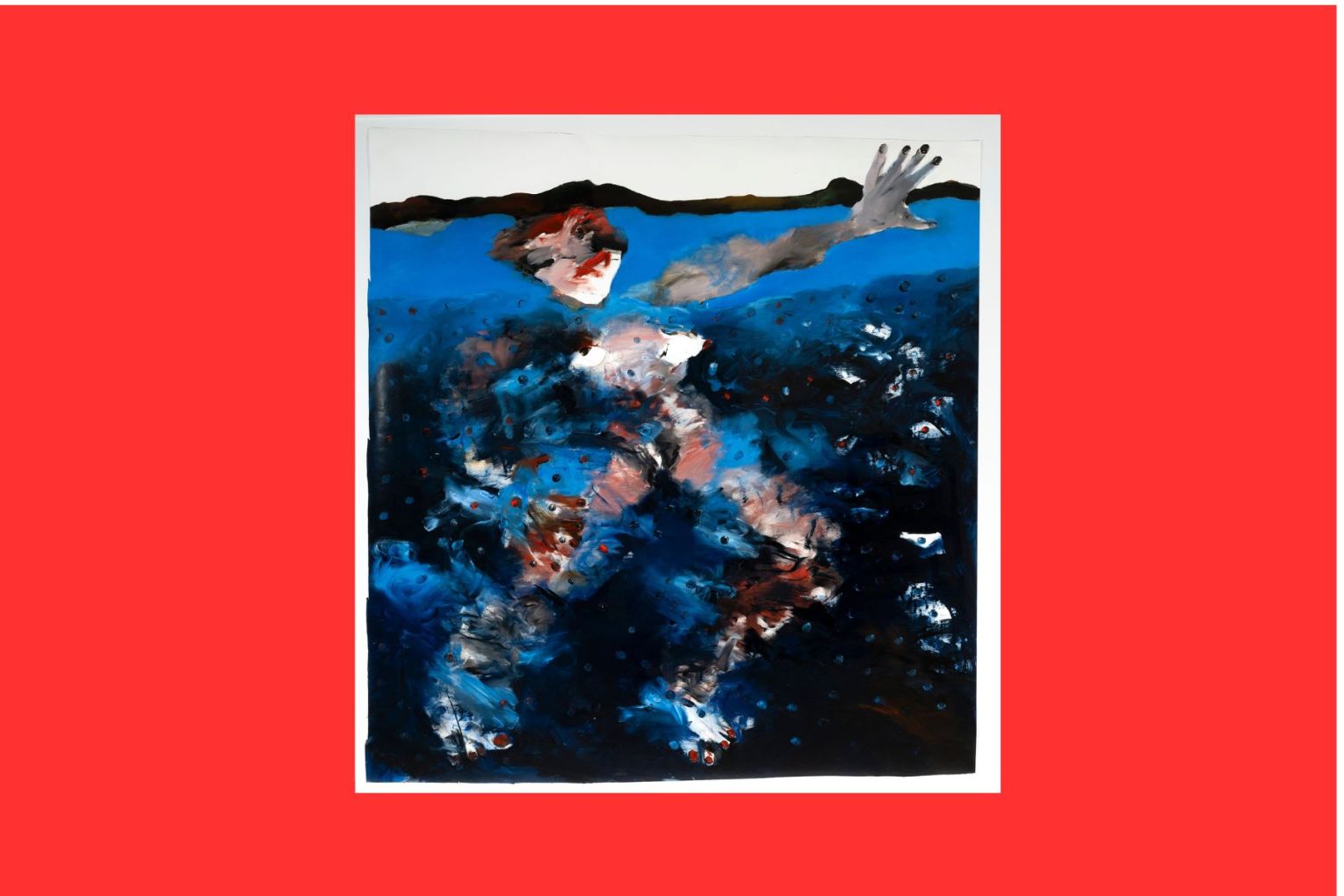
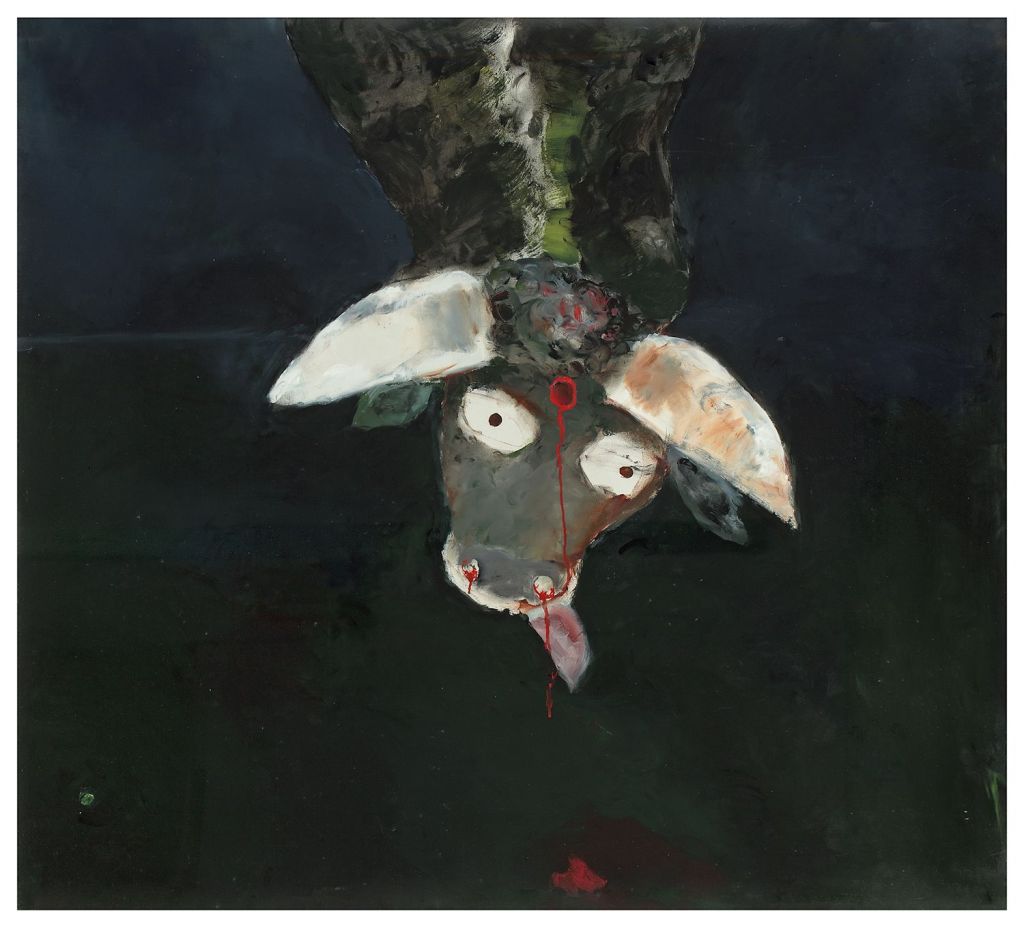
I had forgotten that Gordon Shepherdson had once worked in an abattoir. That was until I saw the painting Bullock hanging in dark landscape, which is now on display at Philip Bacon Galleries in Brisbane as part of Gordon Shepherdson: Selections from the Studio.
Shepherdson, who died in 2019, can be regarded as something of a national treasure, a Queensland icon, in his way. He was of that generation of knockabout artists that included the likes of Sam Fullbrook, Robert Dickerson and his close mate, Gil Jamieson.
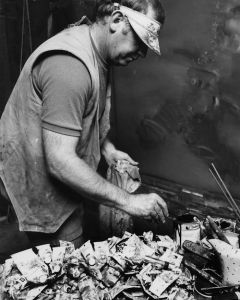
Shepherdson and Jamieson were cut from the same cloth – Hemingway-esque characters engaged in supporting their family through cattle. Jamieson reared cattle on his property at Monto, while Shepherdson dispatched them for 23 years to support his family as he made his way in the art world.
Bullock hanging in a dark landscape is poetic and haunting in equal measure – the bullock’s head set against the regular black background that inhabits most of his work. Like a lot of his figurative art, it seems a tad mythological, almost Minoan. In another painting, Man hanging on the cross, the figure appears like a satyr from Greek mythology.
This exhibition follows on from Redland Art Gallery’s 2023 show, Gordon Shepherdson: Ocean of Eyes. (Eyes are one of his recurring motifs.)
As art curator and writer Bruce Heiser points out in a catalogue essay for this exhibition, the Redland show “focussed on the artists practice relating to the waters, islands and passages of the Redlands region of Moreton Bay”.
You might like
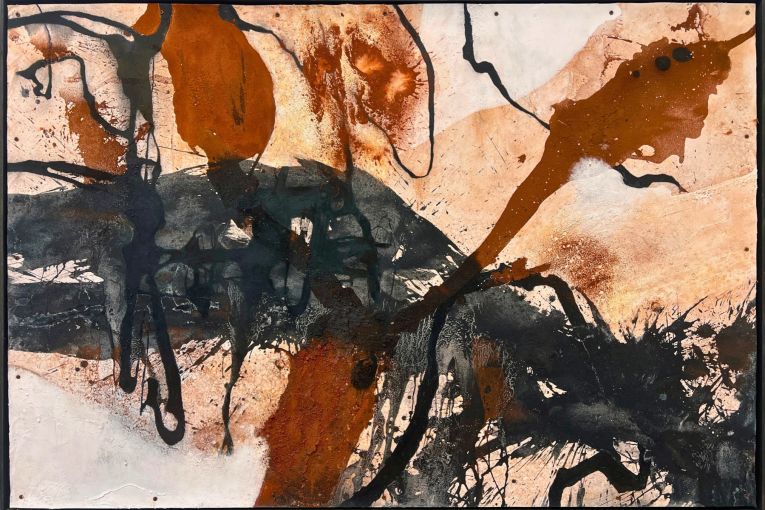
Heiser points out that it is Philip Bacon Galleries’ first exhibition of the artist’s work since his death.
“This exhibition presents works spanning some 20 years of the artist’s career, with many featuring the motifs associated with Shepherdson’s practice – motifs he compulsively revisited in his examination of the human condition and the nuanced rhythms of the natural world,” Heiser writes.
a rare opportunity to collect work by an artist who could have been more famous had he not … ‘eschewed the limelight’
“Turbulent, feverish and frenetic, Shepherdson’s energetic paintings are loaded with these enigmatic motifs whose meaning he alone truly understood.”
The mystery is part of the allure of the works in this current exhibition, which is a rare opportunity to collect work by an artist who could have been more famous had he not, as Heiser points out, “eschewed the limelight”.
Heiser goes on to write that Shepherdson was “never truly comfortable appearing in public and remained reluctant to discuss his practice other than with a trusted few with whom he was comfortable”.
“His preference was to be left to work in the shed – his studio – and to visit the bay and fish.” (He and Gil Jamieson were known to go on fishing trips together.)
Subscribe for updates
Gordon’s son Nathan, an acclaimed poet, has written about his father’s shed in a moving essay in which he described his father knocking back offers to have a studio built in the house after he had a stroke in 2013.
The artist preferred spending 10 minutes traversing the 10 metres from the house to his shed. “It was his ‘magic bit of dirt’.”
Nathan Shepherdson notes that it is 50 years since his father’s first show with Philip Bacon.
“The 2026 exhibition gives us 20 facets of my father’s thinking from 1988 to 2011,” he says. “His shed was the cave of his own making. He stared at the wall. The wall stared back. What you see is the evidence. A poetic physics merged with his physical method in how form and shadow, memory and observation could transform time into colour through the fingers of his right hand.
“Where he went was where he’d been to arrive at new points on his map. Gordon offered up places for silence to sleep in the chaos. What Gordon understood, in what he glimpsed as Nature’s warped metronome, was that it didn’t just keep time, it sliced it.”
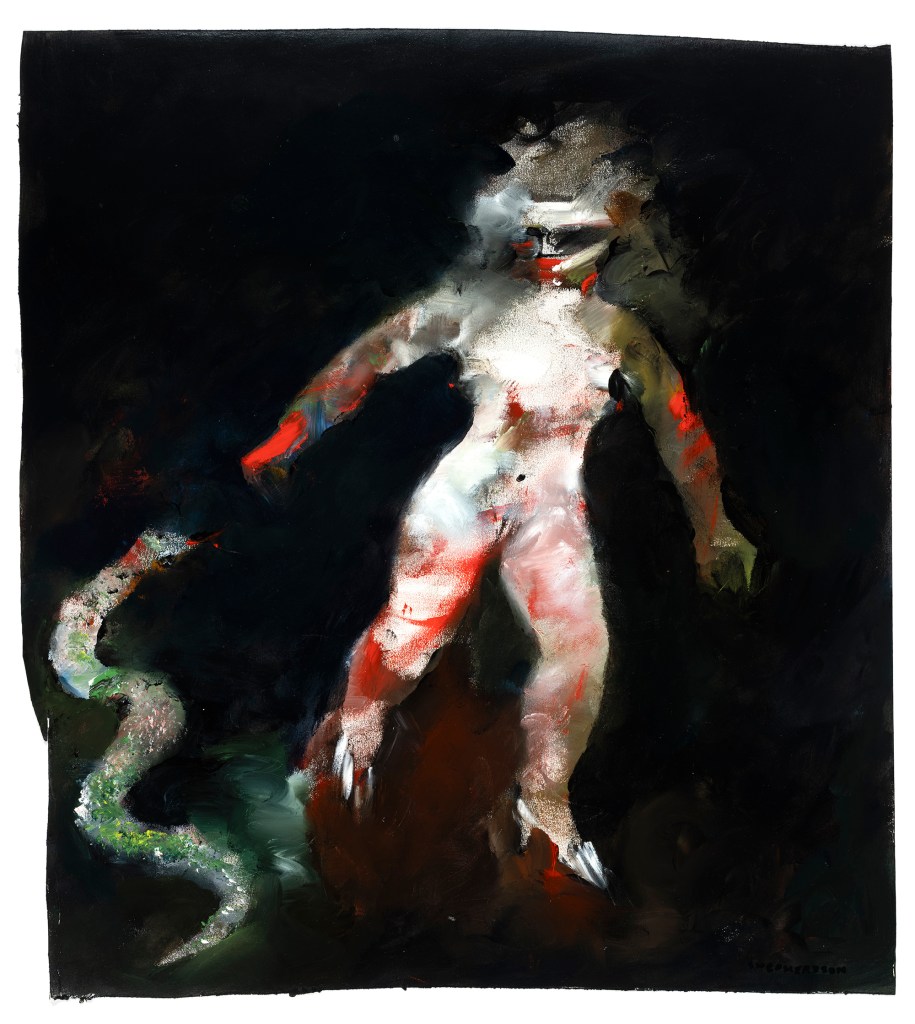
For all the dark mystery of works like Woman with serpent, Frightened man or Running figure in a landscape, there are also less mysterious and exquisite small-scale still-life works including Still life in a striped vase and Still life in a grey vase. These are utterly beautiful, painted by a fisherman who worked in an abattoir. Go figure.
Meanwhile, showing downstairs is an exhibition by Melbourne painter Lewis Miller, a celebrated figurative and still-life painter who won the 1998 Archibald Prize with his portrait of fellow artist and friend Allan Mitelman.
Miller employs an expressionistic style. We love that. His work, characterised by bold lines, vivid colours and expressive, thick brushwork, often captures the essence of a subject rather than a purely realistic depiction. And so it is in this exhibition with works such as Oyster shells on black plate (each oyster is a little artwork in itself) and Large crab. His still-life works are delightfully unruly at times and my favourite in this exhibition is The Studio 1, an earthy view of the tools of his trade.
So, two exhibitions, two quite different painters, two very solid artists. Great stuff.
Gordon Shepherdson: Selections from the Studio and Lewis Miller continue at Philip Bacon Galleries, Fortitude Valley, until March 21.
Want to see more stories from InDaily Qld in your Google search results?
- Click here to set InDaily Qld as a preferred source.
- Tick the box next to "InDaily Qld". That's it.
Free to share
This article may be shared online or in print under a Creative Commons licence