Warrajamba dreaming – Delvene Cockatoo-Collins’ mermaid makes a splash
Delvene Cockatoo-Collins’ art and design reflect her Quandamooka heritage and an intriguing story of a mermaid, which she is sharing with visitors to the Museum of Brisbane during her stint as artist-in-residence.
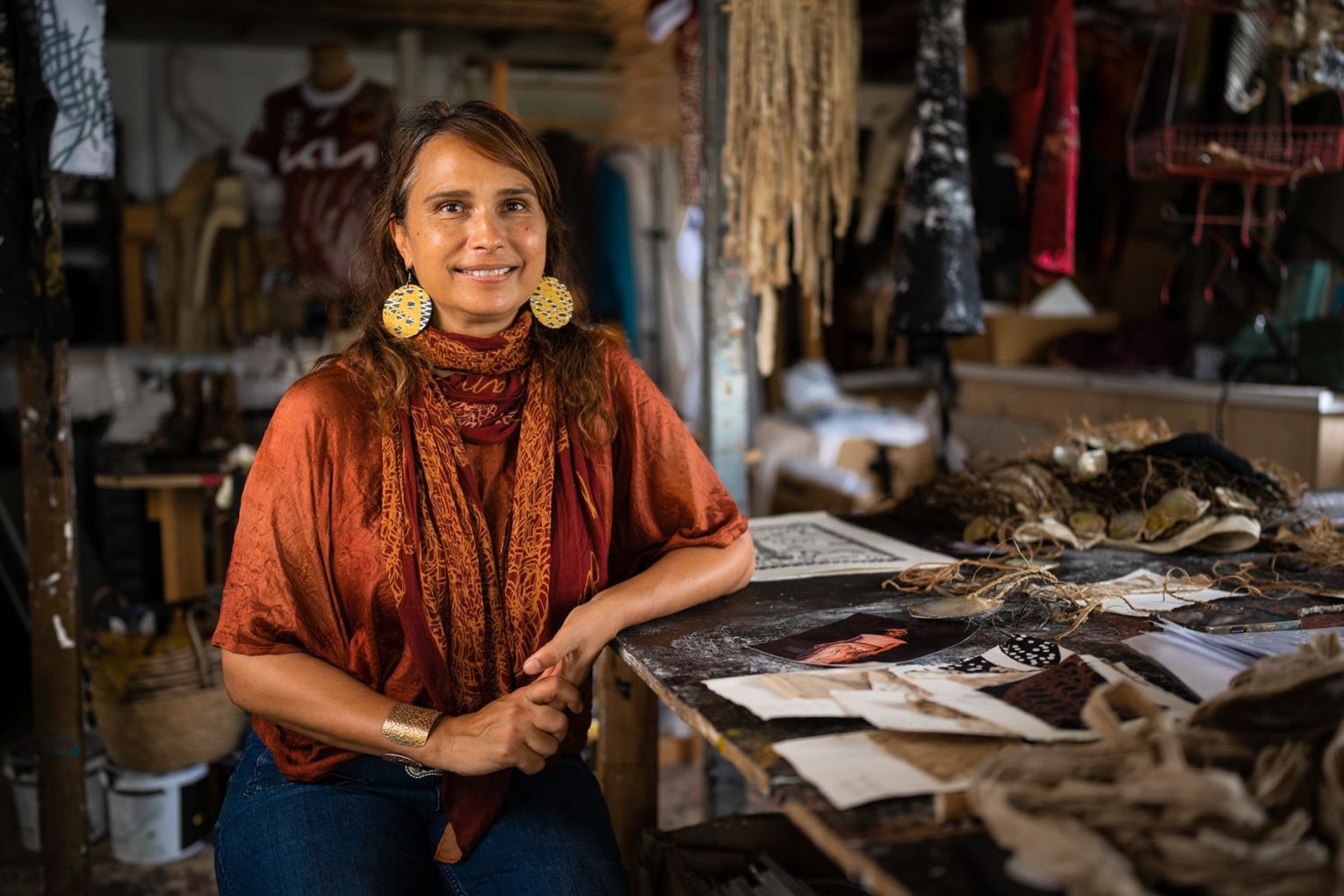
Do you believe in mermaids? Would you like to believe in mermaids? I know I would. Which is why I am so intrigued by Delvene Cockatoo-Collins’ mermaid.
This acclaimed Quandamooka artist from Minjerribah/North Stradbroke Island has reimagined Museum of Brisbane’s Creative Space, turning it an interactive and immersive realm, exploring the ancestral story of Warrajamba, the mermaid.
Until November 15 Cockatoo-Collins will welcome audiences metaphorically, and in person, every Wednesday to slow down and connect with Country and culture through a series of reflective creative activities for visitors of all ages, in the heart of the museum.
As MoB’s newest artist-in-residence, Cockatoo-Collins invites the community to join her on her quest to find Warrajamba – the mermaid who is a central figure in her art – as she continues her search to find the ending of the mermaid’s story.
A proud Quandamooka woman of the Nunukul and Goenpul (Minjerribah/North Stradbroke Island) and Ngugi (Mulgumpin/Moreton Island) peoples, Cockatoo-Collins draws her inspiration and guidance from Warrajamba, a significant story passed down through her grandmother Bethel Delaney and mother Evelyn Parkin.
Cockatoo-Collins’ art will feature in the space, including a soaring sculptural work that is her mermaid, made from natural materials sourced from Minjerribah, such as yungair/yungaire (freshwater reed), talwalpin (beach hibiscus cotton tree) and quampie shells.
You might like
Mermaids are legendary aquatic creatures featuring the head and upper body of a female human and the tail of a fish. Appearing in folklore worldwide, they are generally portrayed as ambivalent beings – sometimes benevolent, but often associated with perilous events such as storms, shipwrecks and drownings.
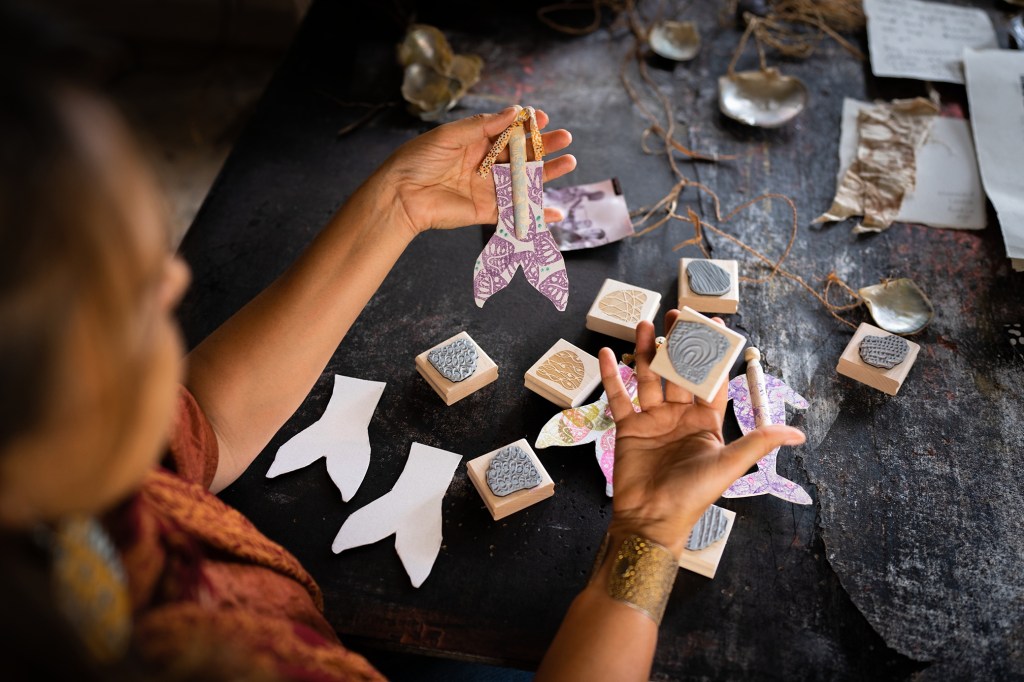
Children are invited to create their own mermaid, or a dugong, when they come into the space at the museum. As Cockatoo-Collins explains, dugongs live in Moreton Bay off Minjerribah. Mermaids do too … at least in mythology and imagination.
“Oral history is that there is a mermaid in the bay,” she tells me. I’d like to think mermaids are real. I have seen dugongs.”
But she has had to imagine her own mermaid, which hangs above us as we chat, the face turned away.
“I’ve made her with her identity disguised,” she says. “I don’t know what she looks like.”
Cockatoo-Collins has been researching the subject, though, and thinks she is onto something. There are snippets of folklore about mermaids in local legend and she thinks there may be more about the story of Warrajamba in the diaries of Archibald Meston (1851 to 1924).
Meston was a controversial Queensland journalist, politician and self-taught anthropologist who documented Aboriginal languages and culture, including wordlists from Minjerribah. As Protector of Aborigines for South Queensland, his work mixed admiration for Indigenous skill with a paternalistic “protectionist” approach, influencing government policy and collecting artefacts while often relying on, or dismissing, local informant knowledge.
His diaries reside in Canberra, and Cockatoo-Collins aims to try to get access to them for her research.
Subscribe for updates
“I think the story would be there,” she says. “If I got to the bottom of the story, I’d like to remake her.”
She refers me to the life-size mermaid hanging above us. It’s an intriguing aspect of her work. She is renowned for creating ceramics, textiles and public artworks that share the stories, culture and history of her people. She creates handprinted homewares and garments, often incorporating natural materials like clay and ochre.
She was proud to see her design on rugby league jerseys worn by fans and players after she designed the Broncos’ Indigenous jersey two years in a row. Having the players and their families visit her studio on “Straddie” was a high.
Fashion is her focus lately and last year Cockatoo-Collins’ work featured at Expo 25 in Osaka, Japan. She has a major fashion event coming up later in the year, although she’s tight lipped about that. However, she wants to see her designs on runways around the world and with her talent, that seems inevitable.
‘Warrajamba is a beguiling story about the past and present that honours the rich heritage of Country, culture and community’
Being able to spend time with her each week will be a treat at the Museum of Brisbane. This year marks 10 years of Museum of Brisbane’s artist-in-residence program, generously supported by Tim Fairfax AC. For a decade, the program has commissioned local artists to create new work within the museum while sparking community connection and creative dialogue.
Museum of Brisbane CEO Zoe Graham says Cockataoo-Collins has “this divine presence” and that having her at the museum as an artist-in-residence is special and her mermaid story is intriguing.
“Warrajamba is a beguiling story about the past and present that honours the rich heritage of Country, culture and community, and with the mermaid at its heart, invites us to experience the lands and waters of Minjerribah as living heritage,” says Graham.
“Within the Creative Space, visitors can take part in free making activities, including crafting mermaid or dugong dolly peg dolls using stamps that feature designs by Delvene – a playful way to engage with the story and the artist’s visual practice. Throughout 2026, audiences can see Delvene in action as part of her residency and connect with her practice more deeply through community workshops and school holiday activities for children and teens. We know visitors will embrace the story of Warrajamba and feel inspired to contribute their own interpretations and reflections.”
As we wind up our chat the artist tells me that when the film Aquaman was shooting around Minjerribah her mum got to meet and chat with star Jason Momoa. It just so happens there are mermaids in the film.
“Mum told him it was the right place to be filming because we have mermaids here, too,” she says. Thereby hangs a tale. Or maybe a tail?
Want to see more stories from InDaily Qld in your Google search results?
- Click here to set InDaily Qld as a preferred source.
- Tick the box next to "InDaily Qld". That's it.
Free to share
This article may be shared online or in print under a Creative Commons licence