It’s a hole in one! Mini golf swings towards the arts
A mini golf course that is also an art exhibition is Louise Bezzina’s opening gambit as the new boss at Brisbane Powerhouse.
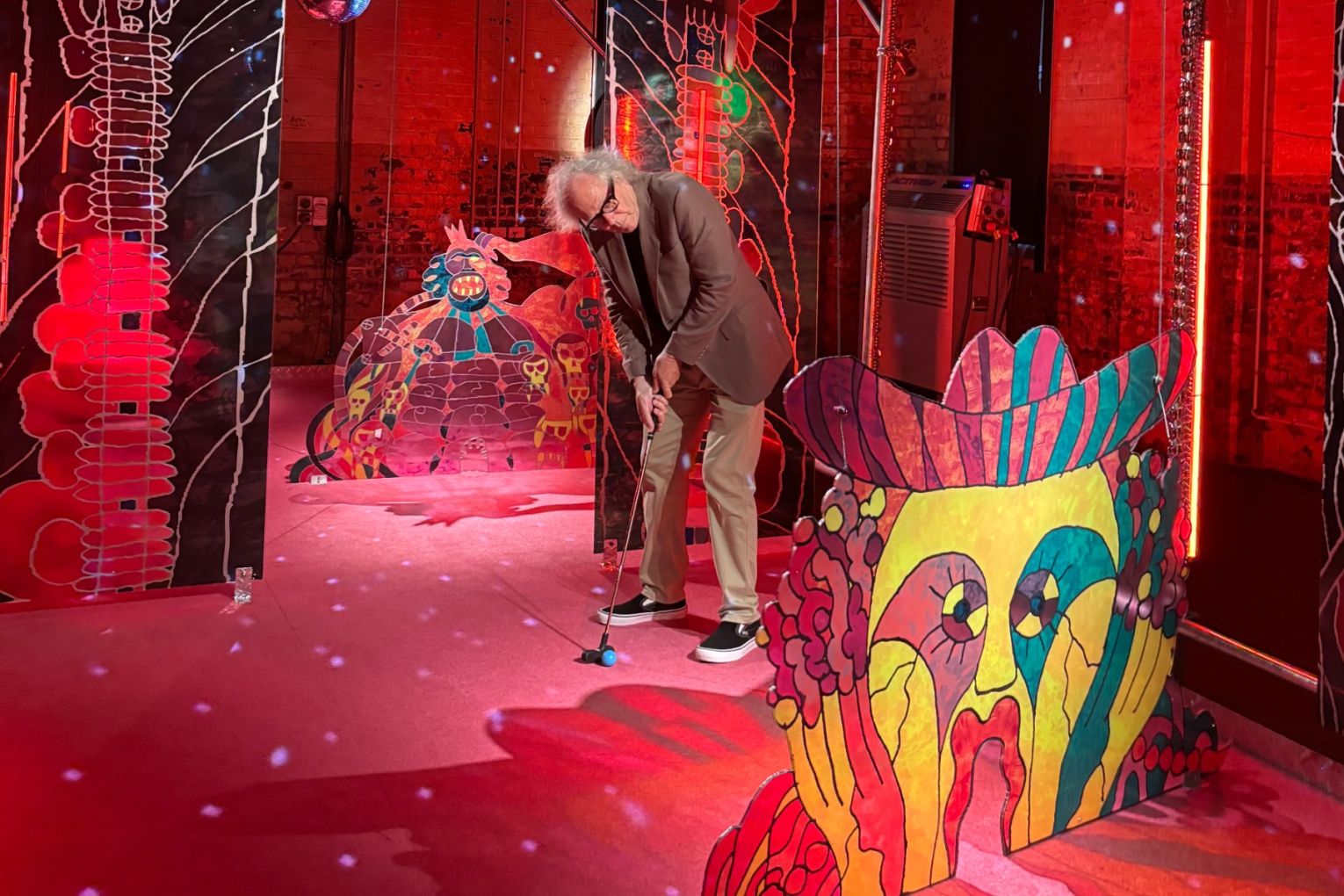
Louise Bezzina’s opening gambit as CEO and artistic director of Brisbane Powerhouse is unexpected. In fact, when I interviewed her late last year, she explained that her opening salvo would be a game of mini golf.
I wondered if I had heard right.
“It’s called Swingers,” she explained. I did not know where to look. Surely she didn’t mean … no, that couldn’t be right. Luckily, it’s Swingers: The Art of Mini Golf, rather than anything unsavoury.
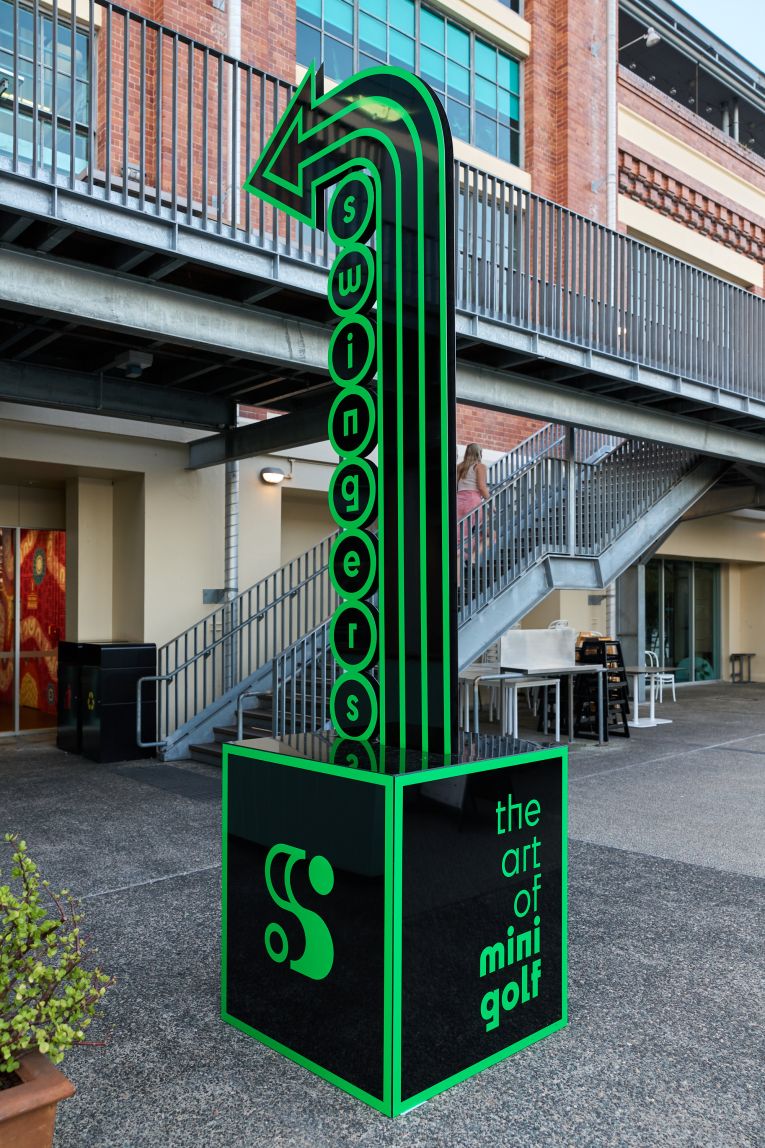 I still wasn’t convinced but I dutifully turned up for the opening, and I am here to report that I had fun. Yes, actual fun … putting my way around a nine-hole course that runs through Brisbane Powerhouse and the Stores building nearby. Each hole is themed by a female artist, and this is kind of the point.
Like many good things, mini golf owes its origins to women
Because it’s not just an ordinary game of mini golf. It has historical and artistic context.
And here is the thing – like many good things, mini golf owes its origins to women. In this case, a group of 19th-century Scottish women banned from playing golf because swinging sticks was considered unladylike. This rebellious group of women commissioned a nine-hole putting-only course named The Himalayas, after its uneven terrain.
You might like
The course still sits alongside St Andrew’s Golf Course near Edinburgh today. The smaller course demanded precision, and its rolling terrain added challenge, chance and amusement. The popularity of the Ladies Putting Club format grew rapidly, with new courses cropping up across the UK and then the US.
Thousands of courses in New York and LA were built on rooftops, in backyards and on nature strips. Many were equipped with loudspeakers and were open 24 hours a day. Eventually, late-night curfews shut them down. Years later, mini golf played a role in the civil rights movement, with a course in Washington becoming one of the first public recreational facilities to be desegregated.
The first mini golf course in Australia was built in the 1920s and was made of sand. One of the oldest continuously running courses is Putt-Putt Mermaid Beach (as a teenager on the Gold Coast this was a place we all went), which hosted the country’s first Professional Putters tournament in 1970.
Swingers: The Art of Mini Golf is a RISING Melbourne exhibition curated by Grace Herbert, who was in Brisbane for the launch. It features nine imaginative holes by an international line up of artists whose practices span film, sculpture, performance and installation.
Expect latex animal tail for putters (I passed on that one), square balls, speculative mythologies and candy-coloured sculptures, all crafted into an imaginative course that invites audiences to play, ponder and laugh along the way.
It is described as an art exhibition masquerading as a mini golf course. Nodding to the game’s feminist roots the artists featured are Kaylene Whiskey, Soda Jerk, Saeborg, Delaine Le Bas, Pat Brassington, Natasha Tontey, Nabilah Nordin, Bktherula and Miranda July.
This exhibition draws on the overlap of sport and art as powerful cultural and social rituals
While the artists’ creative practices are as varied as their lives, a constellation of shared themes and narrative threads connect each work in the exhibition. Most prominent are notions of identity, labour and the entanglements between humans and non-humans – be they animals, machines, or mythologies. The golf hole is mirrored by references to crossing thresholds, entering the void and going down the rabbit hole.
Subscribe for updates
This exhibition draws on the overlap of sport and art as powerful cultural and social rituals, with artists using a combination of gameplay and artistic concepts to engage with their audience in ways that exhibitions do not normally allow.
Today, mini golf is more popular and accessible than its parent and, according to the curator, in some ways it sits counter to the complex land, class and gender hierarchies embedded in the traditional game. Swingers: The Art of Mini Golf draws hope to reflect that spirit and celebrate the ways women and marginalised communities have long challenged and continue to disrupt dominant systems of power. And I thought it was just putting!
Kaylene Whiskey’s Hole 1 titled Ananyi – Travelling. A member of Iwantja Arts, she is known for her vibrant, celebratory paintings that bring together desert life, pop icons, kungka kunpu (strong women), community and culture.
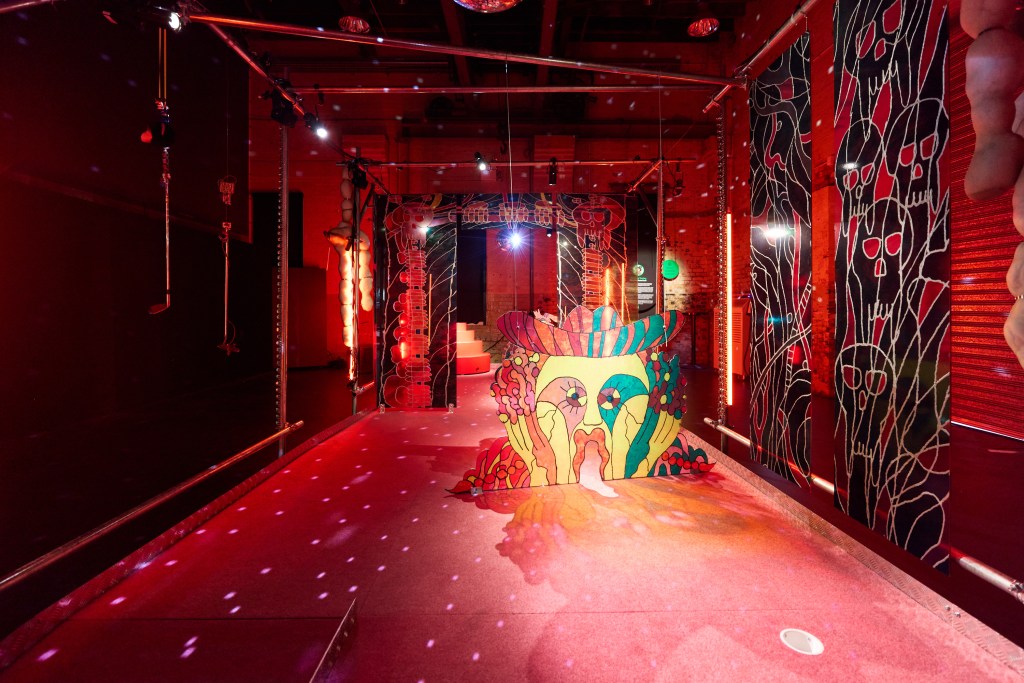
Whiskey’s work invites players to journey to “a mini golf party in the desert” and draws on her childhood memories of catching the Greyhound bus to softball games — as the Iwantja Tigers’ captain — and travelling to Adelaide to play golf as a young girl. The hole features figures such as Cathy Freeman alongside Dolly Parton, Cher and Tina Turner.
Hole 2 features the work of Soda Jerk, an Australian artist duo who make sample-based films with a rogue documentary impulse. Algorithmic K-Holes and the Techno-Serfdom of Simulated Entrapment
Under Slop Capitalism. No, really.
They are fundamentally interested in the politics of images – how they circulate, whom they benefit and how they can be undone. This is a hallucinatory video installation that fuses academic critique with the paranoid rhythms of conspiracy rants. Try getting your head around that as you putt.
Kids will just enjoy the visuals, I guess, and will particularly enjoy Hole 3 and its work – Animal Golf by Saeborg, a Japanese artist known for her performances wearing latex body suits and cartoon-like installations. Animal Golf invites players to swap a traditional putter for a strap-on latex animal and use their bodies to play. A chaotic soundtrack of humans making animal noises marks a timed play period and turns the putting green into an absurd performance space. Weird, huh?
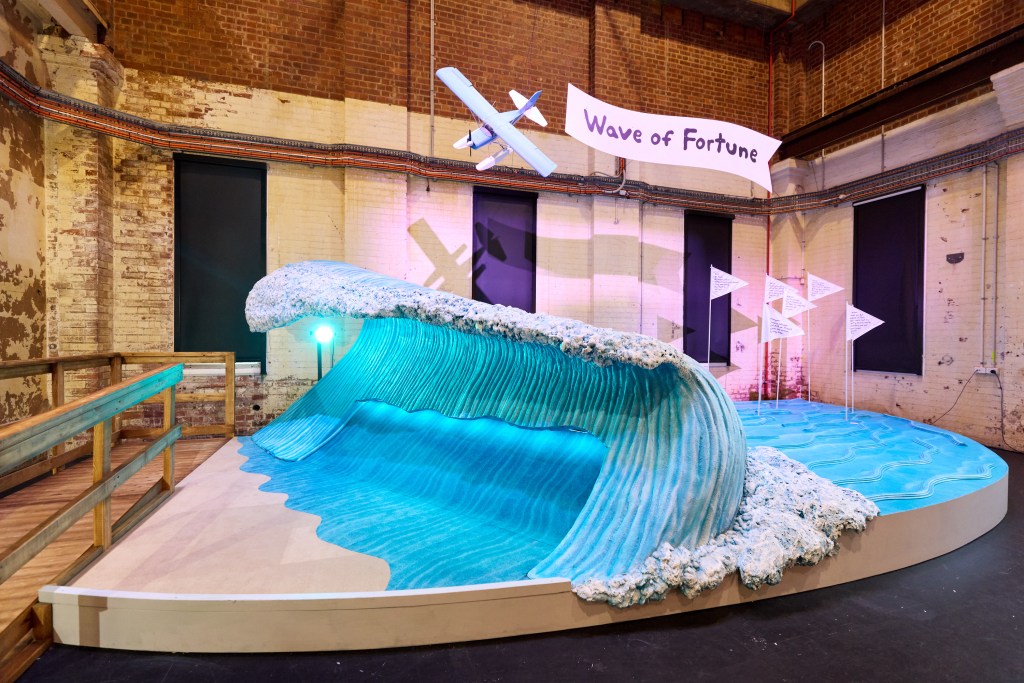
Hole 9 is Miranda July’s Wave of Fortune. “Sports test my patience, but I have an endless appetite for oracles,” the artist says thereby explaining the fortune cookie-style messages at the end of the course.
Players putt their ball up her large cartoonishly sculpted wave before it disappears. Where it remerges is left to fate, landing at one of several flags, each delivering a different fortune displayed on the flag marking each hole. There is no winning – instead, each player’s turn becomes a kind of personal reading.
Crazy stuff and an enjoyable way to finish your nine holes. For the record, I played in a group of five and my wife beat me, which seems only fair.
Swingers: The Art of Mini Golf continues at Brisbane Powerhouse, New Farm, until March 1.
Want to see more stories from InDaily Qld in your Google search results?
- Click here to set InDaily Qld as a preferred source.
- Tick the box next to "InDaily Qld". That's it.
Free to share
This article may be shared online or in print under a Creative Commons licence