London calling: Our APT to be celebrated at V&A
QAGOMA’s Asia Pacific Triennial is world renowned and now its admirers get to see a carefully curated snapshot of it in the northern hemisphere at the renowned Victoria and Albert Museum in London.

If you’re visiting London’s famous Victoria and Albert Museum any time after May 16, you may notice some familiar artworks.
Particularly Michael Parekōwhai’s life-sized fibreglass sculpture of a Māori security guard, Kapa Haka (Whero), 2003, which offers a potent reflection on the stereotypes faced by Māori men even today. (We love Parekōwhai’s work and everyone will be familiar with The World Turns, his giant upside-down elephant out front of Brisbane’s Gallery of Modern Art.)
The guard (pictured above) will be stationed out front keeping an eye on everyone. You may remember him from QAGOMA’s Asia Pacific Triennial of Contemporary Art (APT) and he’s part of the collection at QAGOMA. What the hell is he doing in London? Fair question.
Happily, he is part of Rising Voices: Contemporary Art from Asia, Australia and the Pacific, a landmark exhibition bringing together the work of more than 40 artists from 25 countries across the Asia Pacific region. A partnership with the Queensland Art Gallery and Gallery of Modern Art, the London exhibition draws on more than 30 years of QAGOMA’s flagship event – the APT – offering an unparalleled view of the region’s dynamic creative landscape.
More than 70 works spanning sculpture, photography, painting, ceramics, weaving and body adornment – many of which have never been exhibited outside of the region – will foreground First Nations perspectives and reflect the interconnected, ever-changing cultures of the Asia Pacific today.
For the V&A it’s a gift because the curation has already been done, mostly, by us. In other words, in cooking-show terminology … here’s one we prepared earlier! And the V&A is the perfect place for it. Having visited that museum relatively recently I would venture to say it is one of the world’s top five, for sure. It is vast and full of fascinating things and a place you could easily spend the whole day. Plenty of Australians visit, so if you’re a Queenslander and heading to London this year, drop in and feel a bit of Maroon pride.
QAGOMA director Chris Saines will be popping over for the opening with a small team from QAGOMA. He says he is thrilled to be working with V&A director Tristram Hunt and the museum’s internationally renowned exhibitions team.
You might like
“For three decades the APT has been the cornerstone of our program, bringing together the work of more than 650 artists and groups from across 50 countries in the Asia Pacific region, and the London project will be only the second time that works acquired through the exhibition have toured internationally, following a tour to Santiago, Chile in 2019,” Saines says. “It’s a wonderful opportunity to share the cutting edge and customary art practices of our vast and immensely diverse region, which are so richly represented in our collection, with audiences in the northern hemisphere.”
‘they speak to histories and perspectives that are essential to a fuller understanding of our shared contemporary world’
The exhibition is being co-curated by QAGOMA’s team of Asian and Pacific art curators led by Tarun Nagesh and Daniel Slater, director of exhibitions at the V&A. Slater says while these works have never been seen in the UK before, “they speak to histories and perspectives that are essential to a fuller understanding of our shared contemporary world”.
“From the enduring strength of ancestral knowledge and faith to powerful reflections on colonial legacies and conflict, the exhibition unfolds narratives that deserve far greater visibility here,” Slater says. “It is a privilege to present such varied and compelling practices at the V&A, and to offer UK audiences the opportunity to encounter the depth, vitality and creative force of the Asia Pacific region.”
Curatorial manager of Asian and Pacific art at QAGOMA Tarun Nagesh says the exhibition has “been carefully curated to celebrate the great depth and dynamism of contemporary art from the Asia Pacific region, signalling influential moments and featuring pioneering artists across its immense range of artistic contexts”. “It has been a great privilege to develop this exhibition in close collaboration with the V&A, selecting artwork with great consideration to its collections, context and audiences,” Nagesh says.
Under the watchful gaze of Michael Parekōwhai’s security guard, the exhibition will unfold through works that reveal the ongoing significance of ancestral knowledge, histories and connections to place that continue to influence artists’ practices today.
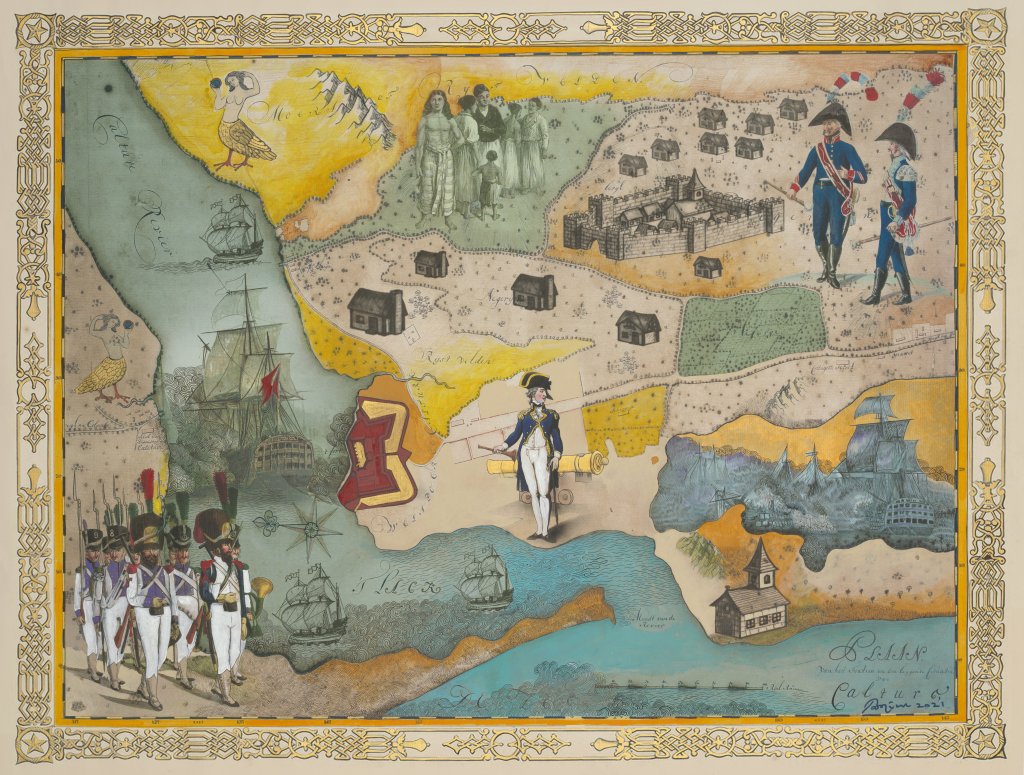
Following an introduction that centres Indigenous knowledge and diverse artistic languages, the exhibition’s first section, Re-Visioning History, will include Pala Pothupitiye’s Kalutara Fort (2020–21), a reimagined map of Sri Lanka’s historic military camp, initially built by Portuguese occupiers, later captured by Dutch settlers and ultimately surrendered to British colonial powers.
Subscribe for updates
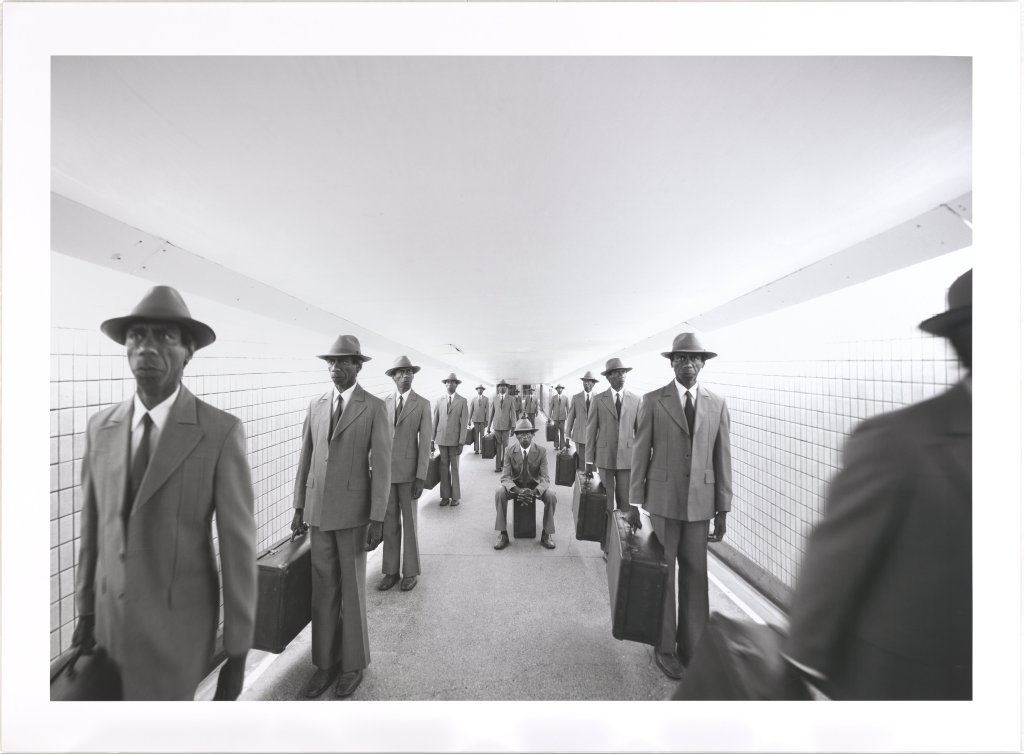
The range of works includes photography including Queenslander Michael Cook’s classic Majority Rule (Tunnel), 2014, which reimagines Brisbane with a majority Indigenous population. The image uses the pedestrian tunnel to Central Station in case it looks familiar.
The second section of Rising Voices, Enduring Knowledge, will foreground practices rooted in ancestral memory and long-standing connections to place and community. Materials drawn directly from the natural environment – including feathers, mother-of- pearl, bamboo and coconut husk fibre – will feature throughout in handbags, baskets, fans and body adornments, alongside examples of miniature painting and ceramics.
Highlights will include necklaces by Lola Greeno, crafted from iridescent maireener and abalone shells, and a selection of vibrant works on paper by Khadim Ali, Saira Wasim, Pushpa Kumari and Nusra Latif Qureshi, who challenges conventions of South Asian miniature painting by centring her female subjects.
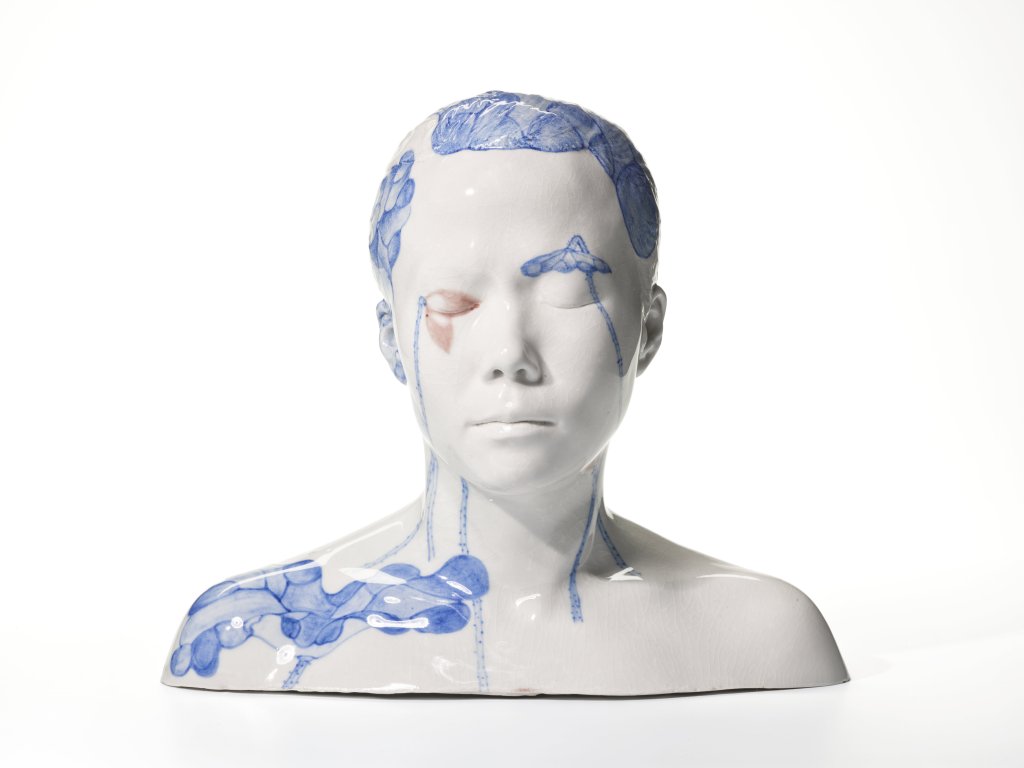
A series of porcelain busts by Ah Xian will be displayed alongside, illustrated with delicately rendered landscapes in cobalt glaze – a porcelain painting technique perfected in Jingdezhen in central China during the Ming and Qing dynasties.
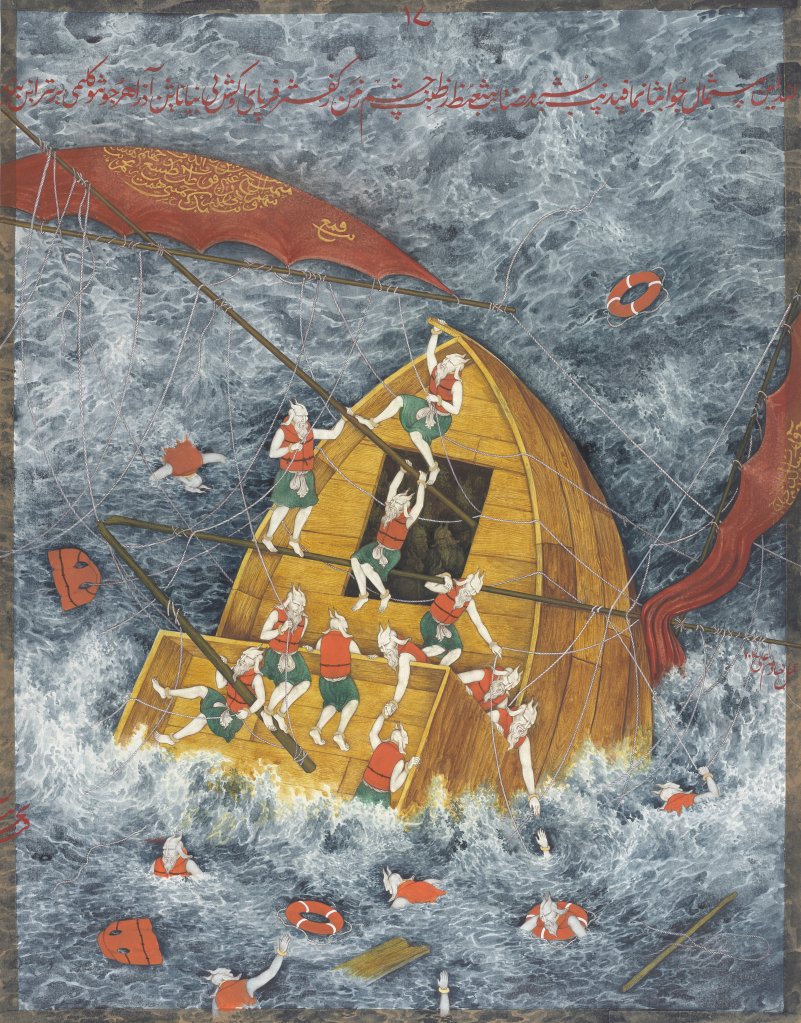
The exhibition’s final section, Evolving Faith, will focus on spirituality and religion in contemporary art across the region. Exploring relationships between the sacred and the secular, artists in this section will demonstrate how belief systems intersect with systems of power and the everyday.
Key works will include Nomin Bold’s 2012 painting, Labyrinth game, which uses elements of Tibetan Buddhist thangka (scroll) painting to capture the complex urban landscape of Ulaanbaatar in Mongolia, and Montien Boonma’s monumental sculpture Lotus sound (1992), a celebrated work inspired by the temple grounds of Wat Phra That Doi Suthep in Chiang Mai.
Nearby, Takahiro Iwasaki’s 3m-long suspended sculpture, Reflection Model (Perfect Bliss) (2010–12) – constructed from Japanese cypress to mirror its architectural inspiration, the sacred Phoenix Hall in Japan’s Byōdō-in Temple complex – will close the exhibition.
It’s going to be quite something. If you are heading to London, don’t miss it.
Rising Voices: Contemporary Art from Asia, Australia and the Pacific, The Porter Gallery, V&A South Kensington, London, May 16 to January 10, 2027.
vam.ac.uk/exhibitions/rising-voices-contemporary-art-from-asia-australia-and-the-pacific
Want to see more stories from InDaily Qld in your Google search results?
- Click here to set InDaily Qld as a preferred source.
- Tick the box next to "InDaily Qld". That's it.
Free to share
This article may be shared online or in print under a Creative Commons licence