We were warriors: The telling tales behind Indigenous shields
Aboriginal shields and their traditions tell stories that might otherwise have been lost in time, as a new exhibition reveals.
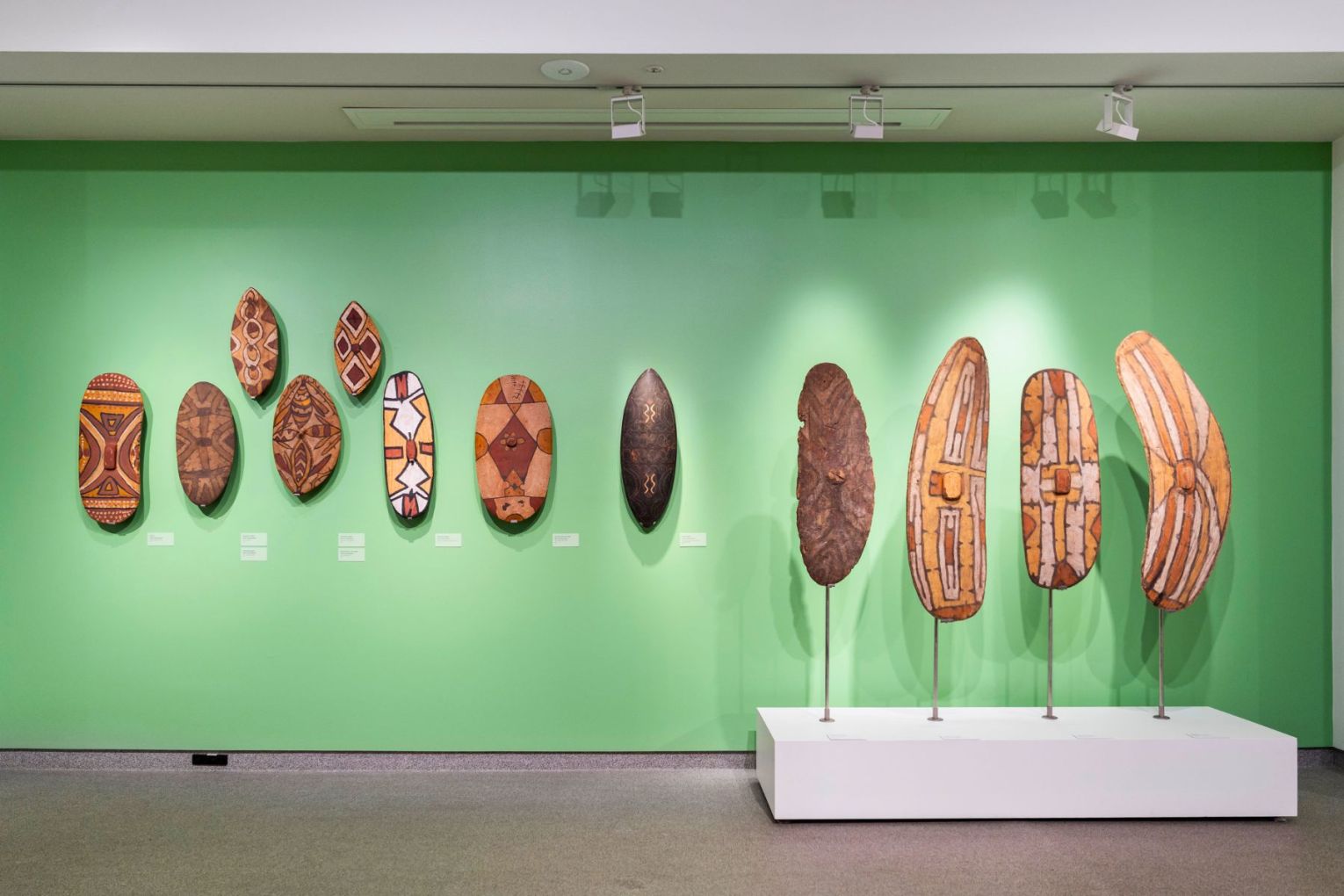
Shields and their traditions open a portal to knowledge through long-held stories embedded by their Aboriginal makers, who used shields for demonstrations, conflict resolution and symbolic warfare.
This knowledge is extended by the shields’ journeys as collected objects into places all over the world.
In Shields: design and functionality, now showing at the UQ Anthropology Museum at the University of Queensland’s St Lucia campus, these narratives are unpacked, aided by the research of museum director Michael Aird and colleagues. The exhibition focusses on 130 shields about which little was known, some dating from the early 1900s and all from the museum’s collection.
“Throughout the exhibition we’ve done our best to group the shields in geographic regions, but there’s a lot of educated guesswork we’ve taken to do that,” says Aird. “The big thing is, once they have all come together, it helps us decide whether we’re right or not. And other people come in and help us with opinions.”
Curator Mandana Mapur coordinated the design and layout of the exhibition to make evident the connections between shields.
The “educated guesswork” is vested in Aird’s life-long research into historic photographs of Aboriginal people and his observed knowledge of designs, families and regional differences in the shapes, patterns and features of shields, with more than a modicum of detective work.
You might like


The exhibition concept emerged from research Aird is doing for a book – in progress with other shield experts including collector and art dealer Bill Evans (now deceased), curator Wally Caruana and Dr Phillip Jones, curator of the South Australian Museum.
But how did this extraordinarily rich collection of shields and other Aboriginal artefacts come to the university in the first place? The collection was begun by medical doctor Lindsay Winterbotham (1887–1960), who was appointed founding director of the Anthropology Museum in 1948. An “armchair anthropologist”, he sought donations that developed the collection from 1200 items to 10,000 by the time of his sudden death in 1960. However, Winterbotham’s interests did not run to documenting details of the circumstances of donations.
Aird and his team have been joining the puzzle pieces around each shield
“Sadly, most of this valuable material often has very little information attached – the kinds of things we are keen to know, like where it was made, how did it come to the donor and what it might have been used for,” says Aird.
Aird and his team have been joining the puzzle pieces around each shield, from donated materials to knowledge held by specialists across Australia – aided by keenly following research leads – all of which has been crucial to this comprehensive display.
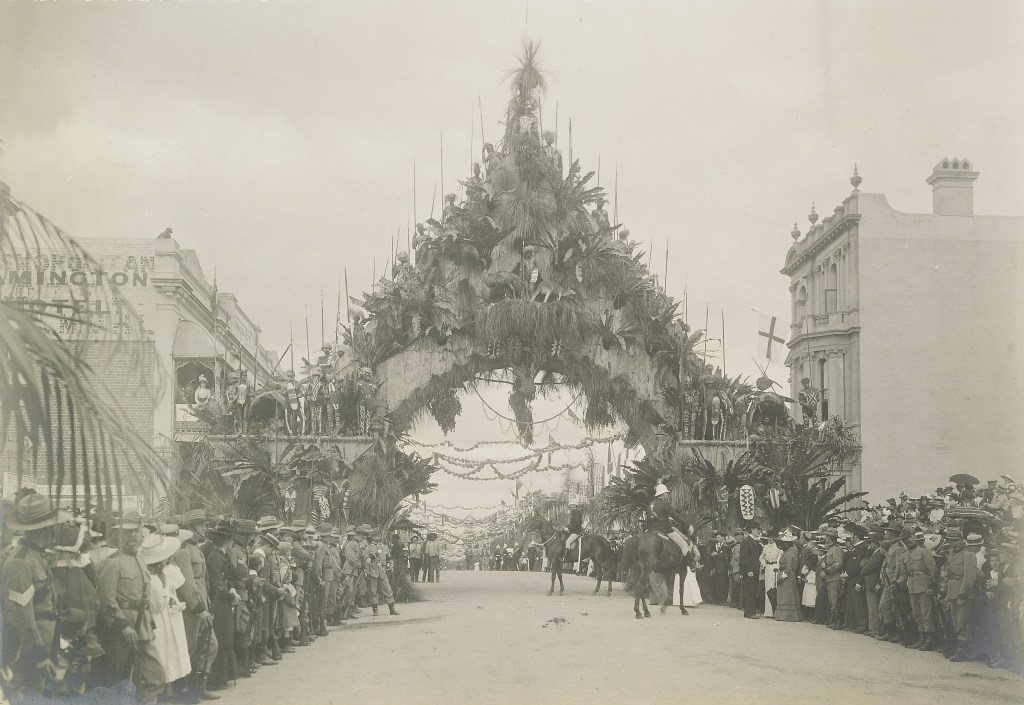
A significant find was a photograph taken in Brisbane in 1901 of a procession for the visiting Duke and Duchess of Cornwall and York. This image, with newspaper reports, confirm that Badtjala shields from K’gari (Fraser Island) were part of the display, one of which has been held by the Queensland Museum since 1904, with another two in the Stockholm Museum since 1916.
Subscribe for updates
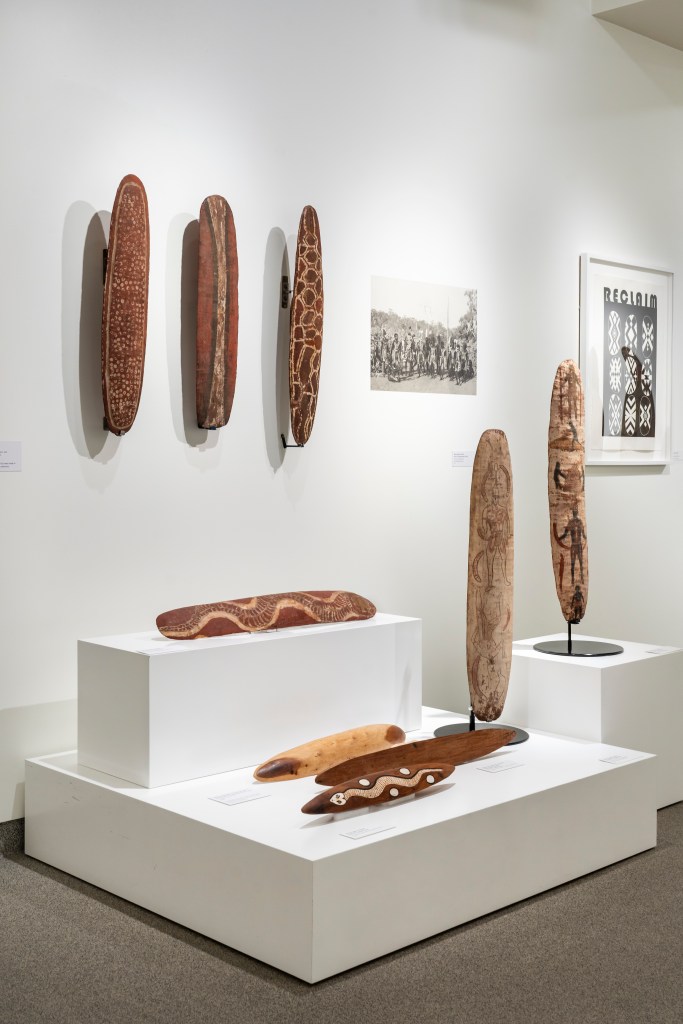
What the regional groupings make evident is the variety and dramatic differences shields convey. Areas throughout Australia are represented – from north Queensland’s strongly patterned rainforest shields to the narrower and more elongated versions that emerge from parts of Western Australia.
The types of carving, paint and patterns – and usage, with some marked by spear impacts – extend the wide variety in these objects. Adding additional interest are artworks that innovate traditional shield designs from contemporary Aboriginal artists – Judy Watson, Dylan Sarra, Jennifer Herd, Paul Bong and Bernard Singleton Jr. These artists (and many others) connect to these cultural artefacts and interpret them anew.
Aird observes that artists such as Bong and Singleton, who have historical connections to the rainforest, draw on the traditions but “refuse to use an old shield design – that they may see in a museum or a book – and copy it exactly. Their own protocols dictate that you are not allowed to do that with work by an earlier artist”.
Watson, who has a long-term interest in Aboriginal objects displaced by colonisation and theft, has used a particular shield included in the exhibition, characterised by its carved directional changes, in some of her public artworks.
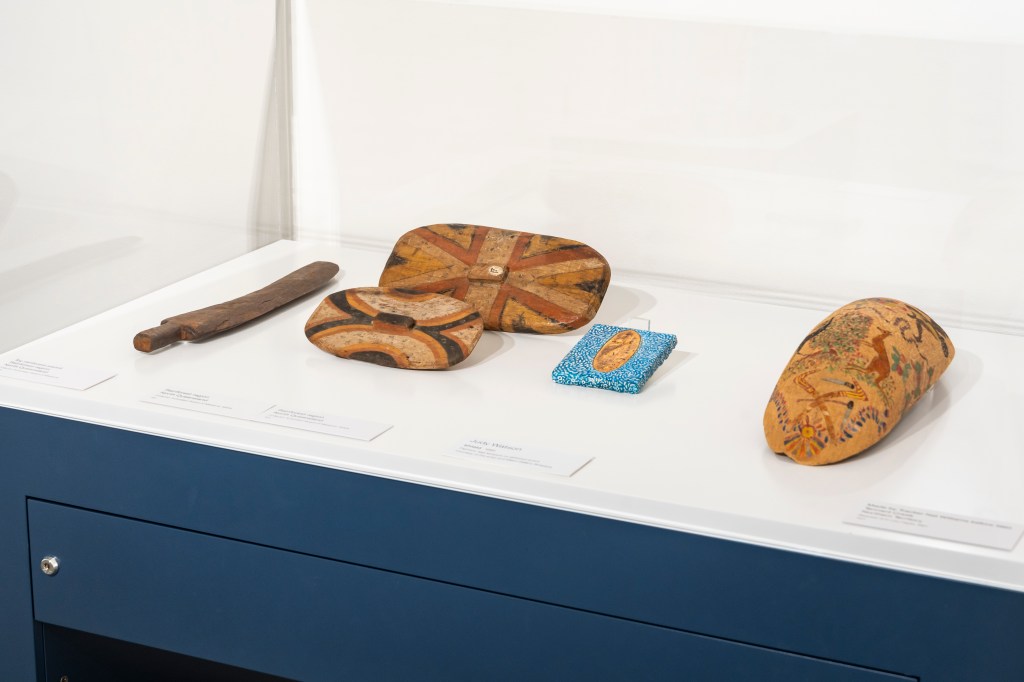
Excavated “10-inches below the Earth’s surface” at Archerfield Airport, not far from where Watson grew up, research has confirmed its origins in Western Australia’s Gascoyne region, with the connection between the two places via air, probably carried between these two bases by an American serviceman after World War Two. Watson says: “I think of it as an outlier.”
One group of shields that do possess strong provenance came to the museum from Mornington Island. Aird describes their importance to the community who have visited the exhibition to spend time with the objects. They were donated by the superintendent of the Presbyterian Mission on Mornington Island, Reverend James McCarthy (1944–1948), who also provided photographs of Mornington Island community members holding shields featured in the exhibition, with these connections particularly precious.
For Aird it underlines that “these are not residual artefacts. They are part of traditions that continue. We have been lucky to have three substantial visits from Mornington Island representatives, and they’re so happy that the shields and artefacts are here”.
As Yidingi artist Paul Bong attests: “By combining traditional shield designs with contemporary materials and forms, I’m showing that our culture is still alive and evolving … it represents my identity, my culture and the continuation of our stories through new mediums.”
Shields: design and functionality continues at the UQ Anthropology Museum, Michie Building, St Lucia, until September 4.
Want to see more stories from InDaily Qld in your Google search results?
- Click here to set InDaily Qld as a preferred source.
- Tick the box next to "InDaily Qld". That's it.
Free to share
This article may be shared online or in print under a Creative Commons licence