Diverse stories expose emerging artists’ vulnerabilities in The Churchie
The Churchie Emerging Art Prize encourages entrants to take creative risks and demonstrate their artistic drive – as revealed by this year’s winners, now on show at Metro Arts.
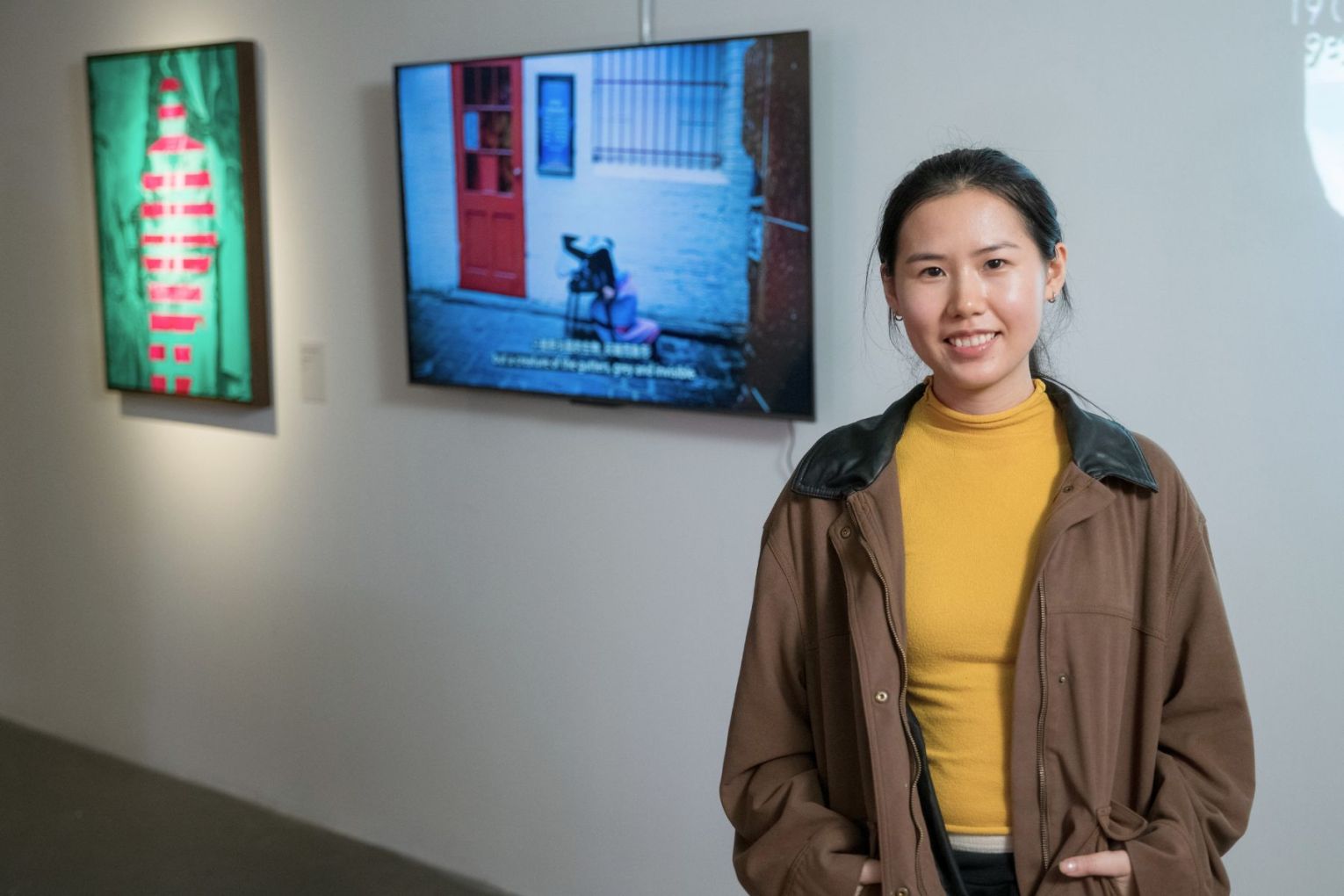
The finalist’s exhibition of The Churchie Emerging Art Prize at Brisbane’s Metro Arts represents art at its freshest, with its format open and inclusive of any media, actively encouraging art that ranges across diverse subjects and styles. The approach allows artists to “experiment, take creative risks and present work that reflects their individual artistic enquiry”.
Accordingly, Metro Arts’ three galleries include art from large immersive sculpture to installations with movement, sound and interactivity, along with many videos, paintings (often paired with installation), prints and a drawing. This year, 17 finalists were selected from a total of 550 entries, competing for a prize pool of $55,000.
The prizes selected by Art Gallery of South Australia director Jason Smith encompass the breadth of the media and the artists’ interests and experiences.
Smith noted that artists are: “emerging from recent graduate programs, from tertiary studies. There are artists emerging from careers in other disciplines, in other areas of their life. It’s not about age. It’s about intention and the will to practice. Practices have biographies. Careers have itineraries. An exhibition and a prize like this is an extraordinary moment in that journey. I want to thank the artists because emerging is about exposing vulnerabilities as much as it’s about the assertion of your intellect, your intentions, your vision, and your will to make art. You deserve our thanks for bringing your vision into our view.”
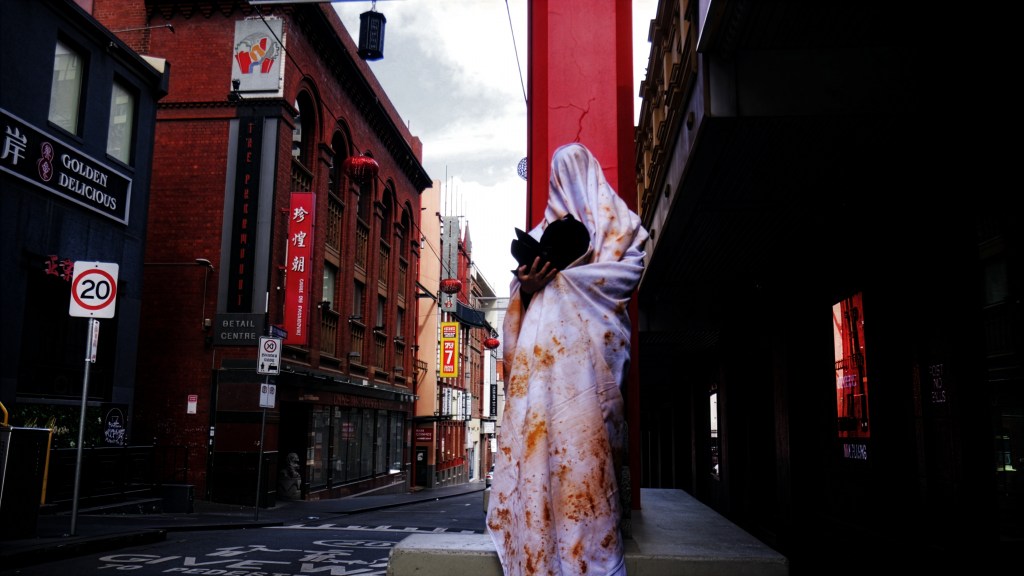
The $40,000 major prize was awarded to Huiyi Xiao for her video work titled The Fire That Wouldn’t Call Itself Ash (2025). This personally driven narrative reflects the artist’s immigration (from China) and the employment situations in which she found herself – describing the impacts of “down-skilling”, the realities of low paid, mainly hospitality roles.
You might like
Xiao’s struggle to belong is expressed through her physical contortions swathed in colourful costumes. For Smith, these three minutes of moving image “contained frames and images that were immensely powerful … (the artist drawing) finally, on ancestral wisdom to push through into a view of air and space and light”. Its visual synthesis of the diasporic experience with Xiao’s cultural understandings are delivered with imagery that transcend expectations both old and new.
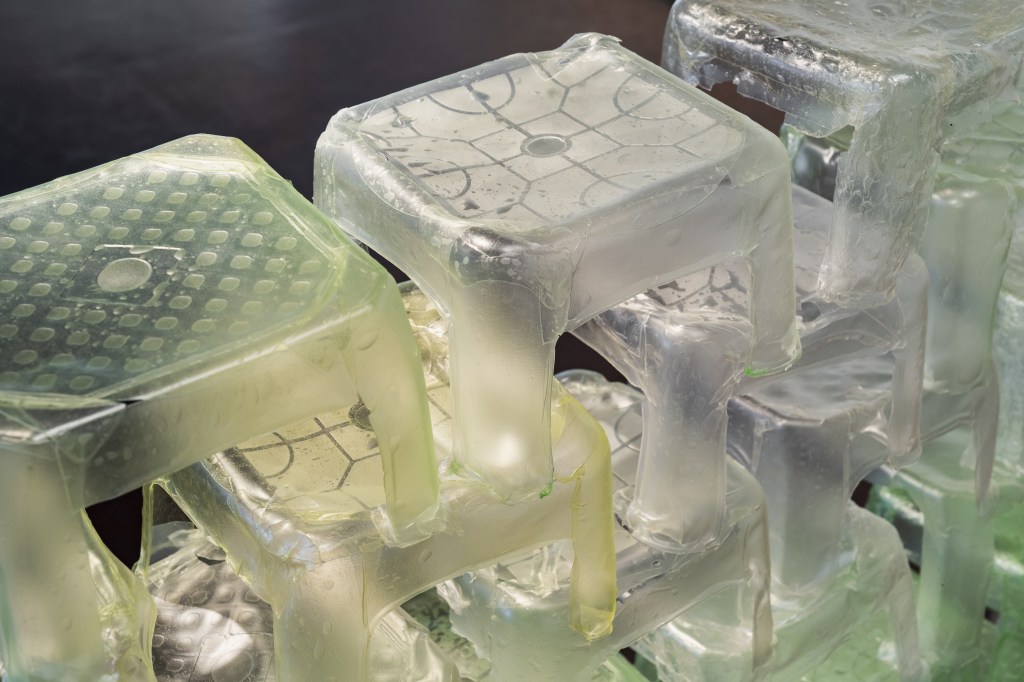
A Special Commendation ($5000) was awarded to Squat Tossed (2026) by Rosemary Tamas-Cao, her sculpture describing another aspect of the diasporic experience, informed by the artist’s Vietnamese and Romanian heritage. Constructed from rice paper and coloured with pandan extract, these fragile sculptures are cast from the plastic stools used as street furniture in Vietnam. Stacked in a pyramid formation in the space, the variations in the green pandan concentrations and the translucency of the objects render this work like a series of ghostly memories in the present.
Smith found the work compelling, given its “serial nature, the investigation, the fragility, the claiming and owning of cultural heritage, the joy and seriousness and melancholy of building a tower so fragile but so redolent of cultural experience and hybridity and strangeness”.
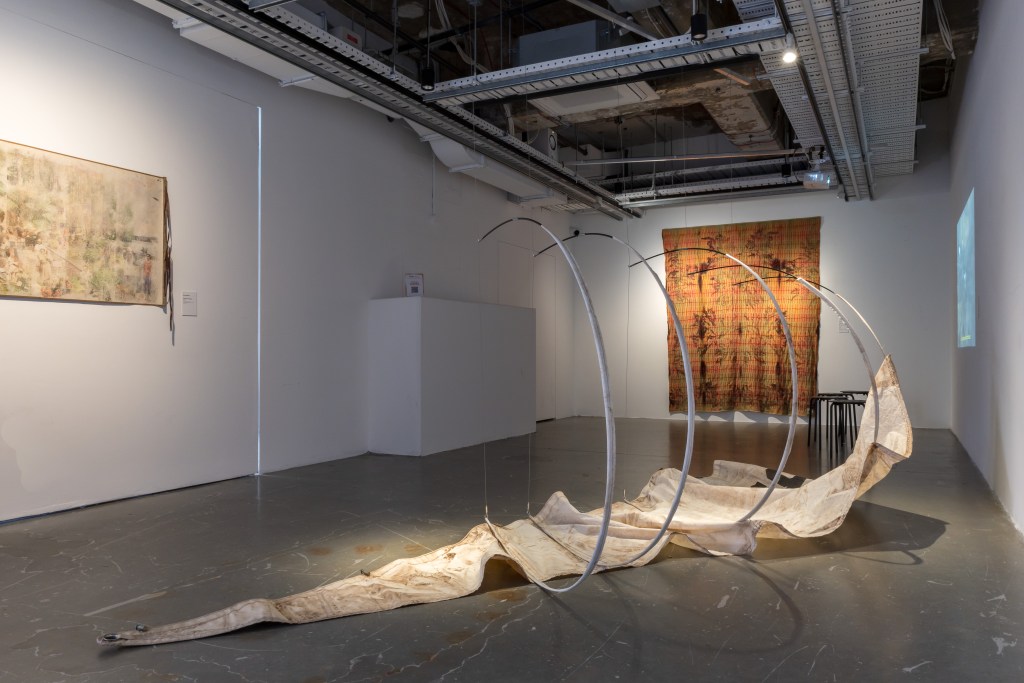
Two Commended prizes (each $2500) were awarded, one to Wagga Wagga-based Gamilaraay artist Juanita McLauchlan for a woven wool blanket, printed with botanical forms and stitched with possum fur titled Crossing Time (2025). On this evocative canvas, landscape, community and culture are described in an intricately stitched surface, with the blanket used as a vessel for Indigenous narratives, both personal and cultural. Smith found power in the way that “McLauchlan reclaims cultural knowledge through her work … to create complex palimpsests that critique the ongoing fight of First Nations people for their privacy and ownership of their lands”.
Subscribe for updates
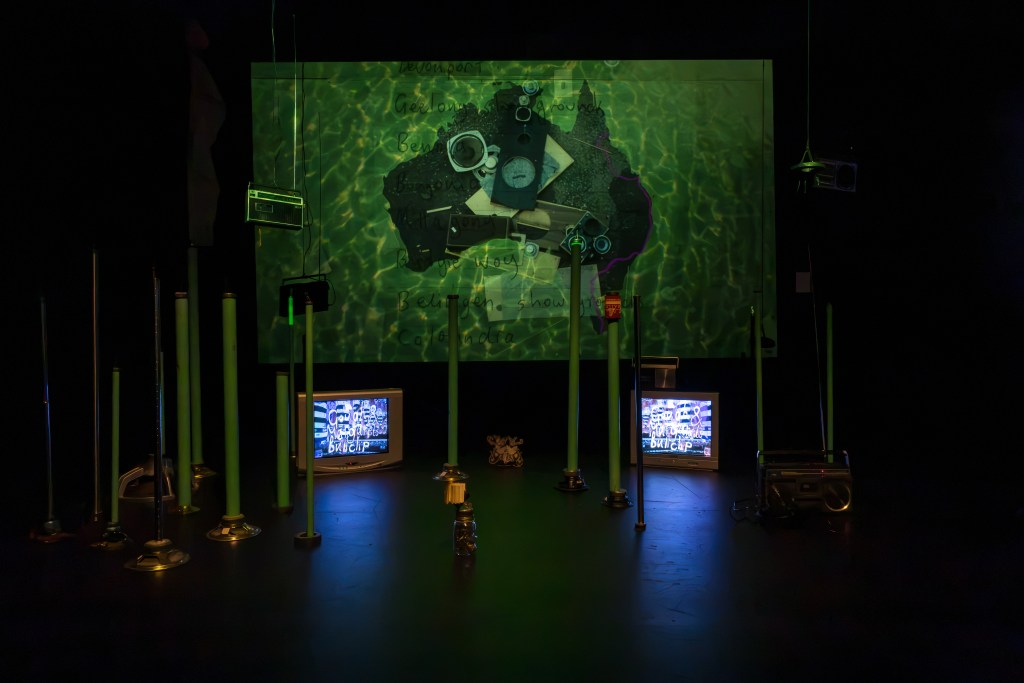
Also Commended (and a crowd favourite) was Lutruwita-based Georgia Lucy’s Gough and Margaret’s Bullclip (2025). This multimedia installation draws attention for its subject, irreverent humour and execution. Lucy’s 15-minute video includes archival retrieval of material relating to discarded alternatives to Australia’s national anthem, Advance Australia Fair, including documents from a competition (held together with a bulldog clip from Gough Whitlam’s office) from the early 1970s.
The ambition was to replace God Save the Queen. The video traces Lucy’s travels from Tasmania to North Queensland, and her subjects range from cheese-tasting to family albums and floods. This work is lively, with magnets conducting the dancing kangaroos that occupy the space in front of the video flanked with “cassette-player” speakers, all protected with a fragile grouping of bollards.
Appropriately poor acoustic quality and a retro ambience create this experience as amusing, scarifying and loving in its cultural critique. Smith noted: ‘The hot mess of (Lucy’s) wonderful, critical, intelligent, fun, investigative take on the crudities and futilities of nationalism and change for change’s sake … I just want to say thanks very much for going hard on absurdity and criticism at the same time.”
There is one more People’s Choice prize to be awarded at the end of the exhibition. Each of the 17 finalists have produced work that not only traces the diversity of the Australian experience but the breadth of the conceptual understanding of art.
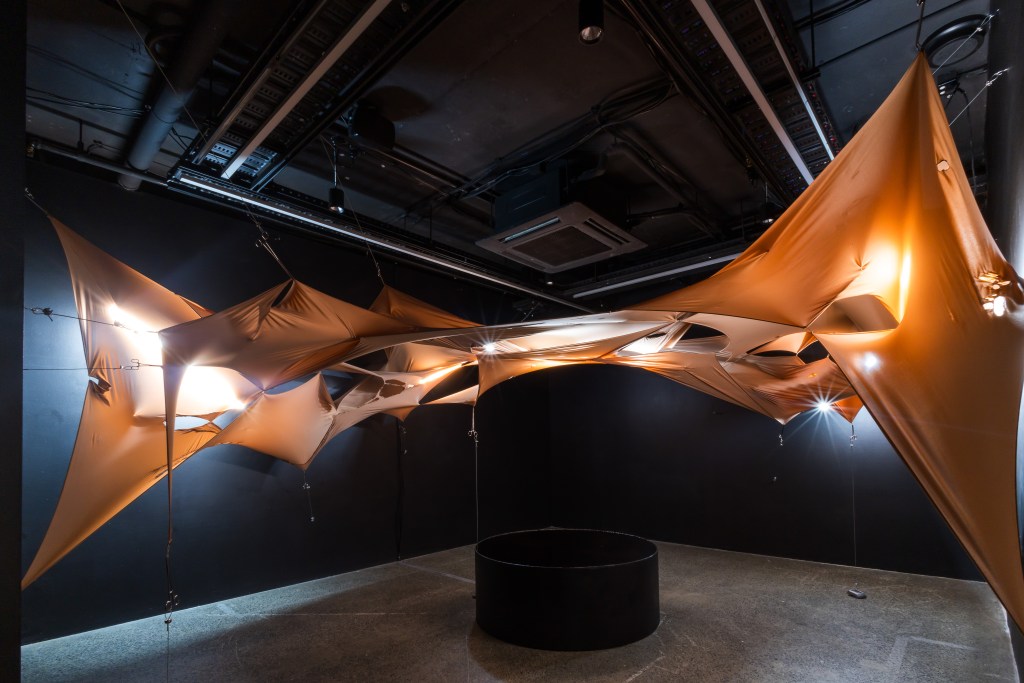
Other works that I found intriguing are Alannah Dair’s Opening through steel, a knowing in skin – iteration II (2024) that occupies the smallest gallery on its own. Outstretched spandex material is held to the wall by surgical forceps, wire and hardware. It protects a pond of Black Bile (2024), its oily surface randomly disturbed, with these works together exploring the artist’s chronic pain.
Badra Aji’s video Tiap Selasa Sore (Every Tuesday Afternoon) (2026) is also biographical, with a novel exploration of familial memory, trauma and swimming.
The Churchie is one of Australia’s longest-running art prizes and it offers significant support mechanisms for emerging artists. In many ways it may be seen to map the maturation of the art scene in Brisbane since 1987. Over 39 years its awards have recognised important and ongoing talents with previous winners including Stephen Newton (1987), Scott Redford (1988), Pip Haydon (1998), Madeleine Kelly (2004), Ross Manning (2011), Caitlin Franzmann (2014) and Melissa Nguyen (2025).
The exhibition has evolved to reflect the changes since 1987. For the past three years The Churchie has been held in the Metro Arts galleries at West End, a venue that includes the dark theatre space downstairs plus two gallery spaces on the street level, with these spaces’ versatility embraced in the exhibition presentation.
The Churchie Emerging Art Prize, Metro Arts, West End, until August 8.
metroarts.com.au/exhibition/the-churchie-emerging-art-prize-2026
Want to see more stories from InDaily Qld in your Google search results?
- Click here to set InDaily Qld as a preferred source.
- Tick the box next to "InDaily Qld". That's it.
Free to share
This article may be shared online or in print under a Creative Commons licence