Image captured: Contemplating the long present
Since the 1980s, John Young’s conceptual art and post-modernist practice has been informed by philosophical and theoretical tenets that have placed the Hong Kong-born, Melbourne-based artist at the forefront of contemporary art.
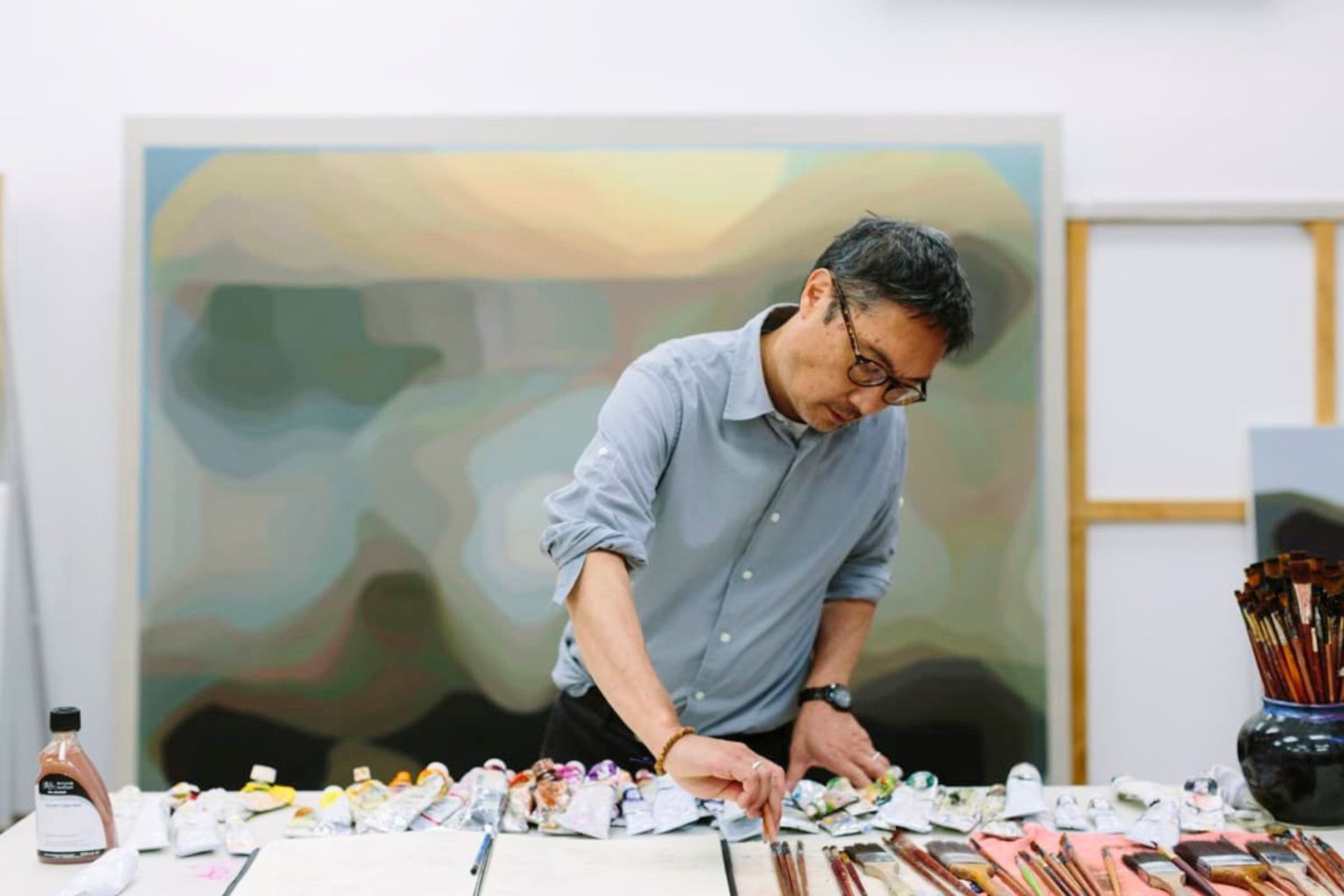
John Young’s 91st exhibition at Philip Bacon Galleries is a sumptuous series of abstract paintings in which often colourful lozenge-like shapes draw the eye and the imagination, evoking memories that feel both familiar and fresh.
This group of works, titled Aion, the Long Present, conjure the Greek understanding of time’s circular nature, with the notion that the past is embedded in the present, in memory and rhythms that tie human lives to history.
For Young, 70, the title speaks to the way that these paintings are produced, using technology to look back at earlier artists.
“I’m trying to find a way through for painting, despite the situation with AI and technology and something elegiac in relationship to that in our situation,” he explains.
His method of producing these works is unique. Over 20 years he has downloaded 1000 images from the internet.
“It could be travelogue landscape photos, sales catalogue images, anything,” says Young. “Overnight, they morph through Photoshop, each of the 1000 images abstracted. So what’s left is really just resonance. If you look at a winter landscape, what’s left is blotches of white snow. The depiction is gone, but the resonance is what interests me.
You might like

“The next morning, I choose one of the 1000, and we paint it – with care – in oil. There’s a reclaiming of something of the original from that image, as well as a pre-conscious affect, through the act of painting.”
In this exhibition, the abstract paintings produced refer to still life paintings by Margaret Preston (1875-1963) and French artist Henri Fantin-Latour (1836-1904). These are artists “that I really, really love – and there is also the fact that Margaret Preston has an oriental influence in her work”.
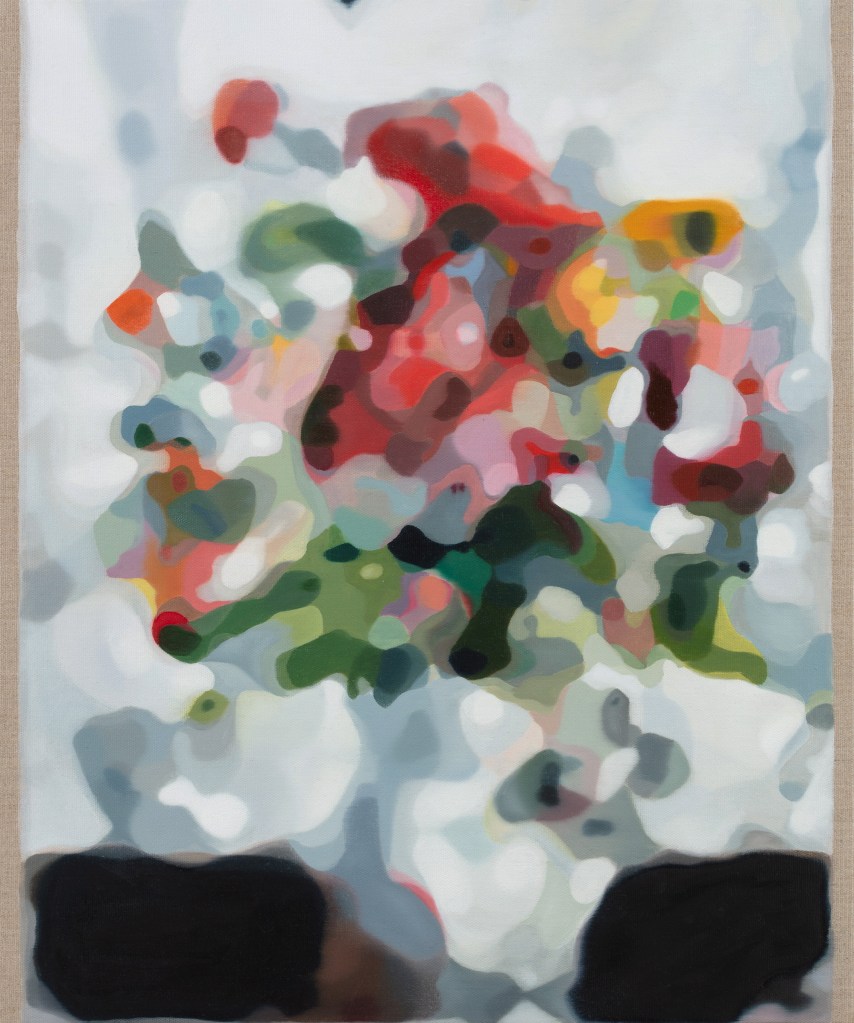
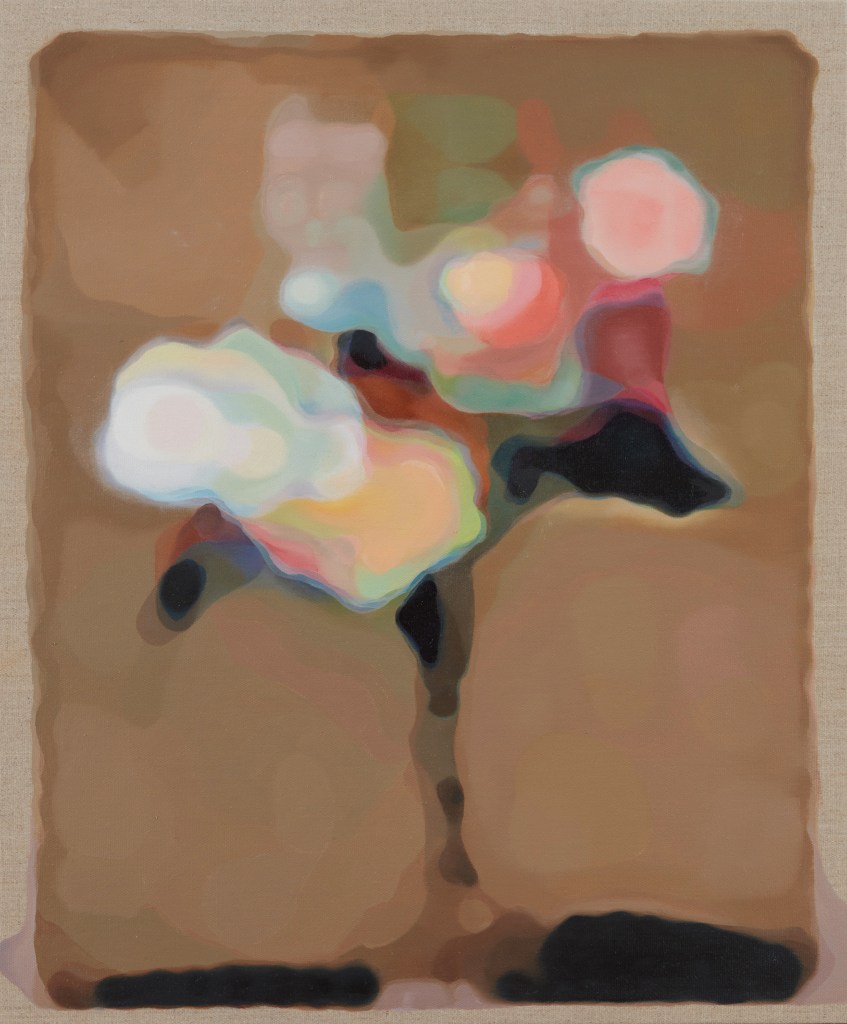
Colour and compositional shapes become intriguingly amorphous, blurred forms that tease the eye with their embedded memory.
Still life IV (Fantin-Latour), 2026, sees coloured shapes, central, balanced above a vase stem, that may also read as a body, leg extended, while Still life IV (Preston), 2026, overwrites the canvas with light and dark, as though a softly pixilated map of positive and negative forms. Within this reclamation are oppositional forces, the random and objective machine generation juxtaposed with the pre-intentional affect of the artist’s painting.
Young’s practice has traversed significant territory over a long career, with this series of abstract paintings following his initial emergence as a conceptual artist during the 1970s. His early work challenged traditional ideas about authorship and originality before committing to the material and expressive qualities of paint.
Subscribe for updates
In the interim he has also explored the history and migration narratives of the Chinese diaspora in Australia, using his own transcultural experience, with paint and hundreds of chalk drawings also the vehicle for these philosophical investigations.
In these most recent abstract paintings, an extension of his ongoing conceptual concerns is visible. They unify the intellectual, emotional and historical dimensions of human experience with the developing impacts of artificial intelligence.
Earlier this year, when a similar group of works were seen at Melbourne’s Arc One gallery, Leah Jing McIntosh (editor of Liminal magazine) observed that, in both method and form, “These paintings propose a kind of map: a way through the accelerating instability, informational excess, and algorithmic mediation that strains to become our world at present … work that proposes painting as a form of attention; that offers a new way to attune our senses to the world.”
Also included in this exhibition are landscapes from Young’s Naïve and Sentimental series, inspired by interpretations of Rilke’s poetry drawn from music by John Adams, and using the same internet-generated method, from traditional landscapes.
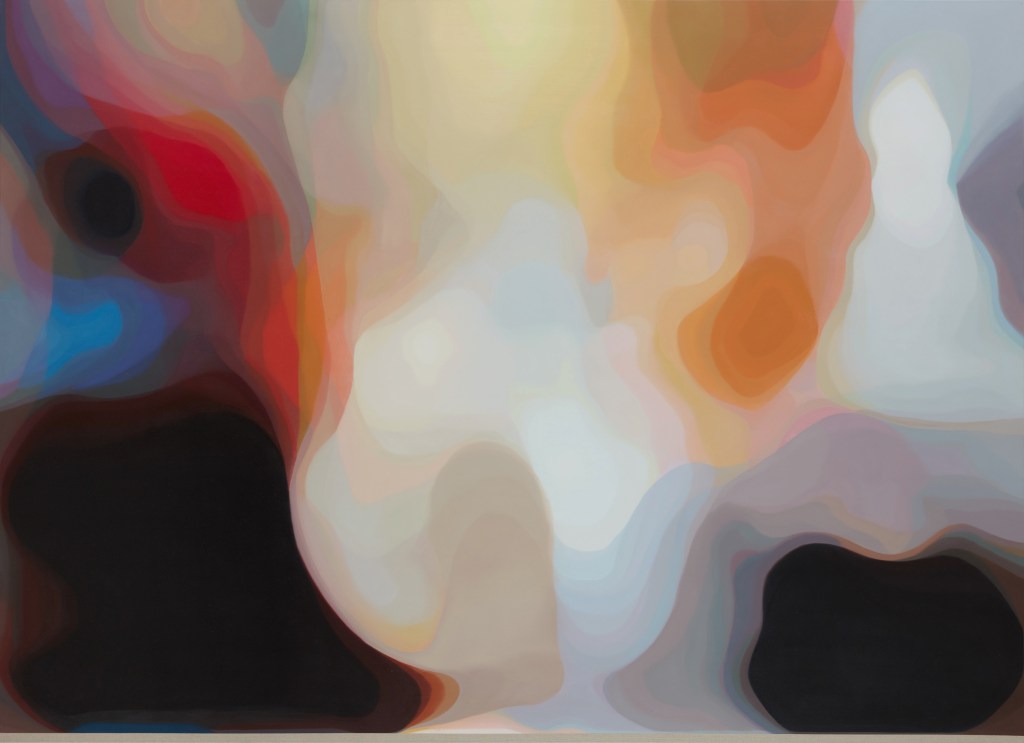
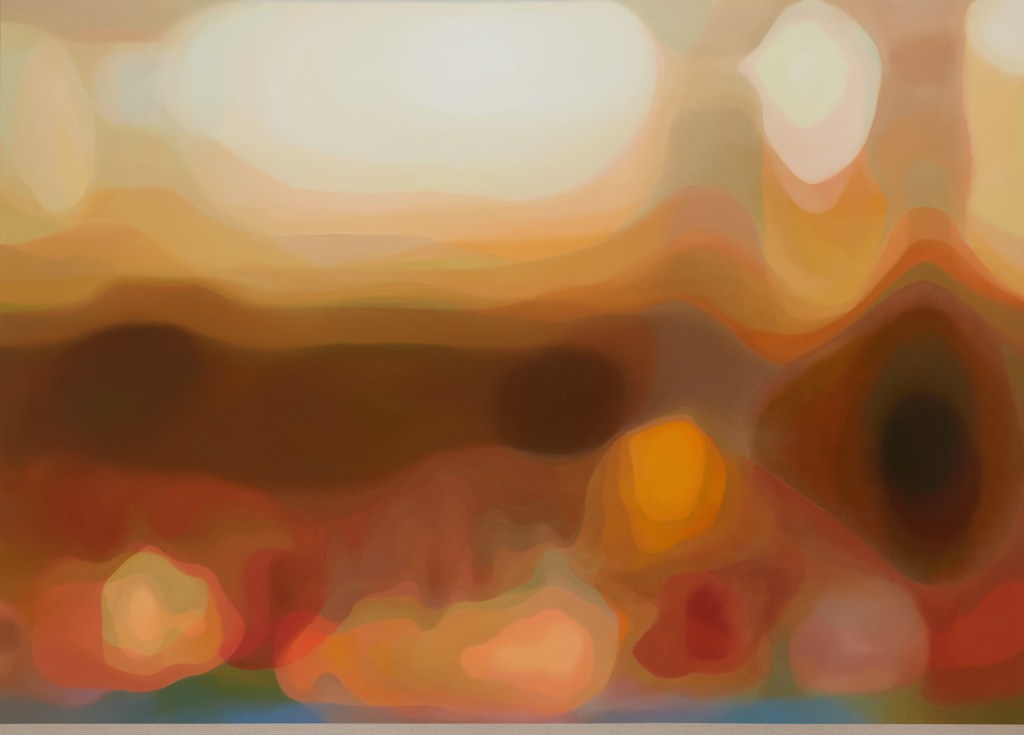
These paintings feel romantic, their colours and shapes lyrical, seductive, their linguistic and conceptual depths evocatively expressed. Horizontal in format, they come forward, an invitation to the viewer to immerse themselves in a static yet emotive experience – with an embedded fluidity.
Young’s artist statement indicates that, within these surfaces, “the present is not a moment between what was and what will be, but an open duration in which everything that has passed is still quietly becoming”.
The qualities of these works are elusive yet resonant – caught in the memory – with their ideas alert to presence, attention, perception and new ways of understanding the rapidly changing human relationship with technology, nature and culture.
John Young’s exhibition Aion, the Long Present continues at Philip Bacon Galleries, Brisbane, until November 28.
Want to see more stories from InDaily Qld in your Google search results?
- Click here to set InDaily Qld as a preferred source.
- Tick the box next to "InDaily Qld". That's it.
Free to share
This article may be shared online or in print under a Creative Commons licence