The Stats Guy: Questions we should be asking about migration
Australia’s political mood is shifting.
The rise of One Nation, the existential struggles of the Liberal Party, and the increasingly frequent warnings about declining “social cohesion” all point to a country asking itself uncomfortable questions about who belongs and under what conditions.
Right-wing advocacy groups such as Advance Australia regularly speak about the need to reduce migration, sometimes with language that hints at “bad migrants”, without ever quite defining the term.
But if there are “bad migrants”, then logically there must also be “good migrants”.
What would such a person look like? And who gets to decide?
Rather than approaching the question purely through economics or morality, it is useful to borrow a framework from Ken Wilber and his “Four Quadrants” model that I introduced in an earlier column.
This model suggests that any human phenomenon can be examined from four simultaneous perspectives: The individual interior, the individual exterior, the collective interior, and the collective exterior.
Applied to migration, it reveals that a “good migrant” isn’t a morally pure person but the result of the interaction between person, behaviour, culture and systems.
Sounds weird and abstract? Don’t worry, it will make sense very soon.
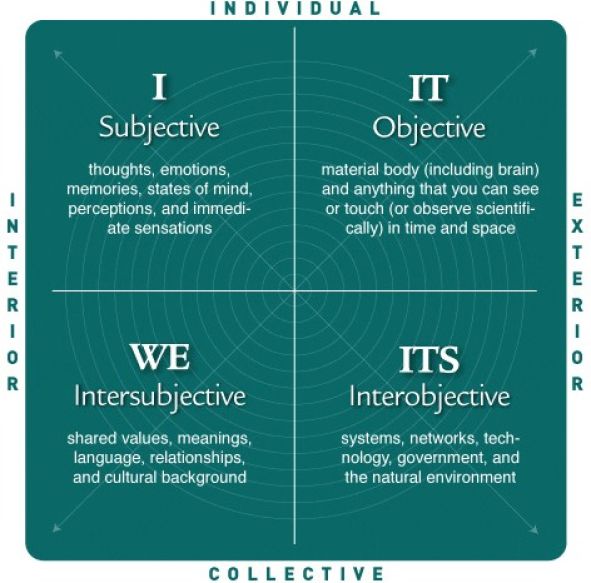
Source: More about Ken Wilber’s Four Quadrants
The Four Quadrants of the ‘Good Migrant’
Upper Left Quadrant: The Individual Interior (Mindset and Values)
The upper-left quadrant is the invisible one. It deals with what is happening inside a person’s mind – motivations, attitudes, openness and psychological orientation toward their new home.
A migrant can arrive with impeccable qualifications and still struggle if they view their host country with suspicion or resentment, while someone with modest credentials can flourish if they bring curiosity, humility and a willingness to learn.
You might like


None of this appears on visa forms, yet it often determines whether migration becomes a story of flourishing or friction.
In this inner dimension, the “good migrant” is not defined by abandoning heritage, but by the ability to hold two identities at once without conflict.
They try to understand why social norms exist, even when they differ from those they grew up with. Agreement is not required – participation is. This flexibility allows integration without erasure and belonging without uniformity.
Long-term orientation is central. Those who see migration as a life project invest more deeply in language, careers and relationships than those treating the destination as temporary.
Postwar Greek and Italian migrants often arrived assuming Australia was their forever home, which made them invested in the nation’s fortunes from day one.
This quadrant also frames migrants as lifelong students of their new society.
Cultural understanding and language proficiency should deepen over time, not at the expense of one’s birth culture but alongside it.
People can hold two cultures in their heart, just as parents can love two children equally. This form of multiculturalism enriches both individual and nation.
What this mindset seeks to avoid are the inner seeds of parallel societies – the quiet decision not to engage, not to learn the language, or to treat core laws and values as optional. Integration, in this sense, begins in the mind long before it appears in statistics.
Upper Right Quadrant: The Individual Exterior (Skills and Behaviour)
The upper-right quadrant is the one most visible to policymakers and the public. It focuses on what a migrant does in observable terms: Their qualifications, work behaviour, economic participation and civic conduct.
This is the domain of visa points tests, employment statistics and tax contributions. It is also the quadrant where political debates are loudest because numbers and outcomes can be counted and compared.
Here, a “good migrant” is often shorthand for someone who is employable, productive and law-abiding.
They fill roles in sectors experiencing shortages, start businesses that create jobs, or bring expertise that increases overall productivity.
Their behaviour aligns with societal expectations around legality and civic participation. Yet even this seemingly straightforward quadrant contains nuance.
A highly skilled engineer driving a taxi for years due to non-recognition of qualifications may appear underperforming on paper despite possessing immense potential.
Behaviour is not only a reflection of personal effort, but also of the opportunities and barriers present in the system.
Still, in public discourse, this quadrant tends to dominate because it provides the clearest metrics and the easiest headlines.
Lower Left Quadrant: The Collective Interior (Culture and Belonging)
The lower-left quadrant shifts the focus from the individual to the shared emotional and cultural landscape.
This is where concepts like trust, belonging, identity and social cohesion live.
A society is not only an economy, it is also a network of informal relationships and shared meanings that determine whether people feel part of a common project or merely co-existing in parallel worlds.
Within this quadrant, a “good migrant” is someone who develops cross-cultural friendships, participates in community life and gradually adopts a sense of “we” that includes both their heritage and their new national identity.
This does not mean abandoning one’s background, but rather adding another layer of belonging.
Stay informed, daily
Sporting clubs, volunteer groups, parent associations and neighbourhood networks are often more powerful integrators than formal government programs because they create everyday interactions across cultural lines (in social psychology we speak about contact theory).
The absence of such ties can lead to social isolation or enclave formation, which in turn fuels perceptions of division even when economic indicators look strong.
In this quadrant, success is measured less in dollars and more in trust (a resource that is harder to build and easier to erode).
Lower Right Quadrant: The Collective Exterior (Systems and Structures)
The final quadrant turns the mirror away from migrants and toward the host society itself. It examines the institutions, policies and physical environments that shape integration outcomes.
It is tempting to discuss migration as if success or failure rests solely on the newcomer’s shoulders, yet this quadrant reminds us that outcomes are co-produced.
A country that fails to recognise overseas qualifications, restricts access to fair employment or allows housing markets to become prohibitively expensive can hinder even the most motivated and capable migrant.
Conversely, well-designed systems (from transparent visa pathways to effective language education and urban planning that encourages social mixing) can dramatically increase the likelihood of positive outcomes.
In this quadrant, the “good migrant” becomes almost a misnomer, because what is really under examination is whether the host country provides a functional runway for newcomers to take off.
Integration is not merely an individual journey – it is an institutional design challenge.
The twist: Critiquing the premise
Having spent an entire column defining “the good migrant”, it is only fair to question whether the label itself is wise.
A clichéd progressive critic might argue that the term is morally loaded from the outset.
Dividing humans into “good” and “bad” might imply that dignity must be earned rather it being an inherent human right.
It can legitimise exclusionary politics and reduce complex human stories to productivity metrics. In this view, the very act of classification is the problem.
A clichéd conservative critic, meanwhile, might object for the opposite reason.
The framework may appear too academic, too soft, too unwilling to draw hard lines. Where are the clear metrics on crime, welfare dependency or cultural compatibility?
Why all the quadrants and nuance when common sense should suffice? From this angle, the problem is not that the label exists, but that it is not enforced firmly enough.
Both critiques expose the tension at the heart of migration debates.
One side objects to judging people at all, the other fears we are not judging decisively enough.
Perhaps the real insight is that a “good migrant” is never just a person, it is a relationship between individual intention, observable behaviour, shared culture and institutional design.
When all four align, migration tends to work. When one or more fail, the conversation becomes political theatre.
In the end, the question may not be whether Australia has “good” or “bad” migrants, but whether it has good or bad systems of integration.
The nation desperately needs to reach some sort of loose consensus on its migration strategy.
As your friendly neighbourhood Stats Guy, I’ve repeatedly argued that our current tax system (the federal budget relies to over 50 per cent on income tax) and the demographics of Australia (we keep running out of workers) suggest high migration (around 240,000 net new migrants each year) will likely remain the norm.
If we want “solve” the migration question, we must at the very least look at the topic from all four quadrants and avoid overly simplistic solutions (cutting migration intake to a certain number) no matter how tempting they might sound.
Simon Kuestenmacher is a co-founder of The Demographics Group. His columns, media commentary and public speaking focus on current socio-demographic trends and how these impact Australia. His podcast, Demographics Decoded, explores the world through the demographic lens. Follow Simon on Twitter (X), Facebook, or LinkedIn.
Want to see more stories from InDaily Qld in your Google search results?
- Click here to set InDaily Qld as a preferred source.
- Tick the box next to "InDaily Qld". That's it.