‘Vanished species’ sighted in Cape York sanctuary after 80-year disappearance
One of Australia’s most threatened marsupials has been spotted at Piccaninny Plains Wildlife Sanctuary for the first time in over 80 years.
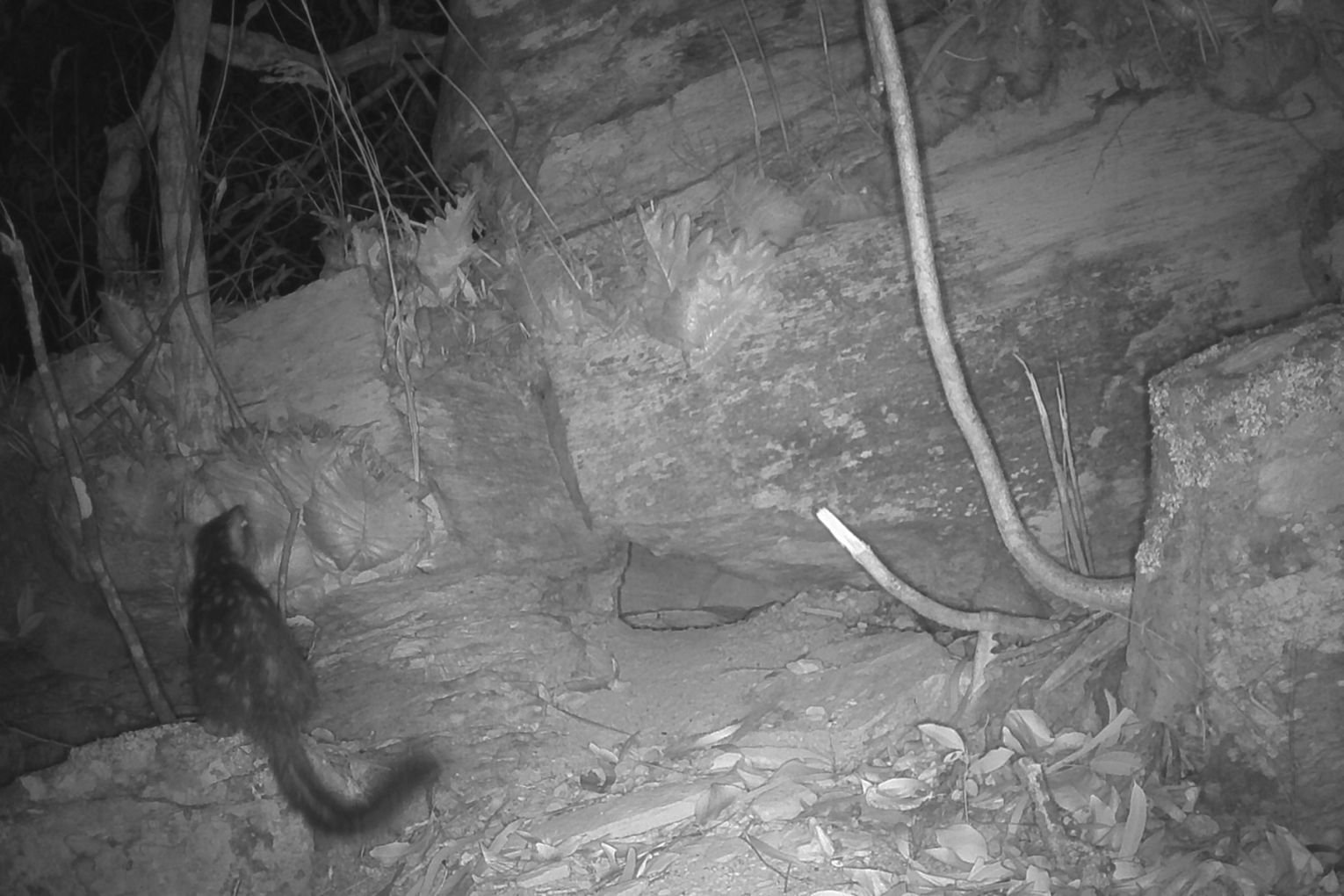
A quoll sighting at Piccaninny Plains on the Cape York Peninsula has given the Australian Wildlife Conservancy (AWC) hope that science-led conservation techniques are helping keep one of Australia’s most threatened marsupials a chance at survival.
After a lengthy search for the species, the group’s conservationists were close to giving up when one individual ran in front of a motion-sensor camera on the eastern side of the 164,850 hectare sanctuary which is jointly owned by AWC and The Tony & Lisette Lewis Foundation.
After targeted camera deployments in 2015, 2021 and 2023 failed to detect any quoll activity, ecologists were surprised when a single camera captured evidence within days.
The camera that captured this footage was established by Sanctuary Manager Nick Stock in October last year, after he followed a hunch about an isolated rocky outcrop spotted from a helicopter.
“Just when we were close to giving up hope, this little quoll reminds us why we keep searching, and why protecting these landscapes at scale is essential,” Stock said.
You might like


Dr Helena Stokes, an AWC ecologist, said for the past two decades, ecologists had begun to suspect that the species had vanished from Piccaninny Plains.
“After years of no sightings, to finally confirm a Northern Quoll on the sanctuary is hugely uplifting for our team. It reinforces the importance of persistence, good science, and managing threats across large landscapes,” Stokes said.
This rediscovery will help AWC begin to understand the survival of the species in the area with early indications suggesting AWC’s long-term fire management plan to be partly responsible.
“We now have a clear starting point for future surveys and research. It’s possible this quoll, and hopefully others, have adapted their behaviour in response to the presence of cane toads. Understanding that resilience could be vital for the species’ long-term survival.”
Stay informed, daily
The species was last detected in the area in 2017, on a trail camera deployed by Chuulangun Rangers on the neighbouring Indigenous managed Kaanju Ngaachi Wenlock and Pascoe River IPA.
“There are records of quolls elsewhere in Cape York (particularly near Weipa) so hopefully they have a chance of making a comeback, despite threats such as cane toads and feral cats,” Stokes said.
Northern Quolls were once widespread across northern and eastern Australia, but have collapsed due to toxic cane toads, feral cats, inappropriate fire regimes and habitat loss.
AWC plans to expand survey efforts across Piccaninny Plains this year, to discover the extent of the surviving population and methods for recovery.
“We are planning to conduct more surveys on sanctuary this year, using camera-traps, to try and determine the extent of the quoll population on sanctuary. Once we have a good idea of where they are, we can establish a monitoring program,” Stokes said.
Stokes said the main actions needed to foster quoll populations are maintaining good quality habitats, reduce habitat clearing and mitigate threats of fire regimes and feral cats.
“Reducing the extent and frequency of fires (particularly high-intensity fires) is likely to help preserve critical denning habitat for quolls, and is also likely to reduce predation pressure by feral cats, which are more likely to hunt in recently burnt areas.”
The discovery comes after long-term conservation investments from AWC and The Tony & Lisette Lewis Foundation across Cape York.
Want to see more stories from InDaily Qld in your Google search results?
- Click here to set InDaily Qld as a preferred source.
- Tick the box next to "InDaily Qld". That's it.