Premier declares state of disaste amid grave Vic bushfire crisis
One person has died and three are missing as out-of-control bushfires escalate across Victoria. In North Queensland, the Premier warned those in the path of a storm to “prepare for the worst”.
Source: X (Premier Jacinta Allan)
Victorian Premier Jacinta Allan has declared a state of disaster amid an escalating bushfire crisis of “extraordinary scale and danger”, with blazes that could burn for weeks.
One person has died, three people are missing and at least 10 homes have been razed as out of-control bushfires consumed about 50,000 hectares of bushland.
Allan made the emergency declaration overnight, saying the purpose was about protecting Victorian lives by invoking extra powers for authorities.
“It sends one clear message: if you have been told to leave — go,” she said. The measures will be in force until February 8.
It applies to 18 local government areas — and the Lake Mountain Alpine Resort — that lie in the path of danger: Alpine Shire, Ararat Rural City, Colac Otway Shire, Corangamite Shire, East Gippsland Shire, Golden Plains Shire, Greater Bendigo City, Horsham Rural City, Lake Mountain Alpine Resort (Unincorporated), Mansfield Shire, Mildura Rural City, Mitchell Shire, Moira Shire, Mount Alexander Shire, Murrindindi Shire, Pyrenees Shire, Strathbogie Shire, Towong Shire, Wellington Shire.
Emergency Management Victoria said the situation remained incredibly dynamic, describing fire conditions as “catastrophic and extreme”, and the gravest in the state since Black Summer in 2019-20.
Early on Saturday, multiple fires were at emergency level — the highest danger rating — as the Country Fire Authority declared a total fire ban for the day.
The agency warned warm and strong winds would likely fan the blazes, many of which ignited due to lightning strikes.
You might like


The three people missing were two adults and a child unaccounted for after fire destroyed their house on Thursday in the hard-hit town of Longwood, authorities said.
In the nearby town of Ruffy, properties, including a school, were lost to fire and a local firefighter was hospitalised with third-degree burns to his hands.
“It looks like an atomic bomb has gone off,” CFA Captain George Noye told ABC.
“We’ve lost the old school, the old Ruffy produce store is gone, three houses on the main street.
“We’ve lost countless homes across the area. Ten of my firefighters that I know of have lost homes.”
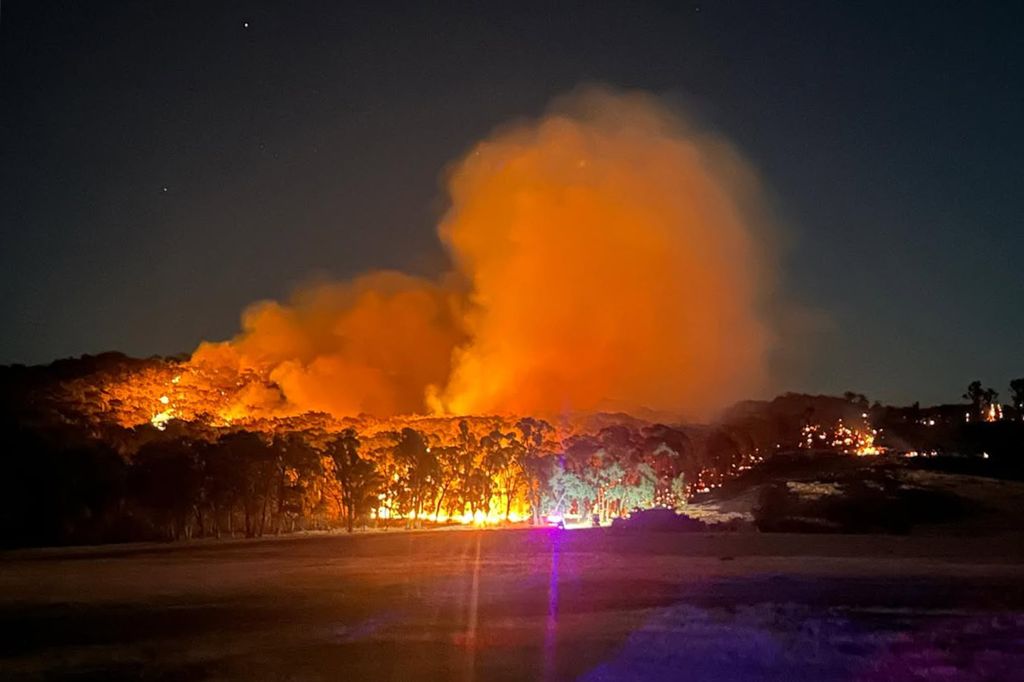
An out-of-control fire at Longwood, Victoria, tears through tinder dry bush. Photo: AAP
About 230 kilometres eastward, a separate fire near the border town of Walwa, tore through a pine tree plantation.
The massive Longwood fire has burned more than 35,000 hectares while the blaze near Walwa has burned more than 17,000.
Both fires, among the fiercest raging across the state, were expected to burn uncontrolled for weeks, despite the efforts of hundreds of firefighters working in the field.
Soaring temperatures exacerbated Friday’s fire risk, with the mercury soaring into the mid-40s in central Victoria, while wind gusts were clocked at up to 90km/h.
Allan said fire activity had become more extreme as existing blazes sparked new out-of-control fires.
“This combination of weather factors simply creates the conditions where fires in the landscape can very quickly become uncontrollable,” Allan said in Melbourne.
Stay informed, daily
The Bureau of Meteorology said a cold front would bring cooler conditions to Victoria on Saturday, with maximum temperatures in the mid-20s.
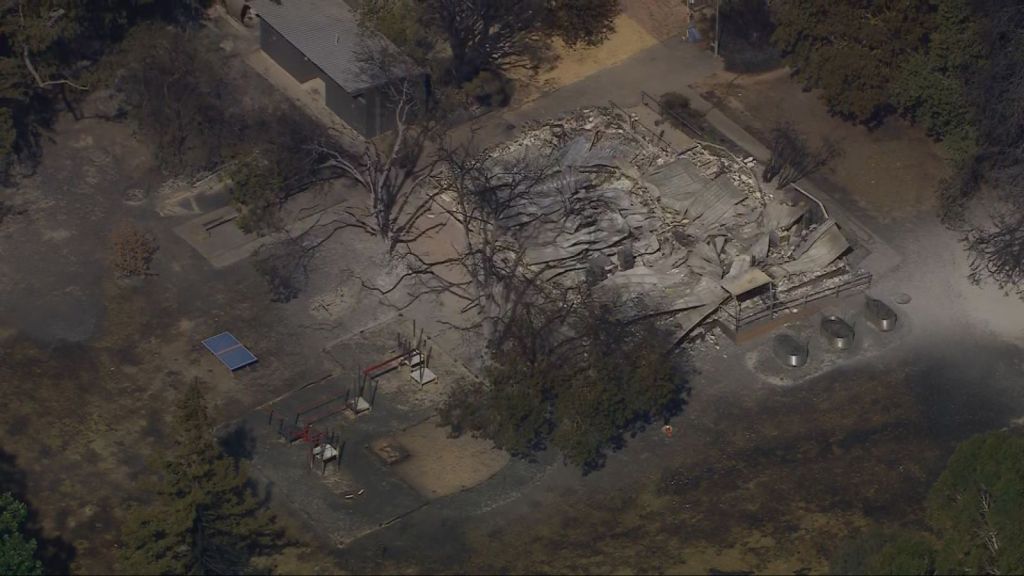
Around 10 homes have been lost so far. Photo: Nine News
Cyclone threatens
In North Queensland, a tropical low is threatening to develop into a cyclone as it approaches a region already reeling from heavy flooding which has isolated communities.
Premier David Crisafulli warned those in the path of the storm to “prepare for the worst”.
Tropical Low 12U, stationed east of Cooktown, is preparing to make a sharp southwest detour towards the state’s north coast.
Bureau of Meteorology’s Angus Hines whether 12U developed into a cyclone or not, the impacts were likely to be the same.
He said widespread flooding was expected after the system crossed the coast, which was projected for early Sunday morning.
Hines said heavy falls were likely to begin from Friday evening, with six-hour rainfall totals of between 90 and 170mm from Cooktown to Mackay, and 24-hour rainfall totals up to 350mm.
“That is a whole lot of wet weather,” he said.
From Sunday, he said the focus would shift southwards, with the tropical low gradually moving inland from central Queensland.
“We’re actually going to see a bit of a departure from this tropical low being the key area of focus,” he said.
“Most of the rain is going to separate from the low and start to affect areas through the central coast, the Capricornia, the central highlands and potentially all the way down to southeast Queensland over Sunday and Monday.”
Hines predicted that multi-day totals up to 500mm from Cairns to Mackay were possible, with between 150 and 300mm forecast from Mackay south to Gladstone.
The picture was less clear in the densely populated southeast of the state, but falls up to 100mm were possible, with most of the rain expected on Monday and Tuesday.
-with AAP
Want to see more stories from InDaily Qld in your Google search results?
- Click here to set InDaily Qld as a preferred source.
- Tick the box next to "InDaily Qld". That's it.