US withdraws personnel from Middle East as Iran strike ‘imminent’
Some US official personnel have reportedly been withdrawn from the Middle East amid President Donald Trump’s warning against attacks on Iranian protesters.
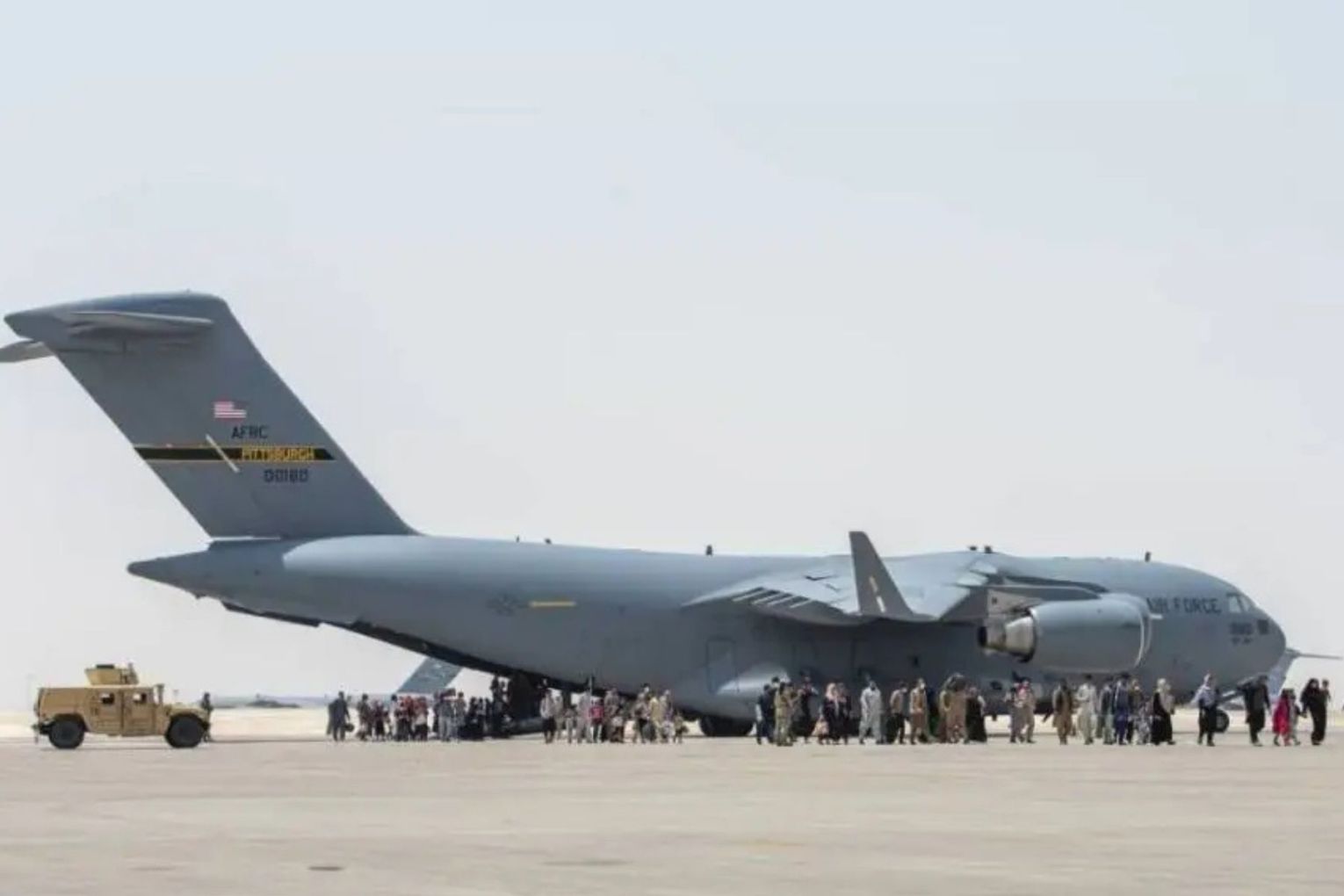
The US is withdrawing some personnel from key bases in the Middle East ahead of expected Trump administration military action against Iran.
A US official, speaking on condition of anonymity, said the withdrawal was a precaution given heightened regional tensions.
Britain was also withdrawing some personnel from an air base in Qatar ahead of possible US strikes.
“The UK always puts precautionary measures in place to ensure the security and safety of our personnel, including, where necessary, withdrawing personnel,” a spokesperson for the Ministry of Defence said.
Two European officials said US military intervention appeared likely, with one saying it could come in the next 24 hours.
“All the signals are that a US attack is imminent,” one Western military official said. “But that is also how this administration behaves to keep everyone on their toes. Unpredictability is part of the strategy.”
An Israeli official also said it appeared Trump had decided to intervene, although the scope and timing had yet to be made clear.
Qatar said drawdowns from its al-Udeid air base, the biggest US base in the region, were “being undertaken in response to the current regional tensions”.
Three diplomats said some personnel had been told to leave, although there were no immediate signs of large numbers of troops being bussed out to a football stadium and shopping mall as happened hours before before last year’s missile strike on Iran.
The US-based Human Rights Activists News Agency has said more than 2400 demonstrators have been killed in Iran, a figure that would make the crackdown the deadliest in the country’s recent history.
You might like
The toll could not be independently confirmed.
Residents of Tehran said on Wednesday local time that there was tense calm in the capital.
Police and security forces remained at many key locations but their presence was less extensive than at the weekend, residents said.
Iranian authorities continue to move against protest organisers.
State media reported on Wednesday that security forces had arrested several alleged protest leaders in the western province of Chaharmahal and Bakhtiari.
According to state radio, the intelligence arm of the Islamic Revolutionary Guard Corps detained what it described as “key figures responsible for insecurity”.
The province was the scene of some of the fiercest clashes at the start of the protest movement in late December.
After security forces opened fire on demonstrators, severe unrest erupted in the city of Lordegan, resulting in numerous deaths.
Stay informed, daily
Chaharmahal and Bakhtiari is an economically underdeveloped region where distrust of the state runs high. Analysts say the harsh security response contributed to the rapid escalation there.
The judiciary also warned the public against co-operating with Iran International, a London-based Persian-language broadcaster that authorities accuse of spreading disinformation on behalf of Saudi Arabia.
Any co-operation or exchange of information with the channel is prohibited, the Prosecutor General’s Office said, according to state media.
Iran has designated the company behind the broadcaster a terrorist organisation.
Anti-government protests began in Tehran on December 28 as demonstrations by shopkeepers over a sharp fall in the value of the Iranian rial and worsening economic conditions, before evolving into a country-wide uprising against the country’s rulers.
The protests appear to be subsiding, according to analysts and residents, amid warnings from Trump that the US may take military action over the killing of peaceful demonstrators.
A reported published by the US-based Critical Threats Project said there had been only seven protests across six provinces on Tuesday local time, a sharp drop from last Thursday, when 156 demonstrations were documented in 27 of Iran’s 31 provinces.
The CTP is run by the US-based Institute for the Study of War and American Enterprise Institute.
The authors cautioned that the true scale of protest activity remained difficult to assess due to widespread internet shutdowns that have restricted the flow of information out of Iran.
They also pointed to the high number of reported casualties during the unrest, noting that “the level of brutality may be discouraging protesters and decreasing the rate of protest activity”.
-with AAP
Want to see more stories from InDaily Qld in your Google search results?
- Click here to set InDaily Qld as a preferred source.
- Tick the box next to "InDaily Qld". That's it.