Critically endangered bird finds new home in western Queensland
One of Australia’s rarest birds has been found thriving in an area it has never been recorded before – an unexpected spot in western Queensland.
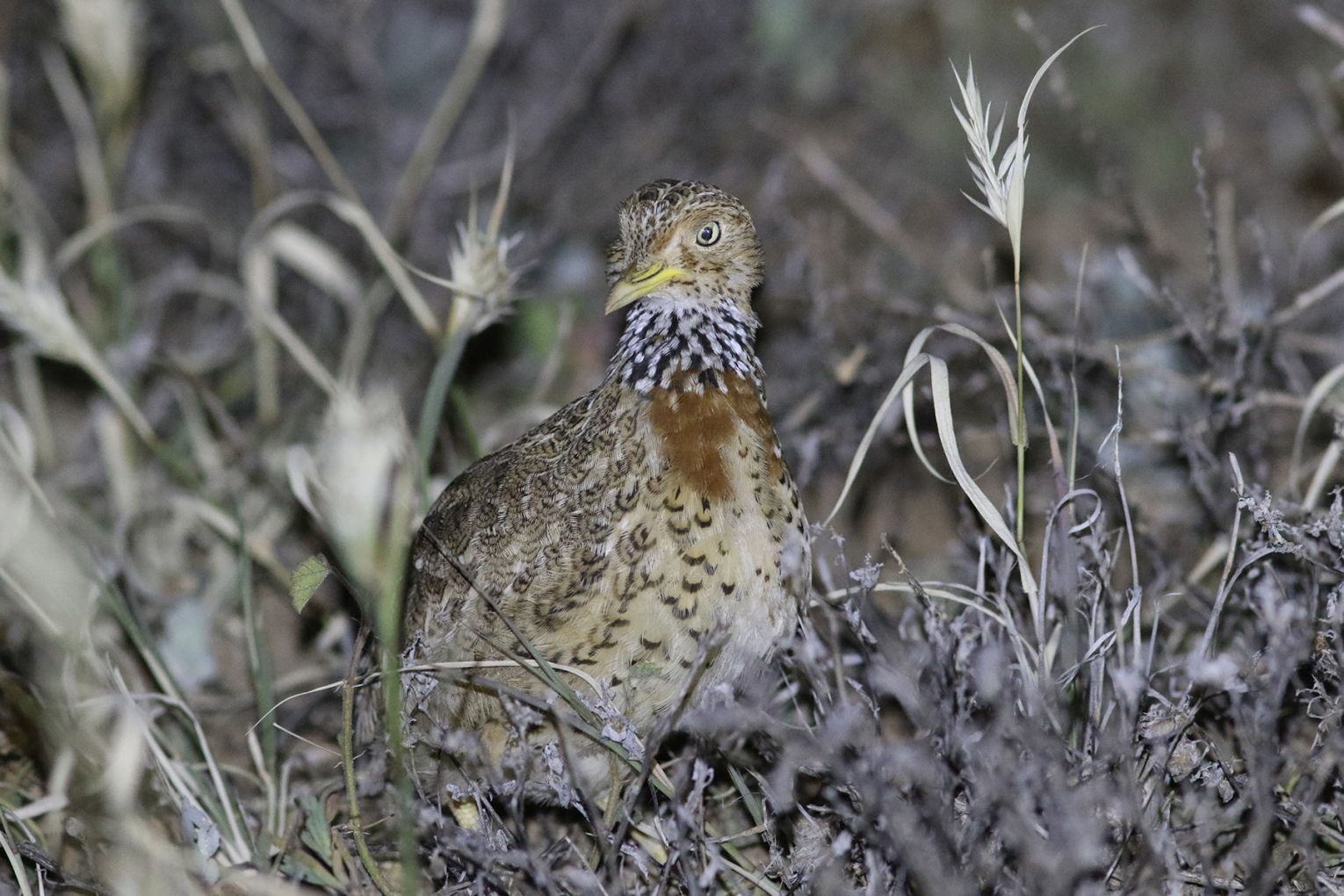
Conservationist say the critically-endangered Plains-wanderer bird was once widespread across the grasslands of eastern Australia but population numbers have greatly declined due to predation by feral cats and foxes, fire regimes and habitat loss.
Now the incredibly rare bird – with an estimated 250 to 1000 individuals remaining, making it rarer than the Giant Panda (1800) and the Black Rhino (5500) – has been discovered in strong numbers on a Queensland station.
The birds were recorded by dozens of bioacoustics recorders deployed by Australian Wildlife Conservancy (AWC) on a North Australian Pastoral Company’s (NAPCo) Station.
Two ecologists also photographed a handful of the birds while retrieving the recorders from the station.
Jamie Hackeson, one of the AWC staff members to see the species in person, said encountering the Plains-wanderer was like finding a needle in a haystack.
You might like


“Being one of the first to see it and knowing what it meant for conservation made it an amazing experience,” Hackeson said.
The grassland-dwelling bird was described as something of an avian oddball, elusive and shy, with no close relatives. It is most often encountered at night, foraging and nesting on the ground, mainly eating seeds and invertebrates such as spiders, beetles and caterpillars.
Ecologists now suspect a small population of Plains-wanderers may be living on the station, with distribution models suggesting the habitat is suitable.
An individual bird was also spotted in the nearby Astrebla Downs National Park area back in 2022.
Stay informed, daily
AWC wildlife ecologist Tessa Manning said this recent discovery was incredibly significant for the species.
“Every confirmed record helps us understand where Plains-wanderers are surviving and how we can better protect them,” she said.
The 60 acoustic recorders picked more than 30,000 short recordings to be submitted to Queensland University of Technology for analysis.
Using a ‘call recogniser’, QUT researchers were able to identify likely Plains-wanderer vocalisations, which was then vetted by an AWC ecologist to confirm.
The ecologist confirmed Plains-wanderer presence at 31 sites, 16 of which had more than 10 of the rare bird calls each.
“These recordings, together with the sightings, provide concrete evidence that the species is present on the station,” Manning said.
NAPCo CEO Allan Cooney said it was significant to confirm the rare species not just passing through, but living and breathing on the station.
“To know such a rare and remarkable species is established on one of our properties is a real privilege and responsibility for us as land managers,” Cooney said.
“Through our partnership with AWC, we’re able to manage the land in a way that supports both pastoral production and meaningful conservation outcomes, and this discovery demonstrates what can be achieved when industry and science work together with shared purpose.”
With the presence of Plains-wanderers now confirmed on the station, a PhD student from Adelaide University will use the data to develop a new distribution model for the species to build a clearer picture of the population.
Want to see more stories from InDaily Qld in your Google search results?
- Click here to set InDaily Qld as a preferred source.
- Tick the box next to "InDaily Qld". That's it.