Flights suspended, travel warnings issued after strikes on Iran
UPDATED: More than 1800 flights have been cancelled and an Iranian drone strike has hit Dubai Airport as travel chaos erupts across the Middle East.
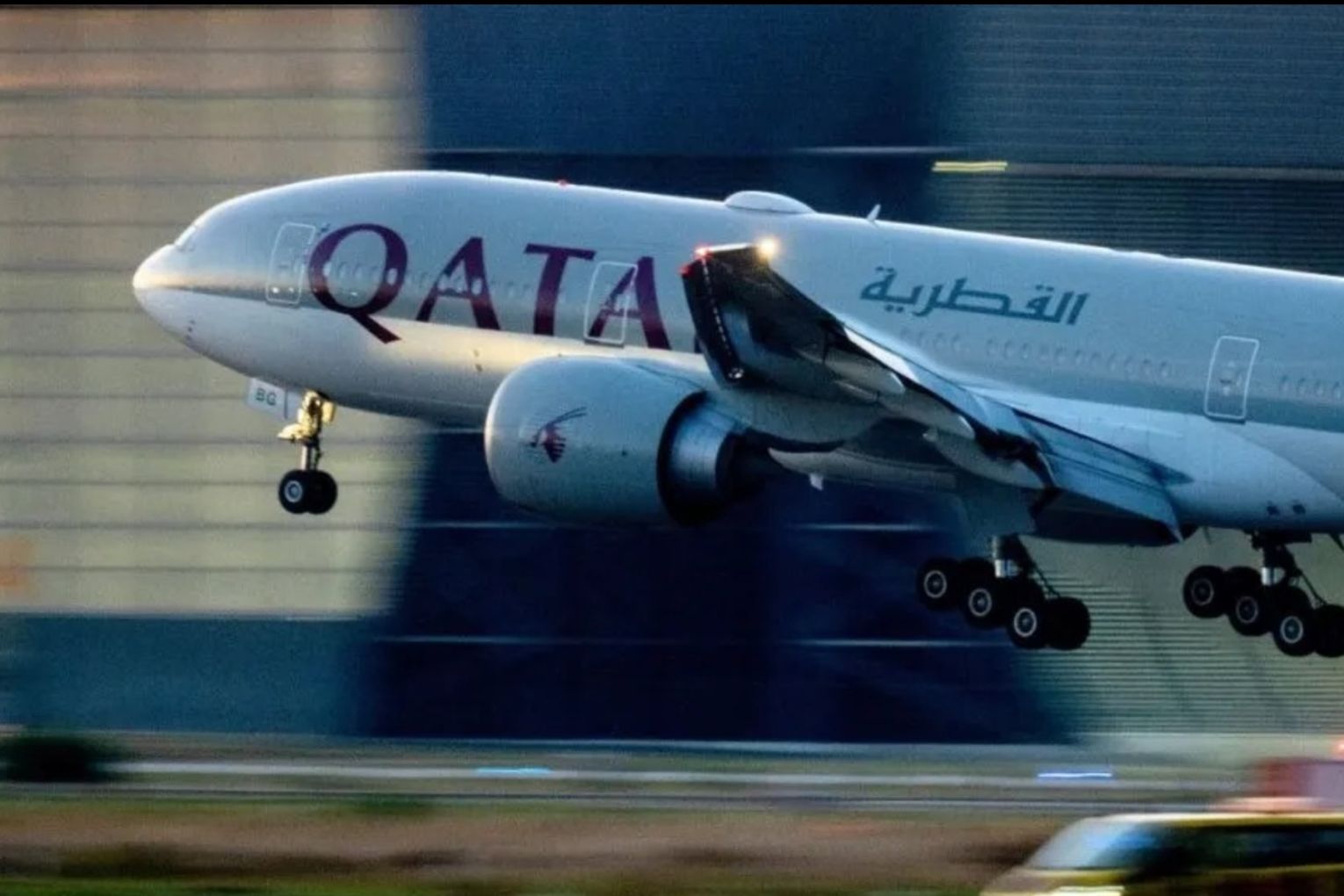
Global air travel remains heavily disrupted in one of the sharpest aviation shocks in recent years as the US, Israel operation against Iran continues.
Key transit airports, including Dubai and Abu Dhabi in the United Arab Emirates and Doha in Qatar, are shut or severely restricted as much of the region’s airspace remained closed.
The ripple effects have been felt far beyond the Middle East, with tens of thousands of passengers stranded as far as Bali, Kathmandu and Frankfurt.
Australia has issued “do not travel” warnings for Israel, Lebanon, Bahrain, Kuwait, Qatar and the United Arab Emirates as tensions escalate, and is urgently trying to verify if any citizens have been caught up in the conflict. A diplomatic crisis centre has been established.
Hundreds of thousands of travellers were either stranded or diverted to other airports after Israel, Qatar, Syria, Iran, Iraq, Kuwait and Bahrain closed their airspace on the weekend.
Airlines and airport management are advising passengers to check their flight details before arriving at the airport.
Emirates has advised affected travellers to contact travel agencies for rebooking or requesting a refund.
In a statement on its website, the airline said it was actively monitoring the situation and engaging with relevant authorities and “the safety and security of our passengers and crew remain our highest priority”.
Qatar Airways has temporarily suspended all flight operations until the Qatar Civil Aviation Authority safely reopens airspace.
You might like

There was also no flight activity over the United Arab Emirates, flight tracking website FlightRadar24 said, after the government there announced a “temporary and partial closure” of its airspace.
That led to the closure of key hub airports in Dubai, Abu Dhabi and Doha, and the cancellation of more than 1800 flights by major Middle Eastern airlines.
The three major airlines that operate at those airports – Emirates, Qatar Airways and Etihad – typically have about 90,000 passengers per day crossing through those hubs and even more travellers headed to destinations in the Middle East, according to aviation analytics firm Cirium.
Emirates and flydubai temporarily halted operations, while Etihad suspended all departures from Abu Dhabi until 1000 GMT (9pm AEDT) on Sunday.
Four injured at Dubai airport, one killed in Abu Dhabi
Two airports in the United Arab Emirates reported incidents as the government there condemned what it called a “blatant attack involving Iranian ballistic missiles”.
Officials at Dubai International Airport – the largest in the United Arab Emirates and one of the busiest in the world – said four people were injured, while Zayed International Airport in Abu Dhabi said that one person was killed and seven others were injured in a drone strike. Strikes were also reported at Kuwait International Airport.
Though Iran did not publicly claim responsibility, the scope of retaliatory strikes that Gulf nations attributed to Iran extended beyond the American bases that it previously said it would target.
Dubai’s landmark Burj Al Arab hotel was also damaged as overnight Iranian retaliatory attacks spread across the Gulf states and the wider Middle East.
Dubai later confirmed that a drone was intercepted, and debris caused a minor fire on the Burj Al Arab’s facade.
Dubai is the biggest tourism and trade hub in the Middle East and its airport is one of the world’s busiest travel hubs.
Stay informed, daily
The Burj Al Arab hotel has long been one of the emirate’s most recognisable symbols. Opened in 1999 on an artificial island off Jumeirah Beach, the sail-shaped tower quickly became an emblem of a city intent on projecting luxury on a global scale.
Airlines that cross the Middle East will have to reroute flights around the conflict with many flights headed south over Saudi Arabia. That will add hours to those flights and consume additional fuel, adding to the costs airlines will have to absorb. So ticket prices could quickly start to increase if the conflict lingers.
The added flights will also put pressure on air traffic controllers in Saudi Arabia who might have to slow traffic to make sure they can handle it safely.
But it is unclear how long the disruption to flight operations could last. For comparison, the Israeli and US attack on Iran in June 2025 lasted 12 days.
Prime Minister says Australia stands with the people of Iran
It comes as Australia throws its support behind the people of Iran amid the coordinated US and Israel attacks against the nation.
Explosions and air strikes have targeted Tehran, pushing the Middle East into another hugely consequential conflict.
In a statement, the prime minister said Australia stood with the people of Iran in their struggle against oppression.
“For decades, the Iranian regime has been a destabilising force, through its ballistic missile and nuclear programs, support for armed proxies, and brutal acts of violence and intimidation,” Anthony Albanese said.
Australia and its international partners called on the Iranian regime to uphold the human rights of its citizens, Albanese said.
“These calls have gone unheeded,” he said.
“Instead, the regime has instigated a brutal crackdown on its own people leaving thousands of Iranian civilians dead.
“A regime that relies on the repression and murder of its own people to retain power is without legitimacy.”
Albanese also pointed to recent Iranian attacks on Australian soil, including those targeting Jewish communities.
He described Iran’s nuclear program as a threat to global peace and security.
“We support the United States acting to prevent Iran from obtaining a nuclear weapon and to prevent Iran continuing to threaten international peace and security,” the prime minister said.
-with AAP
Want to see more stories from InDaily Qld in your Google search results?
- Click here to set InDaily Qld as a preferred source.
- Tick the box next to "InDaily Qld". That's it.