Australia unlikely to join US attacks on Iran: minister
UPDATED: Australia is unlikely to take part in any military action in Iran, the federal government says. Iran has confirmed the killing of its supreme leader.
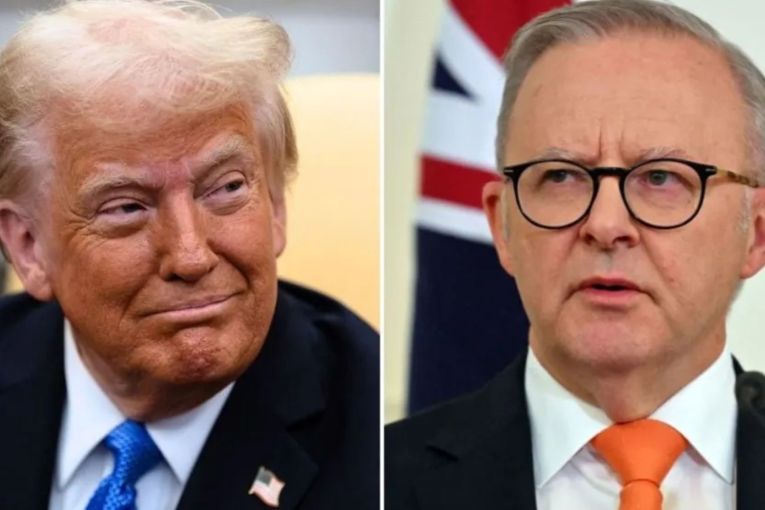
Source: Donald Trump
The Australian federal government has backed the attacks on the Iranian regime, which US President Donald Trump said were aimed at ending the decades-long threat from Tehran and its nuclear weapons program.
Iran has launched counter attacks in a number of countries, threatening a major escalation in the region.
Co-ordinated military strikes began hitting locations across Iran on Saturday (AEDT), including the compound of Iran’s supreme leader Ayatollah Ali Khamenei.
Iran’s Supreme Leader Ayatollah Ali Khamenei is dead, Iranian state media has confirmed.
Iran’s state television and the state-run IRNA news agency reported the 86-year-old’s death, on Sunday without elaborating on the cause.
US President Donald Trump said hours earlier that Khamenei was killed in a joint American-Israeli operation targeting Iran.
Trump said the US worked closely with Israel to target the man who led Iran since 1989.
Israel President Benjamin Netanyahu said Khamenei’s compound had been destroyed, and Revolutionary Guard commanders and senior nuclear officials had been destroyed.
Asked if Australia would consider sending troops to achieve regime change in Iran, Foreign Minister Penny Wong said it was highly unlikely.
You might like
“Ultimately, Iran’s future must be determined by the people of Iran … you would not expect us to participate,” she told reporters on Sunday.
Australia has issued “do not travel” warnings for Israel, Lebanon, Bahrain, Kuwait, Qatar and the United Arab Emirates as tensions escalate, and is urgently trying to verify if any citizens have been caught up in the conflict.
Senator Wong also confirmed the government was not told in advance about the US-Israeli strikes, which have been condemned by UN officials.
Pressed on whether the attacks were justified, the foreign minister said Australia supported any action to stop Iran obtaining a nuclear weapon but added she would leave it to the US and Israel to explain the legal basis for the strikes.
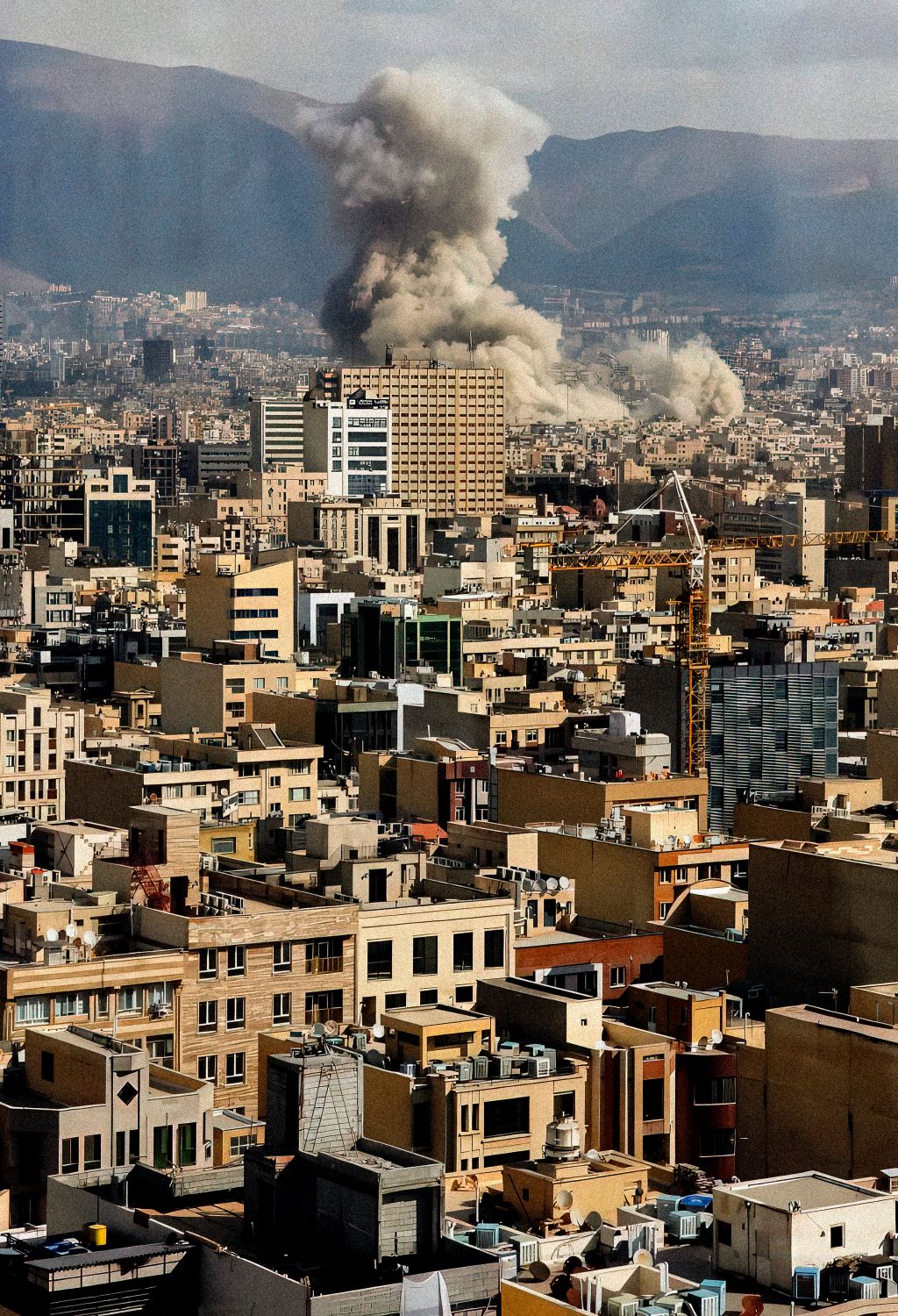
Explosions have been reported across central Tehran. Photo: AAP
When he announced the strikes, Trump said he would never let Iran have nuclear weapons and urged the Iranian people to seize the opportunity to rise up and “take over your government”.
Trump said Iran posed a threat to the US and the world which was why he was taking this moment to launch a “massive and ongoing operation”.
“We’re going to destroy their missiles and raze their missile industry to the ground. It will be totally again obliterated. We’re going to annihilate their navy,” he said in an eight-minute video posted to social media.
“To the members of the Islamic Revolutionary Guard, the armed forces and all of the police, I say tonight that you must lay down your weapons and have complete immunity.
“Or in the alternative, face certain death. So, lay down your arms. You will be treated fairly with total immunity, or you will face certain death.
“Finally, to the great proud people of Iran, I say tonight that the hour of your freedom is at hand. Stay sheltered. Don’t leave your home. It’s very dangerous outside. Bombs will be dropping everywhere.
“When we are finished, take over your government. It will be yours to take. This will be probably your only chance for generations.”
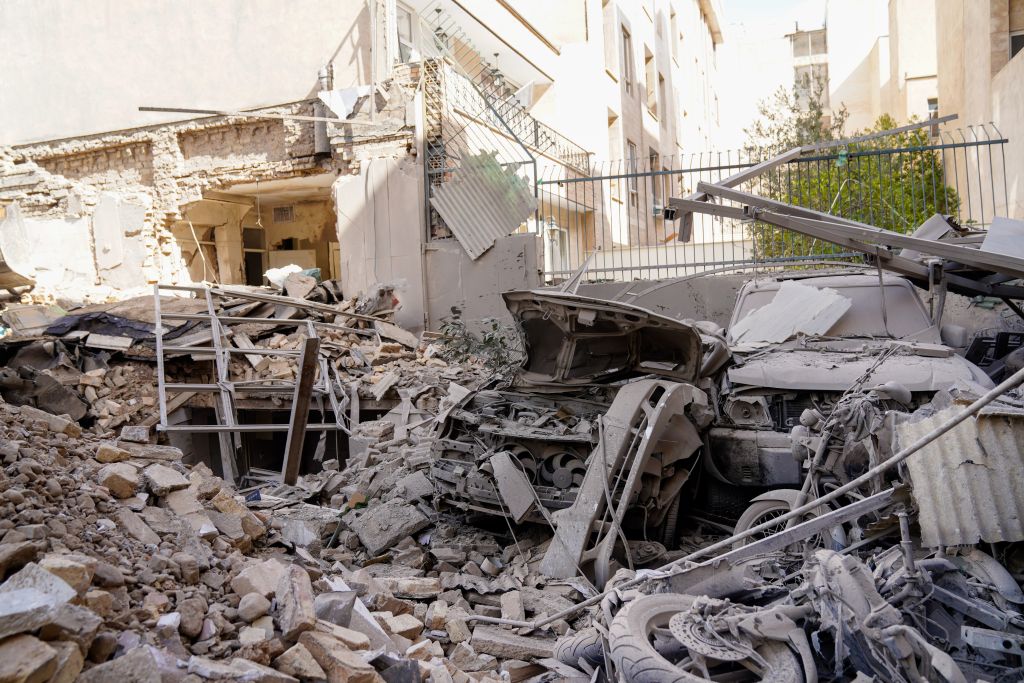
Rubble remains in the aftermath of an Israeli-U.S. strike in Tehran. Photo: AAP
In cities across Iran, explosions caused widespread panic.
Stay informed, daily
Residents rushed to collect children from school and flee areas that might be targeted.
“We are scared, we are terrified. My children are shaking, we have nowhere to go, we will die here,” mother-of-two Minou, 32, said.
Iran issued a warning to shipping that the Strait of Hormuz, the narrow passage through which around a fifth of global oil consumption passes, had been closed.
Traders expected a sharp jump in oil prices. Airlines cancelled flights in the Middle East.
Tehran promised a stronger response to come, with a senior Iranian Revolutionary Guards commander, Ebrahim Jabbari, saying it had so far used only “scrap missiles” and would soon unveil unforeseen weapons.
The UN Security Council Secretary-General Antonio Guterres called for an immediate cessation of hostilities.
Israel’s military said its pilots had hit hundreds of targets throughout Iran, including strategic defence systems already damaged in strikes last year.
It said three sites where leaders had been meeting were struck simultaneously, and several senior figures were killed.
Iran’s Defence Minister Amir Nasirzadeh and Revolutionary Guards commander Mohammed Pakpour were killed in the Israeli attacks, sources said.
The first wave of strikes in what the Pentagon named “OPERATION EPIC FURY” mainly targeted Iranian officials, a source familiar with the matter said.
A girls’ primary school in the southern Iranian town of Minab was hit, killing 85 people, according to the local prosecutor cited by state media. Reuters could not independently confirm the reports.
The strikes by the US create a dilemma for its democratic allies.
While European leaders firmly oppose Iran’s nuclear program and crackdowns by its hard-line theocracy, they are loath to embrace unilateral military action by Trump that could breach international law and unleash a broader conflict.
Trump’s strikes on Iran last June and the arrest of Venezuela’s Nicolas Maduro last month caused a similar quandary.
It was unclear whether US allies were given any advanced warning of the attacks.
Oil markets have been closely watching the stand-off between Washington and Tehran to determine if supplies will be impacted.
Jorge Leon, head of geopolitical analysis at Rystad Energy, predicted prices could shoot up by $US10-$US20 ($14-$28) per barrel when markets open on Monday unless there were signs of de-escalation.
Iran, the third-largest producer in the Organisation of Petroleum Exporting Countries, pumps about four per cent of global oil supplies, and a far larger share is shipped past its coast through the strait leading out of the Gulf.
Iran’s Revolutionary Guards said all US bases and interests in the region were within Iran’s reach and that Iran’s retaliation would continue until “the enemy is decisively defeated”.
-with AAP
Want to see more stories from InDaily Qld in your Google search results?
- Click here to set InDaily Qld as a preferred source.
- Tick the box next to "InDaily Qld". That's it.