Trump hits out amid conflict: Australia ‘not great’
The US president has singled out Australia for not doing more to help in the Middle East, but Albanese’s government insists it has not received a request.
Source: GB News / X
Australia’s government insists it still has not received any direct requests from the United States for military aid in its war with Iran, after a public attack from President Donald Trump.
The US president criticised allied countries for not providing assistance in the conflict, as the closure of the Strait of Hormuz continues to put pressure on global oil prices.
“Australia was not great, I was a little surprised by Australia,” he said at a cabinet meeting at the White House on Friday (local time).
Earlier, in a rambling address as the meeting began, he also hit out at Britain and other NATO allies. He said NATO had done “absolutely nothing” to help the US.
“Now they all want to help. When they’re annihilated, the other side is annihilated, they said ‘we’d love to send ships’,” he said.
“Actually made a statement, a couple of them, that ‘we want to get involved when the war is over’. No, it’s supposed to get involved with the war’s beginning, or even before it begins.
“We had the UK say that ‘we’ll send’ – this is three weeks ago – ‘we’ll send our aircraft carriers’, which aren’t the best aircraft carriers by the way. They’re toys compared to what we have.
But ‘we’ll send our aircraft carrier when the war is over’. I said ‘oh that’s wonderful, thank you very much. Don’t bother. We don’t need it’.”
Australia is providing military assistance in the Persian Gulf region following a request from the United Arab Emirates.
Defence Minister Richard Marles would not be drawn on the president’s criticism, but said no requests from the White House have been received.
“The last thing I’m going to do is give a running commentary on what the president has said, all we can do is respond to this situation, respond to the requests that are made of us,” he told ABC TV on Friday.
“We’re looking at all the requests that we get from countries around the world, including the United States, and obviously we answer them in the context of our national interest.
You might like
“Defending the states of the Gulf is really important given our relationship with them.”
The request for help from the UAE has been the only one received by Australia since the US-Israel war with Iran began, Marles said.
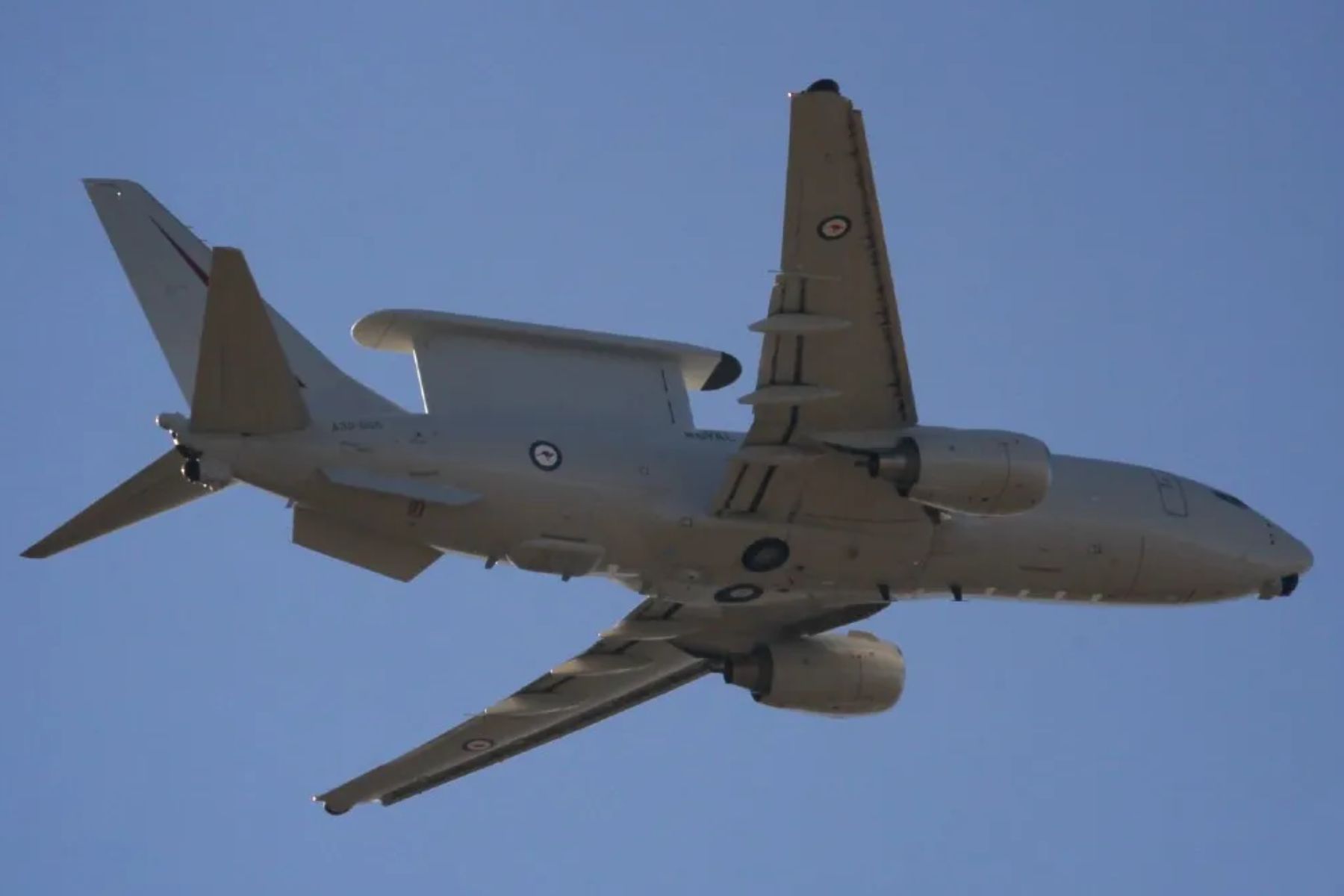
“The E-7 is in in the region, and it is playing a really important part,” he said.
“It is playing an important role in respect of the defence of the gulf states. We will work this through with our with our friends and our partners, to look at what role we can play.
The US president has extended a self-imposed deadline to Iran to re-open the Strait of Hormuz to April 6 before potential strikes on energy infrastructure.
Federal minister Murray Watt said it was imperative for the war to be resolved as soon as possible.
“From Australia’s perspective, we support anything that is going to get the Strait of Hormuz open as quickly as possible and restore some of the interrupted fuel chains that we have,” Watt told ABC Radio on Friday.
“The longer this dispute goes on and the longer the Strait of Hormuz is closed, that’s going to continue to have impacts on the Australian economy and Australian families.”
Coalition frontbencher Sarah Henderson said the government needed to outline why military help had not been provided to the US.
“It’s quite embarrassing that in the international stage we have been called out as not providing appropriate assistance to the US,” she told Sky News.
“The US is our strongest defence ally. This is pretty grim news overnight from the United States.”
Meanwhile, a senior Iranian official has told Reuters a US proposal for ending nearly four weeks of fighting is “one-sided and unfair,”
The official said the proposal, conveyed via Pakistan, “was reviewed in detail on Wednesday night by senior Iranian officials and the representative of Iran’s Supreme Leader”.
It lacked the minimum requirements for success and served only US and Israeli interests, the official said, while stressing that diplomacy had not ended despite the lack of a realistic plan for peace talks.
Trump described the Iranians as “great negotiators” but said he was not sure he was “willing to make a deal with them to end the war”.
On Thursday, Trump warned Iran to “get serious” about a deal to end the fighting.
Stay informed, daily
Trump said in a post on Truth Social that Iran had been “militarily obliterated, with zero chance of a comeback” and was “begging” for a deal.
“They better get serious soon, before it is too late, because once that happens, there is NO TURNING BACK, and it won’t be pretty,” he said, while calling Iran’s negotiators “very different and ‘strange’ “.
Iran has launched strikes against Israel, US bases and Gulf states as well as effectively blocking Middle East fuel exports via the Strait of Hormuz since the US and Israel attacked Iran on February 28.
“They now have the chance, that is Iran, to permanently abandon their nuclear ambitions and to join a new path forward,” Trump said during the cabinet meeting.
“We’ll see if they want to do it. If they don’t, we’re their worst nightmare. In the meantime, we’ll just keep blowing them away.”
Oil jumped to $US105 a barrel on Thursday and stock markets fell on renewed pessimism about ceasefire prospects as global plastics, technology, retail and tourism struggled with the effects.
Trump suggested on Thursday that Iran let 10 oil tankers transit the Strait of Hormuz as a goodwill gesture in negotiations, including some Pakistan-flagged vessels, elaborating on what he had described as a “present” from Iran.
Trump, who is expected to send thousands of troops to the Middle East, driving expectations of a ground invasion, also said taking control of Iran’s oil was an option but gave no further details.
US Special Envoy Steve Witkoff confirmed that the United States had sent a “15-point action list” as a basis for negotiations to end the war.
Pakistan’s foreign minister said “indirect talks” between the US and Iran were going ahead through messages relayed by his country. Other states, including Turkey and Egypt, also support mediation efforts.
Any talks, were they to happen, would likely prove very difficult given the positions laid out by both sides.
According to sources and reports, the 15-point proposal includes demands ranging from dismantling Iran’s nuclear program and curbing its missiles to effectively handing over control of the strait.
Iran has hardened its stance since the war began, demanding guarantees against future military action, compensation for losses, and formal control of the strait, Iranian sources say.
It also told intermediaries that Lebanon must be included in any ceasefire deal, regional sources said.
Trump has not identified who the US is negotiating with in Iran, with many high-ranking officials among the thousands of people killed across the Middle East since the US and Israel attacked Iran on February 28.
Iran has since launched strikes against Israel, US bases and Gulf states.
An Iranian embassy official in Islamabad said talks in the city were still on the table and Pakistan was the preferred venue for Iran.
On Thursday, Iran launched multiple waves of missiles at Israel, triggering air raid sirens in Tel Aviv and other areas and injuring at least five people.
In Iran, strikes hit a residential zone in the southern city of Bandar Abbas and a village on the outskirts of the southern city of Shiraz, where two teenage brothers were killed, Iran’s Tasnim news agency said.
A university building in Isfahan was reported to have been hit.
Israeli officials said Israel had killed the naval commander of Iran’s Revolutionary Guards, and that it had many more targets left as it degraded Iranian capabilities.
Still, Israel took Araqchi and Iranian parliament Speaker Mohammad Baqer Qalibaf off its hit-list after Pakistan urged the US to press Israel not to target people who could be negotiating partners, a Pakistani source with knowledge of the discussion told Reuters.
—with AAP
Want to see more stories from InDaily Qld in your Google search results?
- Click here to set InDaily Qld as a preferred source.
- Tick the box next to "InDaily Qld". That's it.