Brisbane research centre reveals ground-breaking cancer-detecting AI
Scientists have developed an artificial intelligence tool that can detect hidden cancers, researchers saying it gives pathologists “Superman or Superwoman” vision.
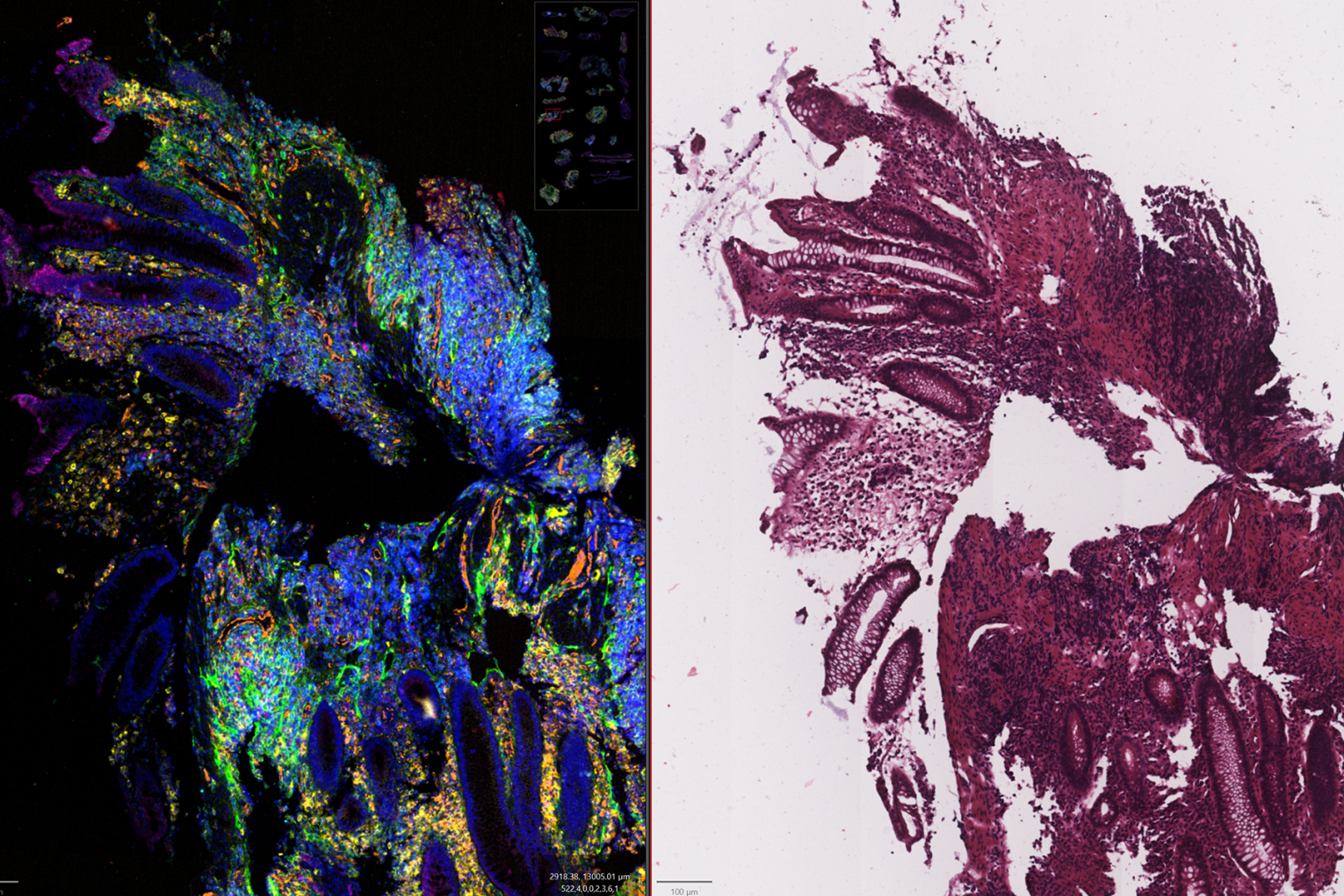
QIMR Berghofer scientists have developed an artificial intelligence (AI) screening tool that can detect hidden cancers through spatial biology analysis.
The machine learning tool, STimage, gives pathologists ‘super vision’ to detect hidden genetic markers of cancer in standard patient tissue samples, an announcement from QIMR Berghofer, formerly the Queensland Institute of Medical Research, said.
New research results published in journal Nature Communications showed STimage accurately predicted breast, skin and kidney cancers and a liver immune disease.
Associate professor Quan Nguyen, who led development of the tool with QIMR Berghofer’s National Centre for Spatial Tissue and AI Research, compared the tool to a superhero power.
“It’s like giving pathologists the super resolution vision of Superman or Superwoman to scan millions of invisible biomarkers in a tiny tissue sample to find the two or three that are showing signs of cancer. This capability is critical for earlier detection, more precise diagnosis, and better-informed treatment decisions,” Nguyen said.
You might like


The research showed the tool was reliable, low cost and rapidly generated results for easy pathologist interpretation.
In their findings, scientists said they hoped the breakthrough could help kickstart a new era of digital pathology and precision medicine, delivering faster and more accurate diagnosis, personalised treatments and improved access to specialist expertise for patients in regional and remote areas.
The team hopes the tool will aid in managing high demand and workload, enhance diagnostic precision and reduce the time involved in screening and analysing samples.
“The STimage tool does not replace the experience and expertise of pathologists,” Nguyen said. “Rather, it assists them in their important and technically challenging work, by providing extra information about cell types and genetic activity that they can’t see with their own eyes.”
Stay informed, daily
Spatial biology is a new field that looks at the complex molecular activity within the tissue microenvironment to uncover causes of cancer and other diseases.
The technology allows for access to crucial molecular information currently limited to specialist research centres, which isn’t currently accessible using the standard pathology approach of examining hematoxylin and eosin (H&E)-stained slides under a microscope.
H&E staining has been used by pathologists worldwide for more than a century, allowing doctors to identify structural abnormalities, but it does not reveal the underlying molecular activity within the tissue.
Nguyen said the STimage tool applied spatial analysis over a H&E slide to generate a biologically-grounded prediction of disease based on the molecular patterns detected in the tissue.
“It makes a diagnostic prediction and mathematically computes the level of certainty about the result. In a first, there is transparency about the result with the tool showing the reasons that led to the prediction, like specific tissue or cellular features, to help pathologists evaluate findings,” Nguyen said.
The tool was also able to accurately predict prognosis and treatment response, correctly classifying patients as high or low risk of survival and likely to have a complete or partial response to existing drugs, though these features are at an early stage in development.
Researchers trained the model using machine learning and statistical algorithms to spatially learn from de-identified data sets of breast, skin and kidney cancers and liver disease.
Only a few comparable tools exist in the field, but STimage outperformed those models while adding critical features about reliability and interpretability of the model prediction.
Scientists are continuing development of the tool by broadening the cancer types it can detect, increasing it accuracy and integrating more data sets to identify rarer cancer cells at early stage and important immune cell types that determine cancer progression and response to drugs.
The next step is trialling the model in pathology labs, with the research team hoping the tool could be part of clinical practice within two years.
Want to see more stories from InDaily Qld in your Google search results?
- Click here to set InDaily Qld as a preferred source.
- Tick the box next to "InDaily Qld". That's it.