SA shipyard to help ageing subs be ‘limped’ through 10 more years
Concerns are being raised about whether Australia’s ageing Collins-class submarines can be kept at sea as planned upgrades at SA’s shipyard worth billions of dollars are scaled back.
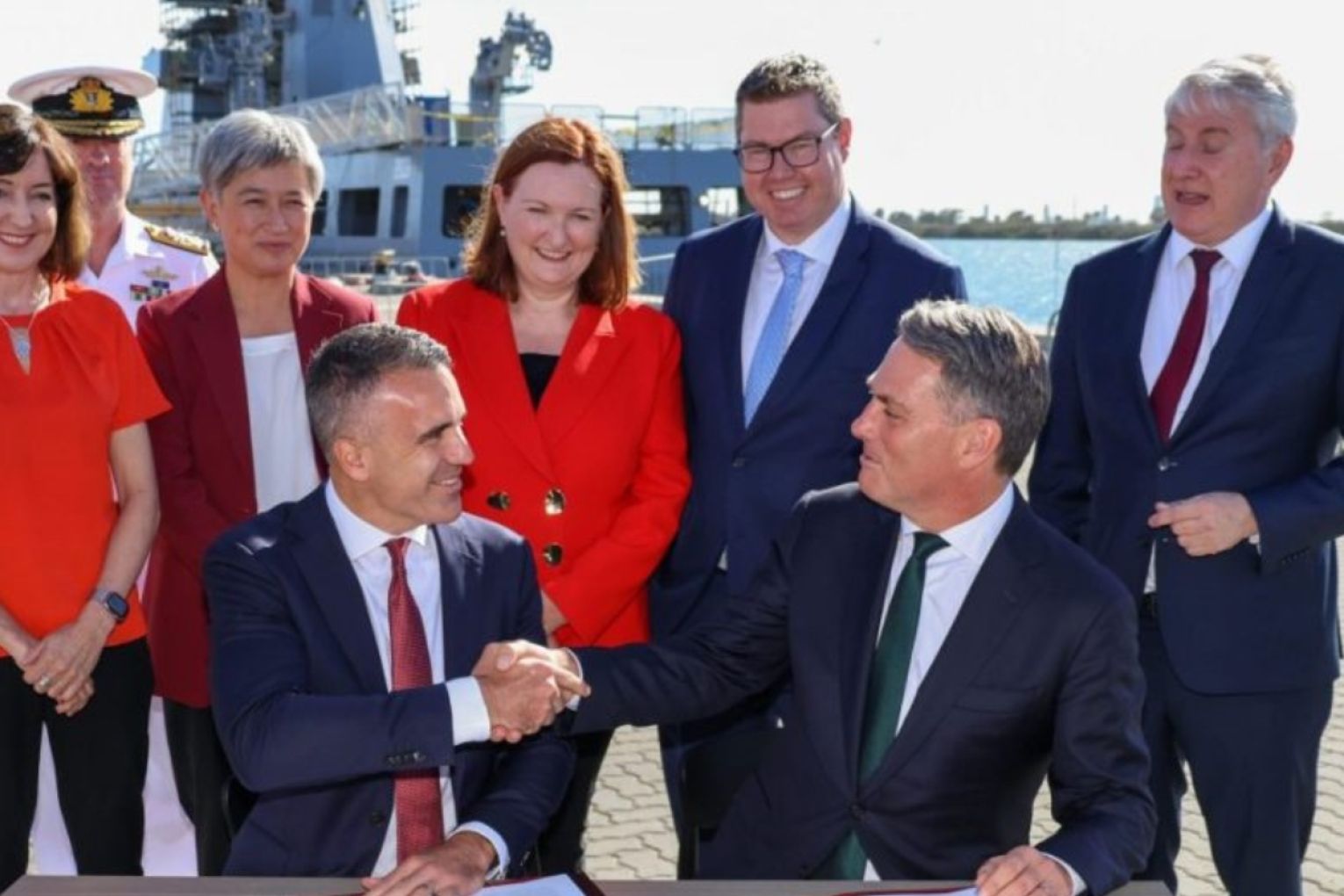
Upgrades to Australia’s ageing Collins-class submarines at Osborne shipyard will be reduced in scope as the federal government tries to get another decade out of the boats before the arrival of a nuclear-powered fleet.
The Albanese government says it will be changing its sustainment approach to the submarines, meaning not all six boats will have key systems such as engines and motors replaced.
Addressing the Lowy Institute on Tuesday, Defence Minister Richard Marles said the $11 billion program would be “conditions-based”.
“This will see a pivot in our approach that reduces risk, upgrades capability and maximises availability for the navy,” he said.
“We will prioritise sustainment and accelerate upgrades for the fleet’s youngest submarines.
“The program will reduce engineering risk by sustaining existing systems where appropriate while continuing to upgrade critical capabilities, including weapons and combat systems.”
You might like

The government claims the change will not impact the plan to give each submarine an extra 10 years of life.
New work on the latest overhaul of Australia’s submarine fleet starts in Adelaide at the end of this month, as the nation prepares to build the new AUKUS nuclear-powered submarine fleet in South Australia.
HMAS Farncomb, one of the oldest boats in the Collins class fleet with the highest number of sea days, will be the first of six submarines to receive a major upgrade by Adelaide-based ASC under the life of type extension program. Work on HMAS Farncomb, first commissioned in January 1998, was expected to take longer than two years.
ASC is based at Osborne and employs more than 2000 South Australian workers.
Former naval officer Jennifer Parker said it was an “unlikely aspiration” that the submarines would last into the late 2030s or early 2040s.
“Until we’re replacing them with the Virginia-class, the submarines were always going to be limped through … the fact is they should have been replaced or started to be replaced by now,” she said.
Stay informed, daily
“When it comes to the Collins-class, we should be spending as little as possible to keep them safe and at sea to link them through until we get the Virginia-class.
“Spending too much money on upgrading them with new systems would be a waste of money.”
Australia has been promised three Virginia-class submarines in the early 2030s under the AUKUS partnership with the US and UK.
The navy has operated the fleet which entered service from the mid-1990s, but the boats have recently faced corrosion issues and maintenance delays.
Opposition defence spokesman James Paterson said Marles had “used the cover of a remarkably partisan and defensive speech” to admit a major de-scoping of the Collins-class life of type extension.
“As is often the case, he’s failed to provide the details transparently to the public,” he said.
“Which aspects of upgrades previously planned are now being abandoned? And how much is the Albanese government cutting from the program?”
The Collins-class boats were listed a “product of concern” in late 2024, as only one of the six submarines was fully operational at the time, triggering greater ministerial oversight.
Premier Peter Malinauskas yesterday described work on the Collins class program at Osborne as being “great news for South Australian workers, industry and the long-term future of our defence sector”.
“This work is in addition to the work already underway at Osborne to construct Hunter-class frigates, and is a necessary precursor to South Australians building nuclear-powered AUKUS submarines,” he said.
“This development only underscores the importance of the work we are already undertaking to train and grow our shipbuilding workforce.”
-with AAP
Want to see more stories from InDaily Qld in your Google search results?
- Click here to set InDaily Qld as a preferred source.
- Tick the box next to "InDaily Qld". That's it.