Lowe blow: Treasurer’s spending slammed by ex-central bank boss
Treasurer Jim Chalmers has been urged to return the federal budget to surplus and revive productivity growth as the Reserve Bank battles high inflation.
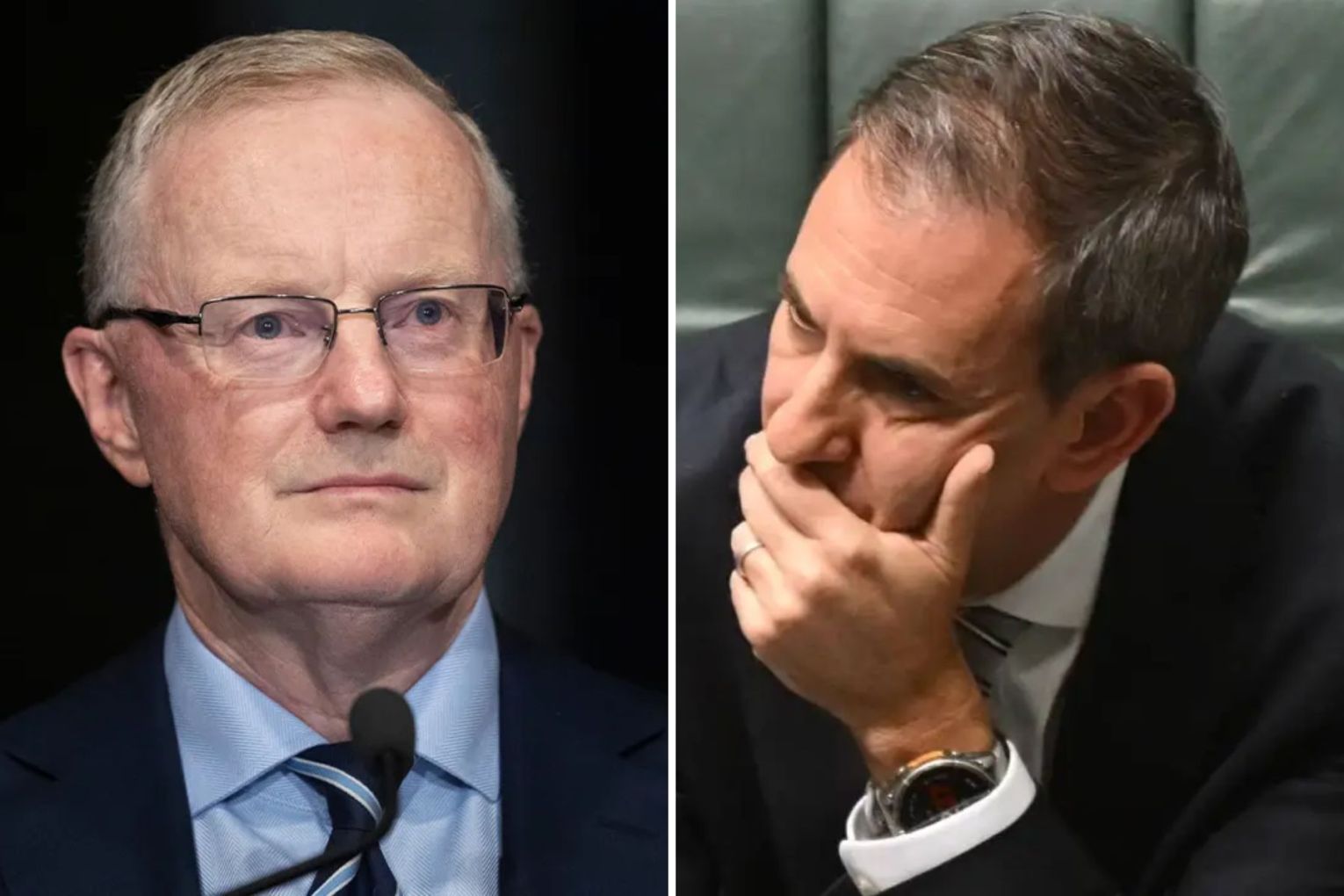
The treasurer has been rebuked by a former Reserve Bank governor for stoking inflation following the central bank’s latest interest rate hike.
Philip Lowe, who left the central bank in 2023 after Treasurer Jim Chalmers chose not to renew his tenure as governor, said excessive government spending had been adding to demand, which was putting upward pressure on inflation.
His comments, made on an Institute of Public Affairs podcast, came after the RBA lifted the cash rate to a 15-year high of 4.6 per cent, which it blamed on the impact of conflict in the Middle East and domestic supply constraints.
Lowe, a board member of investment bank Barrenjoey, said the government should be banking high tax receipts given the current phase of the economic cycle.
“Now we find ourselves running sizeable budget deficits at a time where we’re at full employment and commodity prices are very high,” he told the conservative think tank’s podcast.
You might like
“We should be running sizeable surpluses.”
The federal budget recorded a $22.3 billion deficit in 2025/26, Chalmers revealed on Monday.
The final budget outcome also revealed spending as a proportion of GDP climbed to 26.9 per cent – the highest level in 40 years outside of COVID – a level Australian Chamber of Commerce and Industry chief executive Andrew McKellar said was unsustainable.
“We’ve got to have some higher level of spending restraint as the first step if we’re going to get the budget into better shape,” he told ABC Radio.
Stay informed, daily
Because productivity growth has stagnated in recent years, the economy can’t grow more than about two per cent per year without pushing up inflation, the RBA estimates.
As well as cutting spending, McKellar said the government should be looking to boost the productive capacity of the economy by encouraging business investment, developing skills, cutting red tape and investing in technology.
Current RBA governor Michele Bullock agreed Australia’s productivity malaise was making her job harder.
“The bottom line is that productivity is doing nothing,” she told reporters following the board meeting on Tuesday.
“Over time, if you don’t get productivity growth, you don’t get growth in real wages, and that’s another reason why people are just feeling pretty poor and pretty hard done by.”
Bullock said inflation data, set to be released on Wednesday, would confirm that inflation was unacceptably high in August, if the annual trimmed mean held steady at 3.6 per cent, as expected.
Interest rates tend to work with a lag of 12 to 18 months to take full effect, but there were signs that financial conditions were becoming more restrictive.
Mortgage payments as a share of disposable income were up, while the housing market downturn was deepening.
“And so, what we are predicting, what is the hope here, is that this will be restrictive enough – those four interest rate increases – to bring things down,” Bullock said.
“Now, will it be enough? I don’t know.”
Want to see more stories from InDaily Qld in your Google search results?
- Click here to set InDaily Qld as a preferred source.
- Tick the box next to "InDaily Qld". That's it.