Black Friday sales expected to hit new high despite inflation fears
Australians are forecast to spend an eye-watering sum over the Black Friday-Cyber Monday sales in a pivotal test for retailers amid cost-of-living pressures.

Inflation is spiking, interest rates are at an 18-year high and the economy is faltering, but that won’t stop Australians from shelling out $1.25 million a minute over the next four days as the Black Friday-Cyber Monday sales kick off.
Competition for the money is fierce, especially among the biggest retailers, so many smaller sellers have tried to get in front by starting sales earlier and scaling their discounts.
Mitchell Elworthy set up his lighting business 12 years ago as a side hustle on eBay selling discontinued products.
Today, The Lighting Outlet founder is a 10-year veteran of the four-day Black Friday-Cyber Monday events through his online site.
Previously his strategy focused on blanket discounts, such as spend-and-save promotions and a flat percentage off retail prices.
“But this year, just the way the economy is and business expenses, we’ve dialled it back a bit,” Elworthy said.
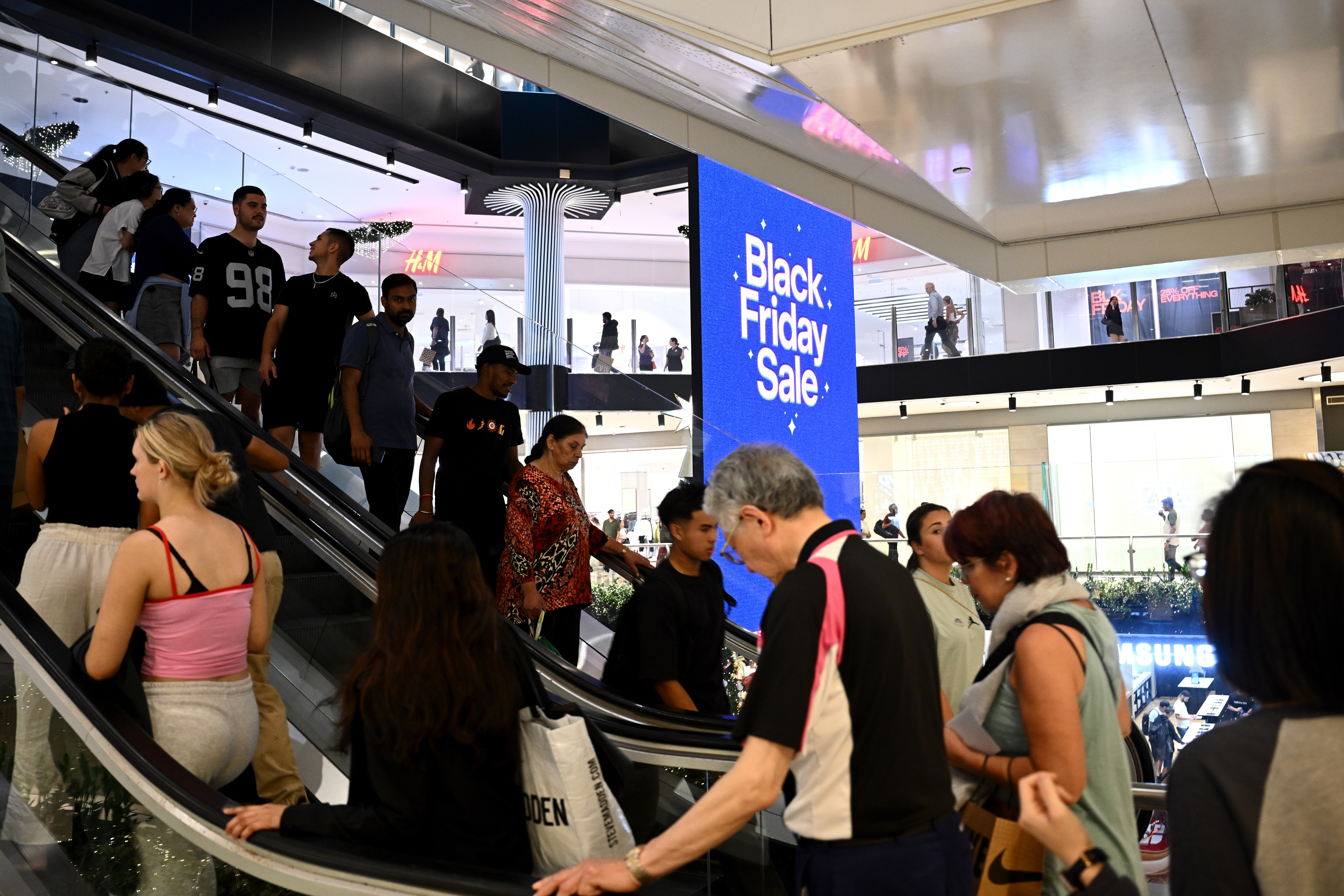
More companies will use AI this year to maximise sales and profits. Photo: AAP
You might like

The store shifted to “hot drops” of 20 heavily discounted products in each of the two weeks before the main event, mainly for high-margin goods, as well as “hero drops” of 25-50 per cent discounts.
“You’ve got to offer something a little bit different or mix it up so that it grabs their attention,” he said.
Shoppers are expected to spend 5.5 per cent more than in 2025, sending the Black Friday-Cyber Monday total to $7.2 billion, according to a Roy Morgan SMS survey of more than 7500 people for the Australian Retail Council.
The average consumer will spend $920 – an extra 14.4 per cent – and almost one in three is ready to shell out $1000 or more.
The majority (67 per cent) won’t complete their carts for discounts of less than 30 per cent, according to Westpac data.
“They are going in prepared, setting rules, comparing prices and waiting for the right deal,” consumer chief executive Carolyn McCann said.
But not all discounts are equal.
A 30 per cent discount at one retailer could be the same price as 20 per cent off at another, if the pre-sale price was much higher.
Stay informed, daily
This is when artificial intelligence comes in handy to track down the best retailers selling this year’s most popular items like clothing, shoes, accessories and technology.
A quarter of shoppers will use conversational chatbots to research their wish lists, and for 72 per cent it will be their first time, retail industry data shows.
But 33 per cent of Australians would use agentic AI tools – such as Meta Muse or OpenAI Dots – to take autonomous control of the hunt, consumer digital safety group TrendLife said.
Of those, 15 per cent would give those agents the power to complete actual purchases, its yet-to-be-released global survey of thousands of consumers showed.
“That’s a pretty high number,” TrendLife consumer education vice president Lynette Owens said.
“It’s the younger generation that’s leading the way.”
Smaller businesses have also stepped up their use of AI this year to improve their performance, using software platforms or other tools to crunch the numbers for insights on sales strategies.
“We’ve been incorporating a lot of AI, so we’re actually getting a lot more market share,” Elworthy said.
Shoppers are urged to spend their money with small businesses doing it tough. Photo: AAP
And with 55 per cent relying on credit or deferred payments to fund stock and labour for the sales, every dollar counts, small business payment platform Xero found.
“We really want to encourage Aussies to shop small for Black Friday and this festive season, given some of the challenges that small businesses are facing,” Xero’s Australian operations head Charlie Sheppeard said.
“A lot of consumers believe that by shopping small you might be spending more, but in many, many cases you’re not and the experience you get as a consumer or shopper is pretty special.”
As for Elworthy, his Xero analytics and AI tools tell him November 2026 will be a good one. Gross profits are forecast to be 20-30 per cent higher than in 2025.
Want to see more stories from InDaily Qld in your Google search results?
- Click here to set InDaily Qld as a preferred source.
- Tick the box next to "InDaily Qld". That's it.