Coalition shambles can trace its genesis to precisely one spot
To understand what’s happening in the Coalition, you have to understand Queensland – and “it’s strange spot in Australian power structure”, Amy Remeikis argues.
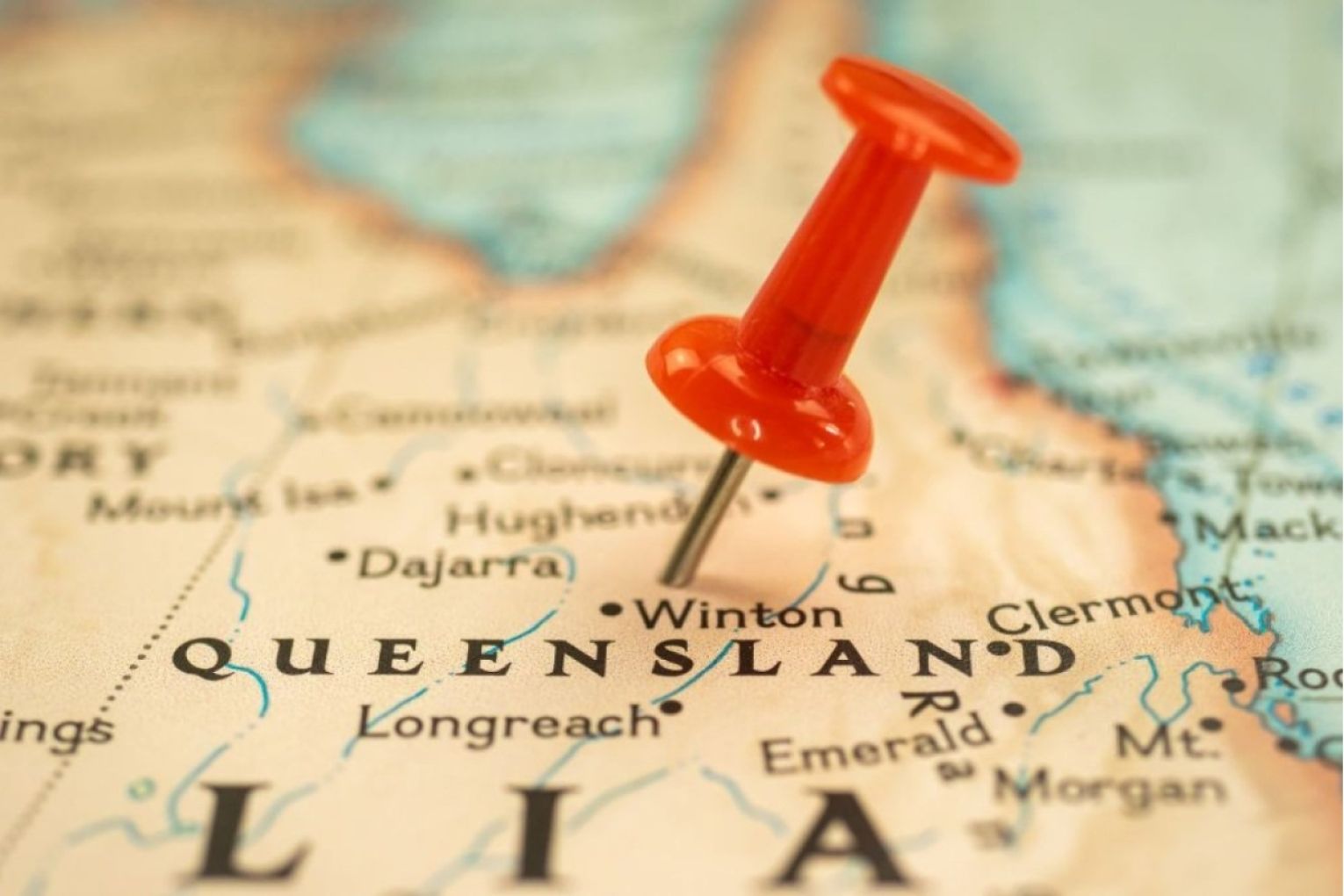
To understand what’s happening in the Coalition, you have to understand Queensland.
And, despite it pulling Australian politics around by the nose since a group of striking shearers came up with a manifesto in 1801, understanding Queensland is as rare as seeing the bottom of the Brisbane River.
It occupies a strange spot in Australian power structures. Like Western Australia, Queensland’s powerbrokers do not usually have the institutional networks that really decide power in this country.
It’s easier for an Angus Taylor or a Tim Wilson to get backing and advancement within a party than it is for an Andrew Hastie or Andrew Wallace, no matter how much these people think “merit” or “talent” is what sets them apart.
Institutionally, South Australians have stronger networks than the renegade states (in the federal gallery and in the parliament – the common thread being a strong desire to get out of South Australia. I was born in Mount Gambier and therefore am allowed to say this).
But Queensland and WA? That’s God’s country. Why would you need any other kingdom?
WA is hampered by distance and its centralisation, from truly throwing its power around. But as a resource state with a predisposition to tantrums and a chip on its shoulder the size of Indonesia, it still gets to make its presence known.
You might like

But the great nation of Queensland has the resources, the proximity and the decentralisation (it is three states in one, really, the only state with 50 per cent of the population living outside its greater capital city area) to truly live in its own world.
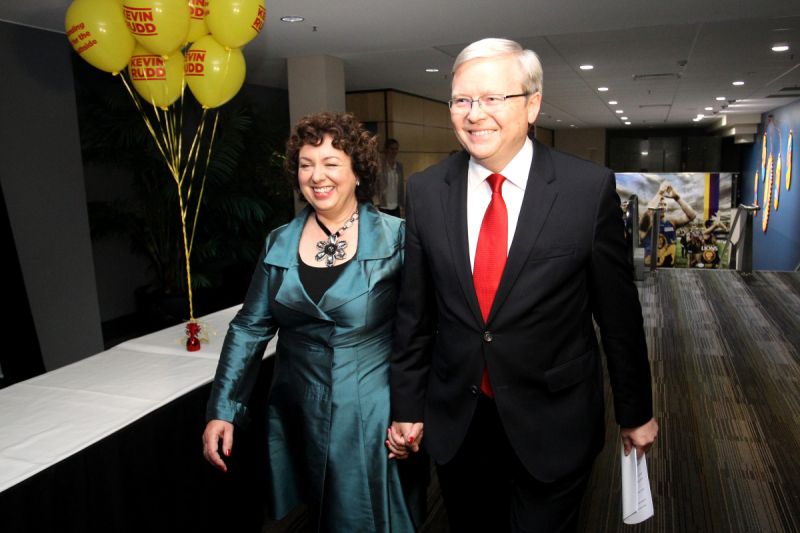
Even Kevin Rudd, with wife Therese Rein, had to camouflage his Queensland-ness to get to the top. Photo: Getty
This hasn’t been too much of a problem for Labor or the Greens – their power centres still sit further south, and even
But the Coalition is one dysfunctional formal marriage of a party in the Liberal-National Party in Queensland. The kingdom of Queensland has produced little emperors with no clothes, sure of their power within their branch and electorate and delusional enough to believe having the CWA at your beck and call in Texas (Queensland) means you’ve always been THAT girl in Canberra. (For those not terminally online, “always been that girl” is a meme to denote confidence and control, even if it’s deluded).
What Queenslanders in Canberra care about is not what the rest of their colleagues care about outside of Canberra. But because of Queensland’s decentralisation, a lot of these little emperors get sent to Canberra from electorates traditionally aligned with conservatives’ economic interests – rocks and crops.
Which means you have a disproportionate number of little kings throwing their weight around in ways that would make the kingdoms of Westeros or Middle Earth seem functional.
And in Queensland, the LNP has always been more worried about One Nation than about Labor. And because One Nation rents all the space remaining in their head after identity politics and culture wars, the rest of the renegade Nationals followed suit – the beacons are lit! Gondor calls for aid! (in saving their seats) Rohan will answer! (To also save their seats.)
It doesn’t matter if the Coalition is destroyed around them. Maybe, just maybe, they’ll save their seats.
The Queensland LNP threw open its preselections two years early because of an administrative fight. Matt Canavan has a preselection battle on his hands, complicated by the rise in One Nation’s vote in its strongest state, led by his former mentor, Barnaby Joyce.
Stay informed, daily
If One Nation’s polling keeps growing, the LNP vote risks dropping to a 20 per cent first-preference, which makes winning two seats in the Senate difficult. It also makes winning seats like Maranoa, Flynn, Capricornia, Dawson, Herbert and Hinkler difficult.
It doesn’t matter that it is two years until the next election – these people remember 1998 and what Hanson-mania did to the state parliament then. Now, with Barnson at the helm, one half of whom knows their electorates, constituents, fears, tactics, and perhaps most importantly – major donors – better than most of the people who sit in their party room, and who is personally invested in bringing the party, or at least current leadership, down, they are spooked.
A spooked LNP means the Coalition cannot move forward. It can only slide further backwards.
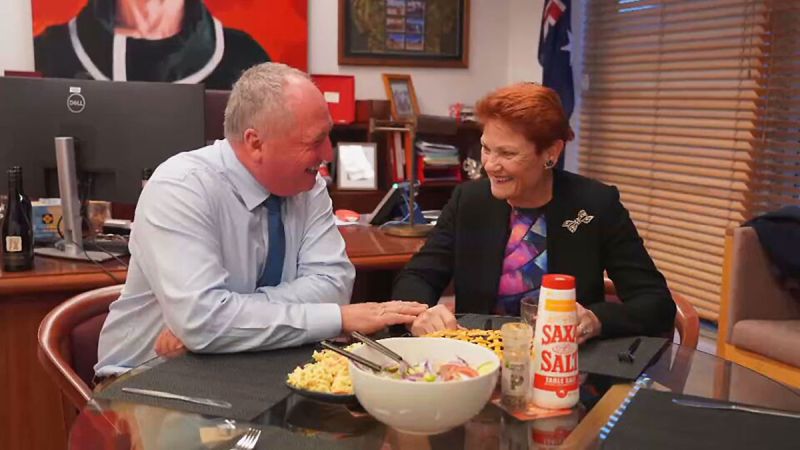
Recent One Nation recruit Barnaby Joyce has his former party spooked.
The Nationals, led by the LNP, have spent the better part of three decades dragging the Liberals to where they are now. And like Monty Python’s Black Knight, the Liberal Party, bereft of direction, shared values, or understanding of what it is, continues to scream ” ’tis but a scratch” as it slides further and further into irrelevancy.
It doesn’t matter who the Liberals choose as leader; the LNP will continue its panic run off the electoral cliff.
Barnson is better at communicating than it is. Better at understanding and collecting grievances. Better at raising money off it. And now One Nation will also get public funding to run campaigns in every electorate.
So to understand what’s happening, you have to understand the Queenslanders. For that, you don’t need common sense, or rationality or even to look at what’s in front of you. It’s base political instinct, honed under the hot sun of Joh’s Moonlight State and passed down to men who won small-town battles but never had to expand their political tactics beyond a tantrum.
You can’t reason your way through that. You cannot reconcile with it, and you can’t find common ground – because it’s going to keep shifting every time they get spooked.
But what is left in its wake is the bigger problem. And how Labor responds. Because if it seeks to continue filling the void left by the Coalition, then the LNP has succeeded in dominating – just not in the way it wanted.
Amy Remeikis is a contributing editor for The New Daily and chief political analyst for The Australia Institute
Want to see more stories from InDaily Qld in your Google search results?
- Click here to set InDaily Qld as a preferred source.
- Tick the box next to "InDaily Qld". That's it.