Artist Renee Kire on finding joy in form and colour while transforming Museum of Brisbane’s entryway
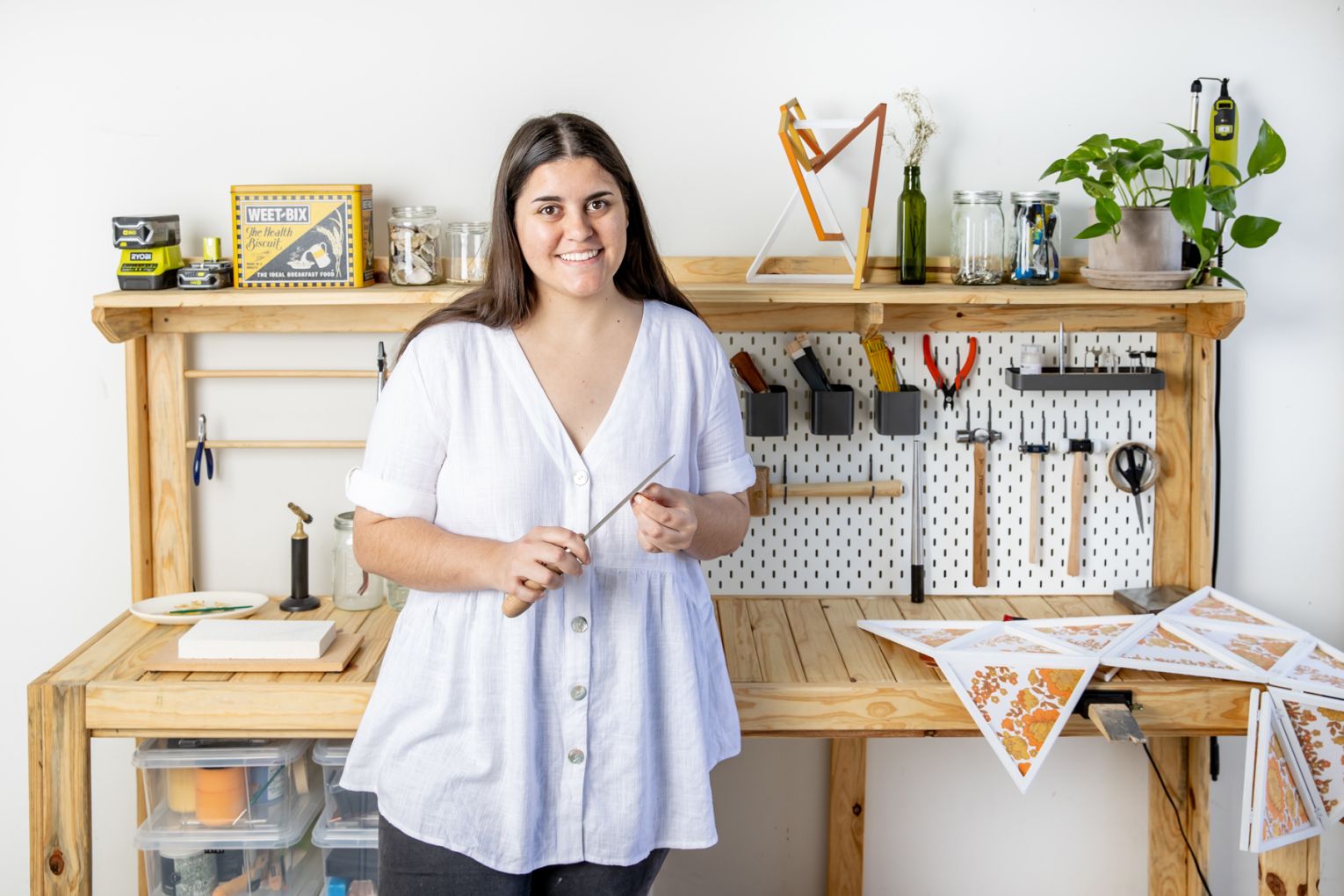
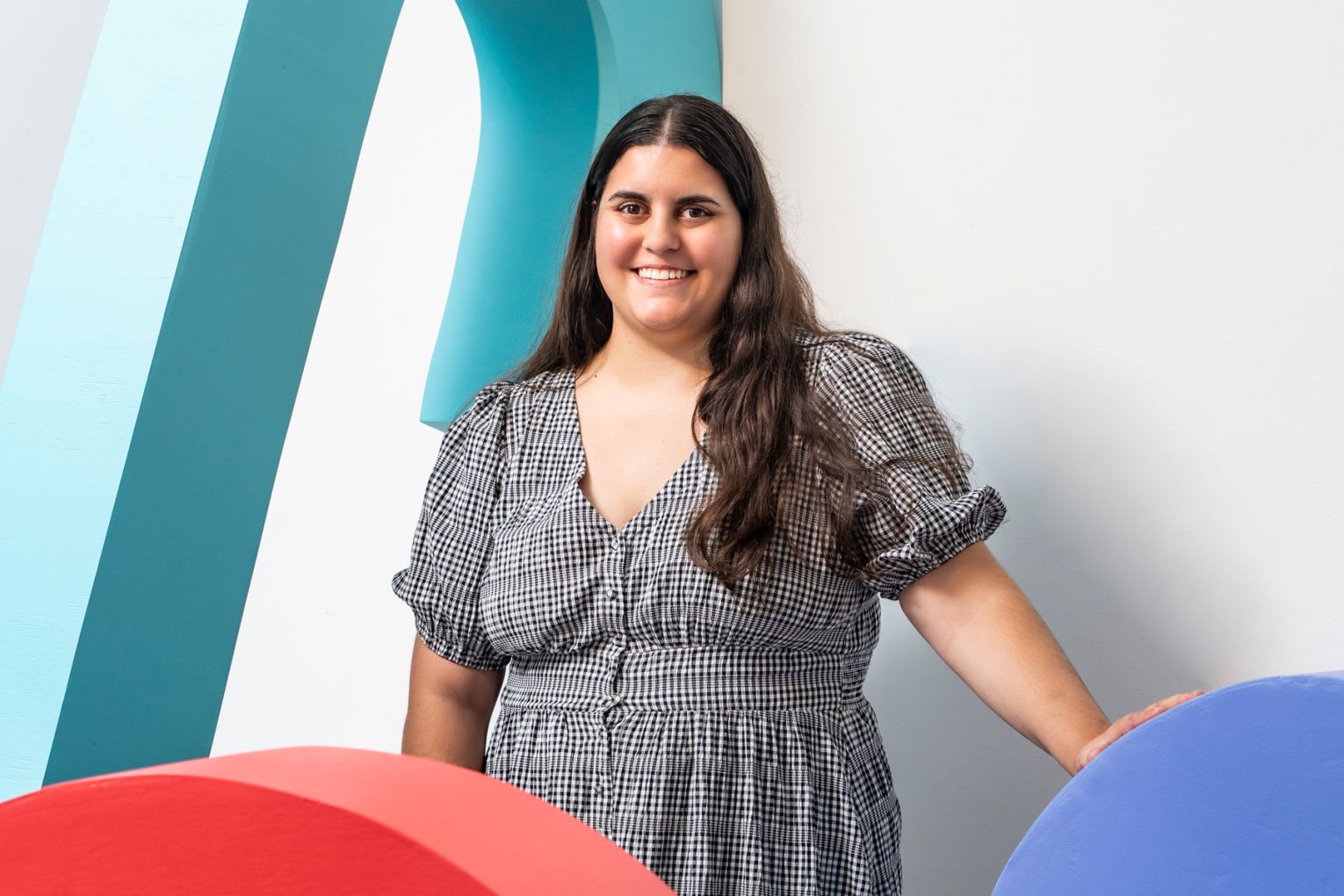
From Friday March 6, Renee Kire is taking over the entryway at Museum of Brisbane as its first Artist in Residence for 2026. Working at architectural scale, her installation splashes bold vinyl graphics and sculptural timber elements across walls and ceilings, bringing colour, rhythm and movement to the museum’s arrival space. We caught up with Renee to talk about working in the museum’s busiest thoroughfare, designing for first impressions and finding creative freedom inside an iconic, heritage-listed building.
Your residency project takes over Museum of Brisbane’s entryway – the first space visitors move through. What excites you most about creating work in a place that welcomes people into the museum?
What excites me most about creating work in the museum’s entryway is having my work be the first thing people see as they enter a space I’ve been visiting since my early university days. It’s exciting because this first impression helps welcome visitors in, sets the tone, and can shift how they feel as they move through the museum. This moment also marks ten years since I moved to the city from the Sunshine Coast to pursue becoming an artist, which feels surreal.
The installation responds closely to the architecture of City Hall and the surrounding cityscape. When you first spent time in the space, what stood out to you, and how did those unique details shape what you created?
It’s hard to pinpoint what stood out to me when I first spent time in the space, as I was overwhelmed by the amount of room I had to work with. But after a few visits, I really began to appreciate the character of the space. No two walls are the same, and there are so many different planes and angles, which inspired how I approached the forms, colours and interactions in my work.
Was there anything about the space or process that challenged you or changed your approach along the way?
Coming into the project, I knew there would be some limitations since the museum is in a heritage-listed building. But after learning what could and couldn’t be done, the most challenging part ended up being developing the works digitally and translating scale from the screen to real life. Seeing how the forms, colours and interactions would exist in the space required me to adjust and rethink certain elements along the way.
Your work approaches Minimalism from a contemporary feminist perspective. How did those themes inform the way this project developed?
I think these themes have and always will be a big part of why I create. Whether explicitly mentioned or not, these influences are always at the forefront of my work, shaping how I approach each project. For this installation, thinking through Minimalism and a contemporary feminist lens guided the forms, colours and interactions I developed, encouraging repetition and inclusivity for all visitors.
Working in the museum’s entryway means your work is seen by a huge range of people, from first-time visitors to regulars. Was there a particular audience you found yourself thinking about while developing this project?
When creating my work, I don’t focus on age. I try to make art that anyone can enjoy, because I think it should be accessible to people of all ages. My two-year-old niece Myah loves the colours in my work, while my grandmother Sandra enjoys composition and how the different shapes interact with one another. For me, art is subjective, but I hope my work sparks a little curiosity for anyone who sees it, whoever they are.
You might like
Part of the installation will be co-created with the community through hands-on workshops. What are you most looking forward to about inviting others into the making process?
I’m excited to take a step back and see how people interpret the shapes and colours I’ve been immersed in for the past several months. It’s always interesting to see how people interact with the work and how differently we all think and create.
Your practice often encourages people to slow down and look closely. In such a busy, transitional space, how do you invite visitors to pause, even briefly?
Being a new creative environment for me, I hope the forms and colours in the space catch people’s attention and invite them to pause, even for a moment, to really notice their surroundings and discover little details they might otherwise miss.
Because this work is part of the museum’s everyday environment, visitors may encounter it more than once. What do you think repeat visits might reveal that a first walk-through doesn’t?
I’m hoping visitors experience the space the way I have while developing this work. Each time I spent time there, new details emerged in this otherwise overlooked space, from subtle shifts in light, the repetitive nature of shapes, or small architectural features I hadn’t noticed before. I hope repeat visits allow people to discover these layers and notice something new each time.
Renee Kire’s Artist in Residency project is on display at Museum of Brisbane from March 6 to September 6.
MoB’s Artist in Residency program is supported by Tim Fairfax AC.
Want to see more stories from InDaily Qld in your Google search results?
- Click here to set InDaily Qld as a preferred source.
- Tick the box next to "InDaily Qld". That's it.