Bringing Warrajamba to life – inside Delvene Cockatoo-Collins’ Museum of Brisbane residency
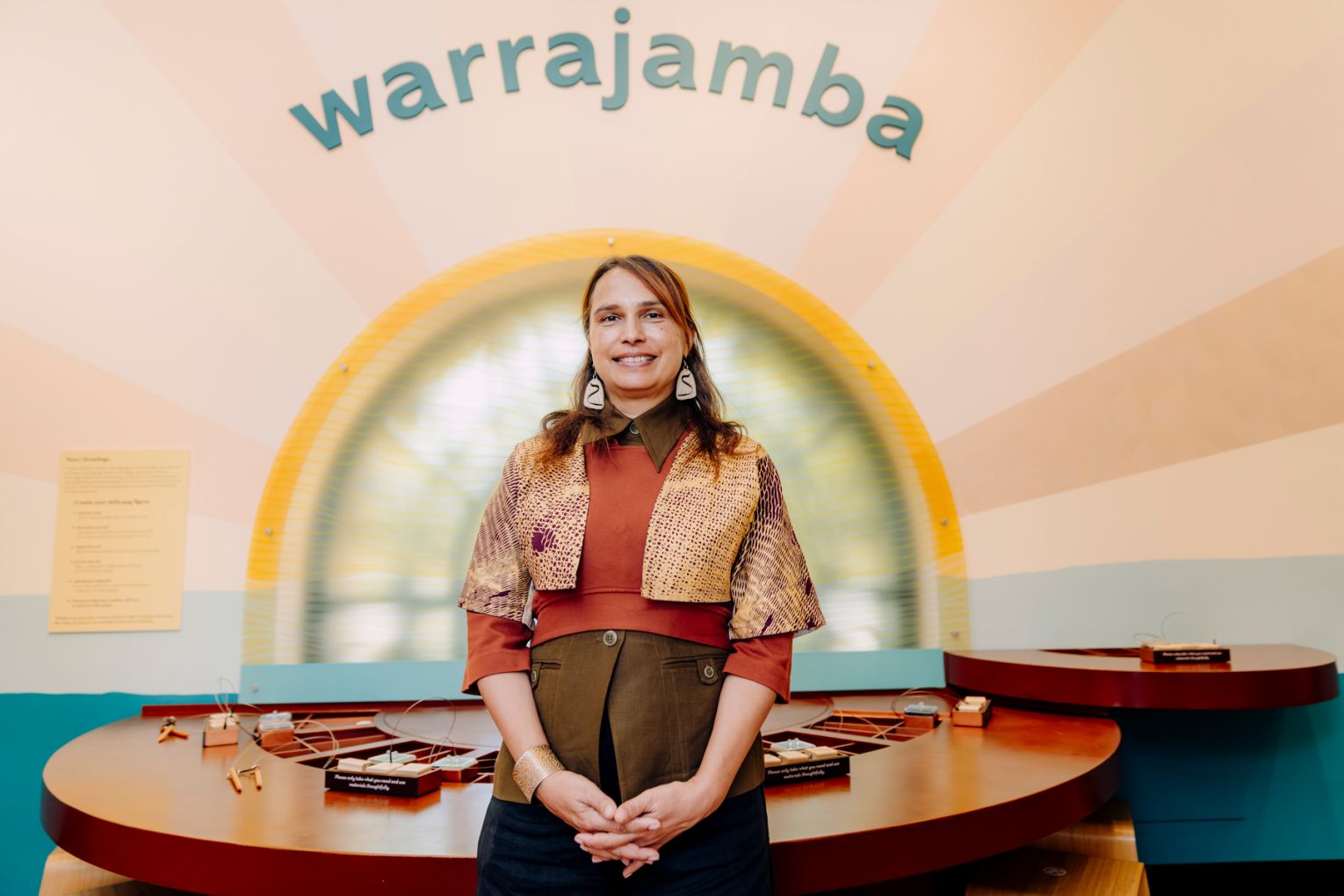
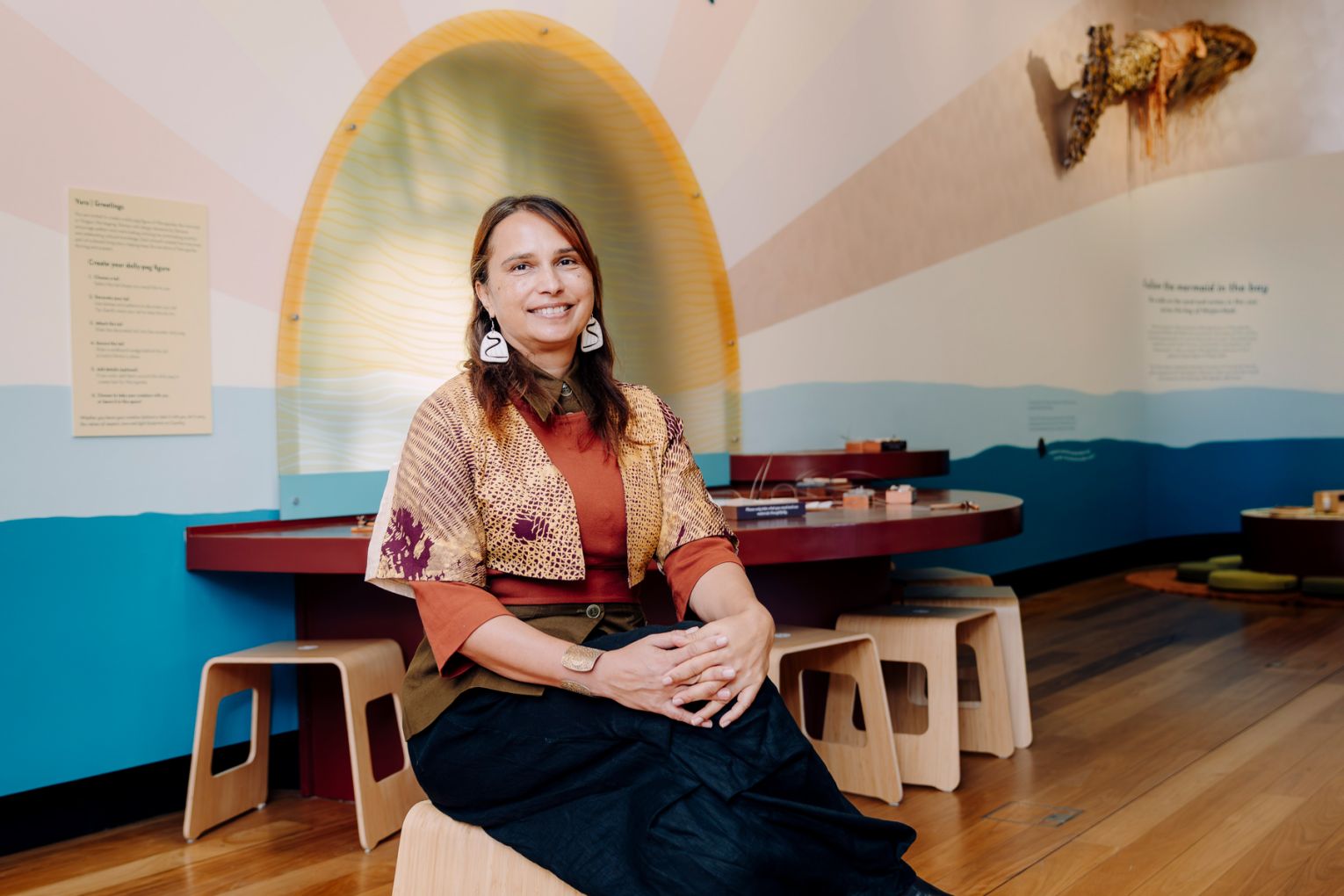

Museum of Brisbane’s Creative Space has been reshaped by Quandamooka artist Delvene Cockatoo-Collins, who brings the ancestral story of Warrajamba, the mermaid, into the heart of the museum. The immersive installation pairs sculptural works made from materials gathered on Country with hands-on elements that invite visitors to take part, shifting the experience from observation to participation. With the residency now underway, we spoke with Delvene about the role of storytelling in her practice, the responsibility that comes with sharing cultural narratives and her ongoing search to uncover Warrajamba’s story.
To start, we’d love to go back to the beginning of your artistic career. What first inspired you to become an artist?
Growing up, I was surrounded by listening to family and later I became interested in how those narratives could be held and expressed visually. Art became a way for me to process and make sense of these stories, to explore identity and cultural knowledge. It is depicted by different moments, like waiting for Migalu with Mum, like seeing my Grandmother’s Grandmothers baskets for the first time. So this making is an accumulation of different experiences that made it feel natural to communicate through making.
Storytelling is central to your work. How do you balance honouring tradition while allowing space for evolution and reinterpretation?
For me, it starts with understanding where stories come from, who they belong to, and the responsibility that comes with sharing them. Honouring tradition is also about making sense of this story; culture is living and adaptive. I try to approach each work as a continuation rather than a reinvention, like with the telling of Warrajamba, who is in print form, sculptural form, in my garments and now here at Museum of Brisbane. It was always a wish to bring her to life, and the first time was on the runway in 2022.
You’ve reimagined Museum of Brisbane’s Creative Space into an immersive art activation exploring the ancestral story of Warrajamba, the mermaid. Warrajamba is a central figure in your art – can you share any insight into the personal significance of this story?
Warrajamba is deeply personal to me. She represents connection to my Grandmother’s story, old written texts, to the Bay and to the unseen layers of story that exist within place. Working with her story feels like both a privilege and a responsibility. I’m able to explore themes of identity and cultural continuity. It’s a lifelong goal to uncover who she is and what happened to her.
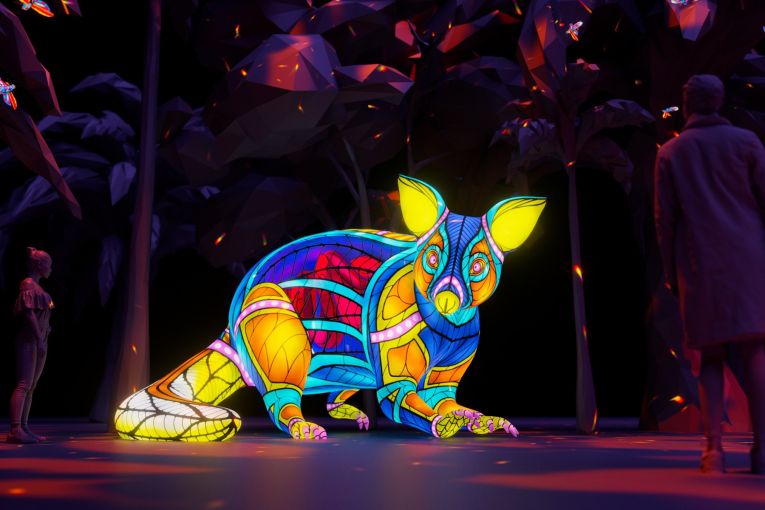
Your practice spans original artworks, ceramics, sculpture and homewares – how do you decide which medium best tells a particular story?
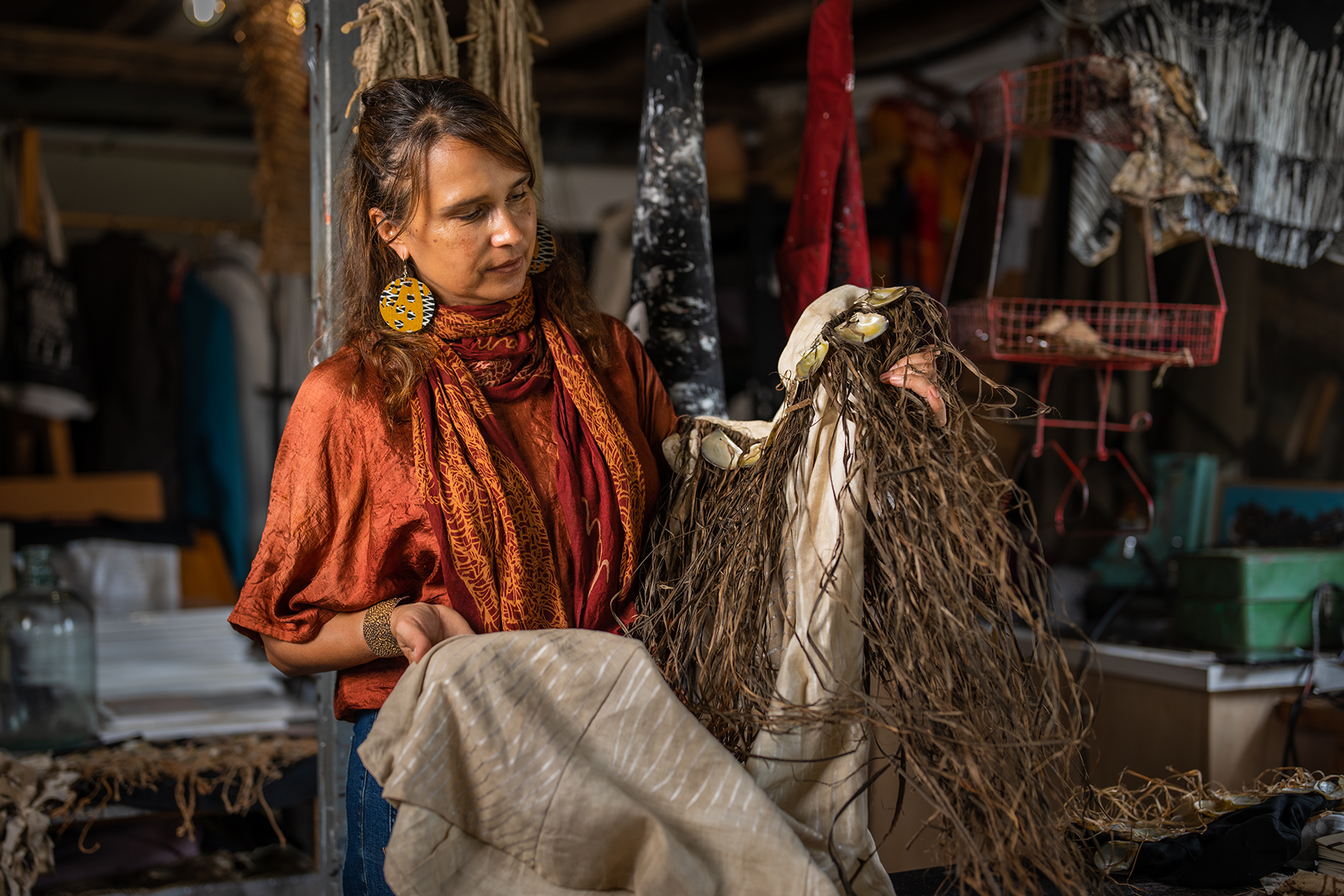
The story usually leads. Some ideas feel like they need to exist in a tactile, grounded form like ceramics or sculpture, while others are better suited to surface and image. I think about how people will encounter the work – whether it’s something to hold, to live with. Each medium carries its own language, and part of my process is listening for which one aligns most naturally with the story I’m trying to tell. For a long while I’ve been focused on screenprinting and dyeing fabrics, to tell those stories. These can either be hung or be worn. Both are art.
How does working with natural materials like yungair, talwalpin and quampie shells differ emotionally or spiritually compared to working with clay or paint?
Working with natural materials carries a different kind of presence. There’s an inherent connection to place here on the island and to the environments those materials come from, which brings a deeper sense of responsibility and care. I’m usually with family, especially my sons, when collecting and processing the freshwater reeds, tawalpin or the quampie shells, so it truly is collaborative. Compared to clay or paint, there’s often a stronger emotional and spiritual awareness with the fibres and shells from here, because those materials already hold their own histories.
When visitors walk into Museum of Brisbane’s Creative Space, what do you hope they notice first – and what do you hope they feel last?
I hope the first thing they notice is a sense of calm and peace, like the island offers. When I first stepped in, my immediate thoughts were ‘the kids who visit here are going to look for a nap’. Visually, I want it to draw them in and invite curiosity. There are a few things that I would hope they last feel, including the desire to seek some of the answers that they may not have, which is what Warrajamba evokes. And also the idea that ‘taking only what you need’, otherwise there can be consequences. It’s part of what I see in the story of the Yungun or Dugong legend that my Grandmother published locally in 1974.
What has surprised you most in developing this residency?
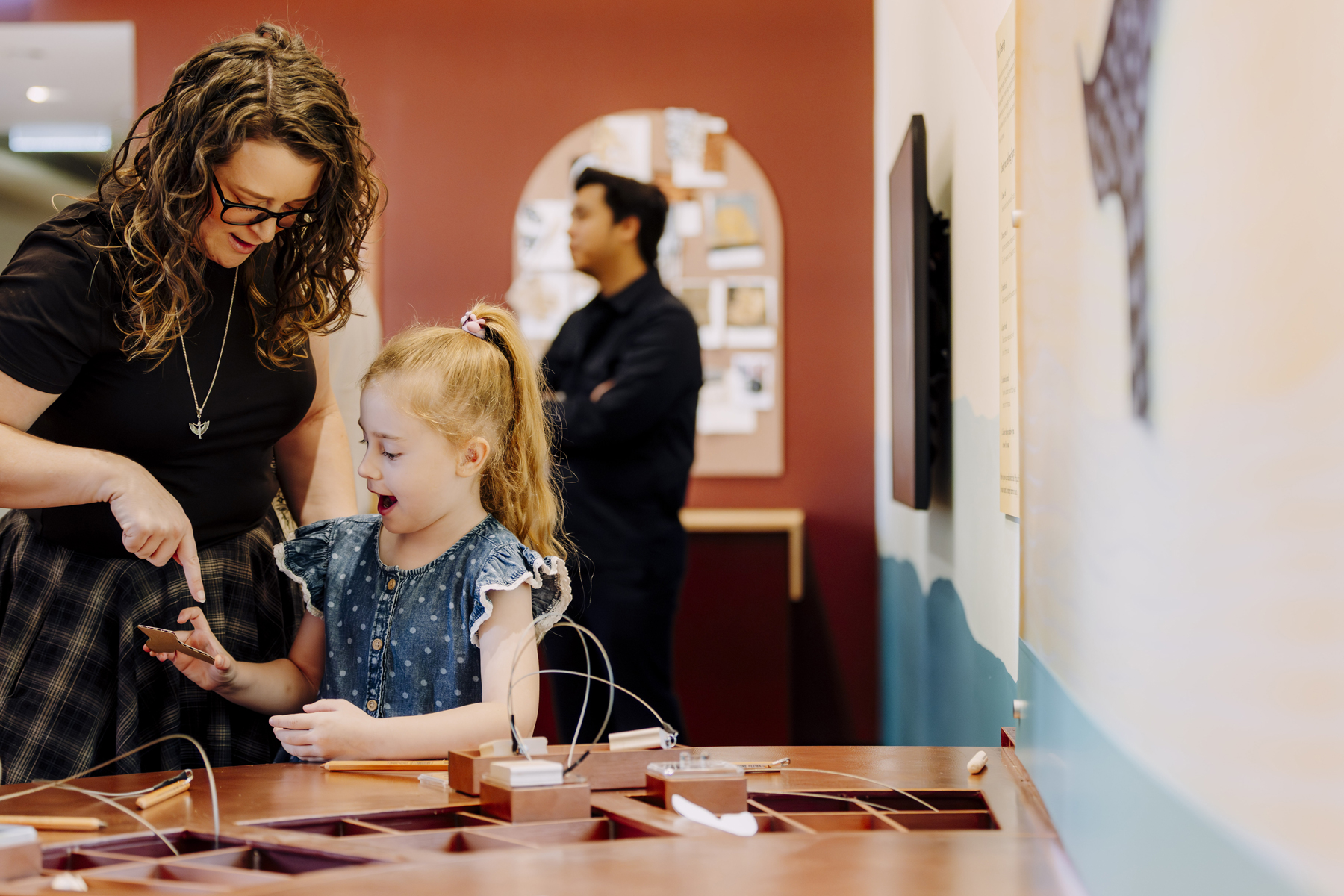
I’ve been surprised by the audience response, particularly over the first weekend, which fell during the school holidays. There were so many visitors engaging with the space and taking the time to create their own Warrajamba or Yungun. What’s been especially meaningful is seeing how many of those pieces are being voluntarily left behind on the display wall, for others to see and connect with. It’s become a kind of shared storytelling space, which I hadn’t anticipated, but deeply value.
Visitors can create mermaid or dugong peg dolls using your stamp designs. What role does hands-on making play in deepening cultural understanding?
Hands-on making invites a different kind of engagement. It encourages people to slow down and connect through doing, rather than simply observing. In that process, the story becomes more personal, something they’ve participated in and contributed to. During my residency, particularly on Wednesdays, it’s been meaningful to see this unfold with people creating while listening to the nearby video that shares the island, my practice, and the search for Warrajamba. I see that in this space, making offers a gentle entry point into cultural understanding. Through engaging with patterns, symbols, materials and process, visitors can connect in a way that feels accessible, while still holding depth and meaning.
Warrajamba is open daily at Museum of Brisbane until Sunday November 15. As part of her residency, Delvene will be creating a new collection in the space on Wednesdays (excluding NAIDOC week), at various times. Visitors are also invited to drop-in weaving sessions with Delvene from 10:00–11:00 am on the first Wednesday of each month, starting in May. More information is on the Museum of Brisbane website.
This article was written in partnership with our good friends at Museum of Brisbane.
MoB’s Artist in Residence program is supported by Tim Fairfax AC. The Creative Space is proudly supported by MoB’s Major Partner Brisbane Airport and generously supported by Ian and Cass George, and Holly and John Livingstone. Warrajamba is supported by the Queensland Government through Arts Queensland.
Want to see more stories from InDaily Qld in your Google search results?
- Click here to set InDaily Qld as a preferred source.
- Tick the box next to "InDaily Qld". That's it.