Australian schools favour the rich – but how can we fix it?
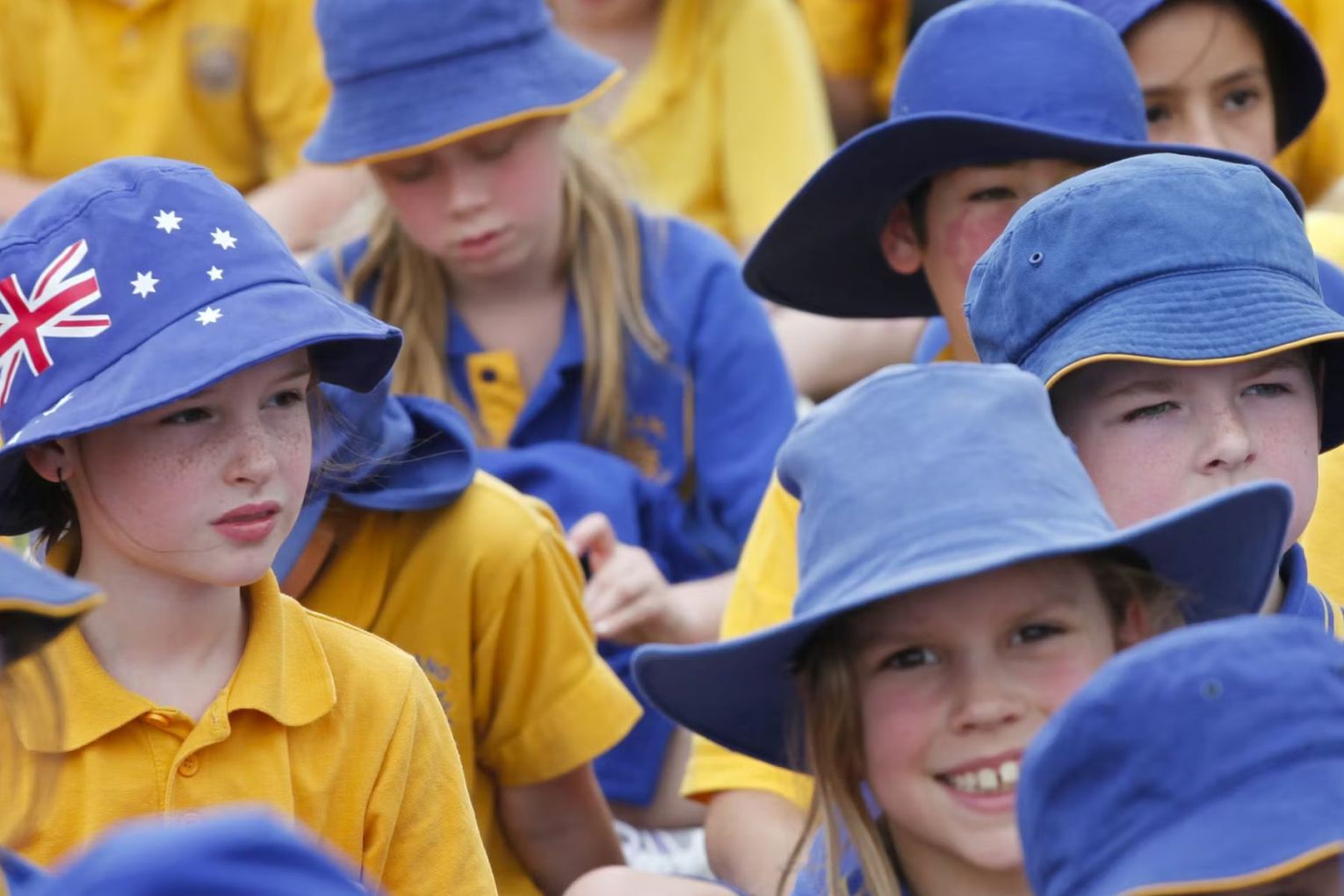
Australia’s schooling system is among the most highly segregated in the OECD. Public schools educate the majority of disadvantaged students, while there is concentrated advantage in private schools.
This situation can be attributed, in large part, to our school funding arrangements. Recent research from the Australian Education Union shows “over half of Australia’s private schools now receive more combined government funding per student from both the federal and state governments, than similar public schools”.
In her essay Rich Kid, Poor Kid, public education advocate Jane Caro provides a detailed historical excavation of Australia’s school funding policies, politics and policy ideologies over the past 65 years.
As its subtitle makes clear, her essay details the “battle” experienced by Australian public schools as they are often forced to compete with well-resourced private schools for enrolments. These private schools are free to charge uncapped school fees and receive government money.
At the same time, in states and territories other than the ACT, most public schools do not receive the minimum amount of their legislated government funding, known as the Schooling Resource Standard (SRS).
Caro contrasts this with the experiences of non-government or private schools (Catholic and independent schools), most of whom receive the full amount of their legislated government funding and more.
As the recently legislated Better and Fairer Schools Agreement – which seeks to address part of the funding inequality between sectors – comes into effect, Caro’s reflections and lamentations are timely.

Jane Caro shows how Australian public schools are forced to compete with well-resourced private schools.
Wall Media
A funding system unequal by design
Caro begins by opening the “black box” of Australia’s school funding arrangements to reveal their contents.
In order to explain the current inequalities in resource distribution, Caro takes readers on a funding policy journey. Public funding for private schooling began in the late 1960s. Until this point, the federal government played virtually no role in school funding. Initially, it began its involvement through one-off grants for government and non-government schools, to support the building of science laboratories and school libraries.
This funding expanded over time with successive federal governments, in response to a few intersecting factors.
Among these was the Catholic sector’s desperate call for financial aid from the federal government to assist with rapidly increasing enrolments, and simultaneously decreasing supply of labour and resources from its religious teachers and leaders (nuns and brothers). This call for “state aid” was politically contentious.
By 1975 – under a Whitlam Labor government – recurrent federal funding for private schools was in full swing. As Caro explains, Whitlam positioned this decision as “educationally necessary”: that is, funding based on need for both public and private schools.
But this move also served dual political purposes – it helped address the “state-aid” issue and appealed to Catholic parent voters.
Caro documents what she describes as the schooling system’s “shift from an emphasis on the public good towards the private and positional”. Subsidies for private schools continued, and even expanded, but were no longer justified by needs. Rather, a right to choice came to predominate.
This was reinforced by the next federal government under Malcolm Fraser, who embedded a “basic grant model” for private schools based on entitlement and choice, rather than need. Ultimately, these decisions provided the basis for our current system: government funding for both public and private schools – a funding system that is internationally unique.
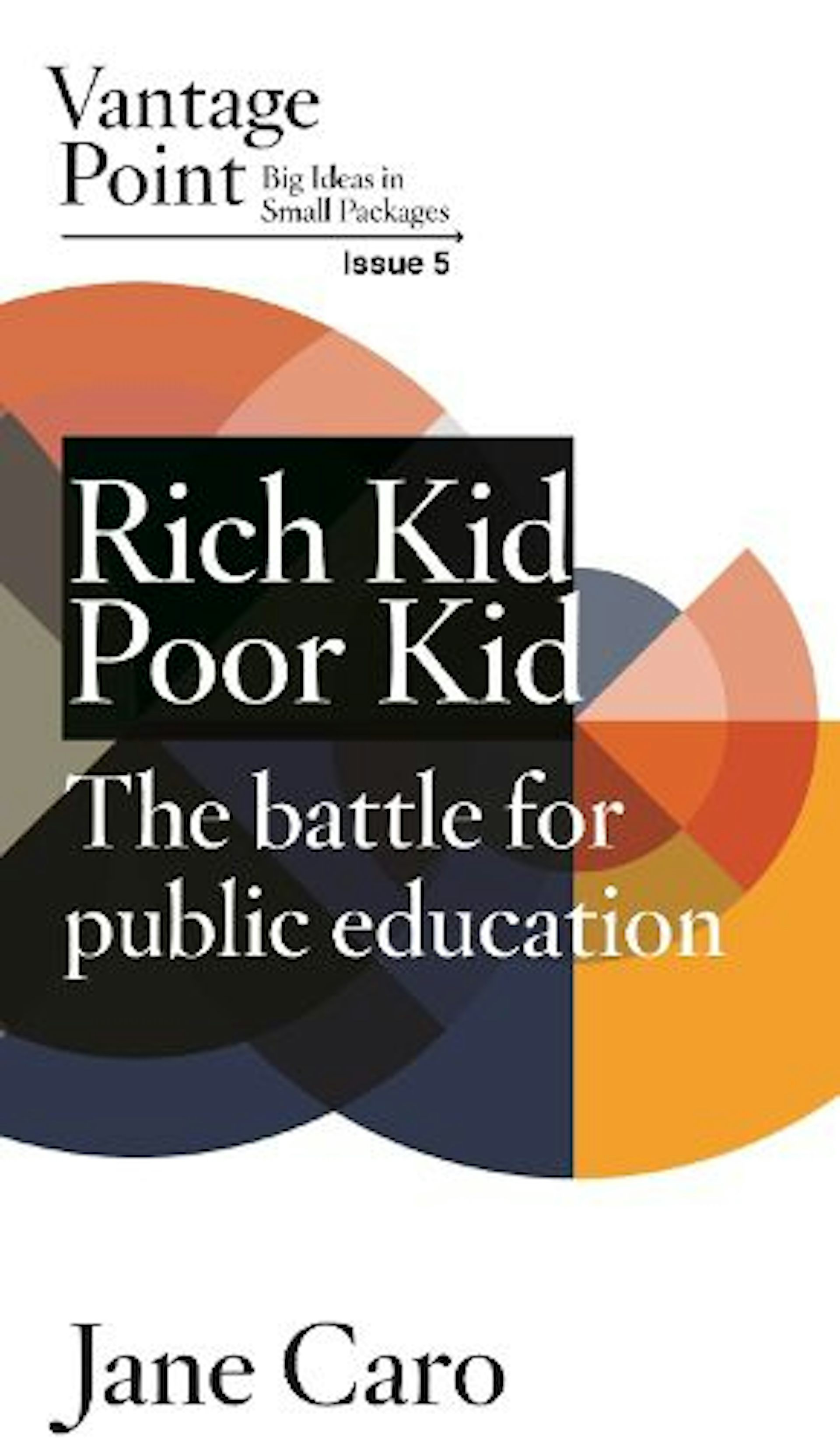
Caro moves through funding policy agendas and reforms of successive federal governments, explaining the politics, policy principles and policy levers that created and sustain deep inequalities in Australia’s school system.
Among many examples, Caro refers to the commissioning and release of the 2011 Review of Funding for Schooling, conducted by an expert panel headed by David Gonski AC. The “Gonski Review” revealed (among other things) the concentration of disadvantage in Australia’s public schools. In an attempt to address inequalities in Australia’s existing funding arrangements, it proposed a new funding model based on the concept of student need: the Schooling Resource Standard.
Here, Caro points to the infamous promise made by then Labor prime minister Julia Gillard, that “no school will lose a dollar” as a result of the review or the implementation of the new funding model. This meant the possibility of a fully needs-based approach was compromised from the outset.
Caro also explains the various concessions offered to private schools, despite them being publicly funded.
For example, private schools are free to select and exclude students, including on the grounds of gender and sexuality, and to charge uncapped school fees. Many private schools also have “charitable status”, providing a range of tax exemptions, including incentivised donations. While not explicitly stated in the essay, these factors also undermine the extent to which the Schooling Resource Standard can be understood to function as a true “needs-based” funding model in practice.
It is important to note that not all private schools are high-fee paying or elite. Indeed, there is some diversity in the sector. However, Caro confesses she sometimes “cannot help wondering whether divide and conquer was the plan all along”. Her essay reminds readers the current situation is by no means accidental. Rather, it is constructed through particular policy decisions and values that have created a class-based schooling system.
Challenging ‘business as usual’
Part of Caro’s contribution is her discrediting of arguments often used in defence of the current system. For example, governments often argue for the need to fund private schooling, to provide parents with accessible options. However, as Caro shows, private schools remain out of reach for many.
Referring to a recent study, she explains that even “after decades of publicly funding private schools”, Australia’s secondary schools are some of the most costly among developed economies of the OECD.
The result of unequal access to an unequally resourced “market” of schools, Caro shows, is the concentration of social advantage and disadvantage. Schools compete to attract the same set of privileged students, who will boost their market position for top results. At the same time, they compete to exclude students with higher needs and less potential to blitz tests.
Caro addresses other commonly evoked rationales for supporting school choice policies, too. These include: “Private school parents pay taxes, so their child is entitled to be subsidised.” And: “Public funding of private schools saves the government money.”
In response to these arguments, Caro suggests that “taxation is not a deposit account that we can draw on to ‘buy’ whatever service we choose”. (In this case, parents are buying what is “perceived as an educational advantage”.) The “glaringly obvious problem” with the tax argument, she writes, “is that when a large part of that choice involves fee-charging schools, only parents with money have choice”.
The battle for public education
Across all of these arguments, we see the tensions within Australian school funding on full display: entitlement and a right to parental choice operating at the expense of school funding based on the principle of “student need”. Underpinning Caro’s argument is a belief in
"the ideal of a strong public education system funded by everyone, for the benefit of everyone, originally developed alongside the ideal of representative democracy […] for the benefit of everyone."
She opens her essay reminiscing about her own experience with New South Wales public schooling in the 1960s and 70s, which, she explains, provided her and her peers various opportunities. This included the chance to mix with a socially diverse group of students, irrespective of their socioeconomic or cultural capital. It is this version of public schooling, she argues, that has been lost.
Caro argues that “public schools are an expression of a public good: the common good.”
As professor of education Jessica Gerrard writes, there is a danger in idealising the public schools of the past, which had their fair share of exclusionary practices and prejudice. Fighting for public education requires acknowledging that it hasn’t always been inherently democratic. Public schools have also been sites of harm and exclusion for some.
The democratic potential of public schooling is connected to ongoing political struggles over whose knowledge, identities and futures are recognised and supported within public schooling – including through funding.
Where to from here?
How might we imagine and achieve a more just approach to school funding policy? Rich Kid, Poor Kid draws to a close by addressing this question, providing a list of “solutions” for a “more equal” schooling system.
Caro suggests various changes to current funding arrangements, such as reconsidering private school tax exemptions and having all schools that receive public money subject to the same standards and compliance measures. Certainly, these would go a long way toward addressing the frightening inequalities laid bare in her essay.
Caro considers what she refers to as the “political possibility” for these solutions. It is difficult to see how such solutions and more just funding policy approaches might emerge until there is a deeper reckoning with what she identifies as Australia’s unwavering political and cultural fidelity to school choice and entitlement. How this might occur must also be a core part of the discussion.
Other terms of the debate must also shift. For example, it is problematic to hold discussions about school funding in terms of the “cost” to the taxpayer, “cost” to the system, or referring to students who are the “the most costly to educate”. Narratives like this (political and otherwise) can perpetuate marginalisation and stigmatisation. They reduce student need to a bottom-line, cost-benefit analysis.
Rich Kid, Poor Kid reinforces the urgency and devastation of the school funding problem in Australia. Caro delivers the story in a way that should propel readers into action.
Elisa Di Gregorio, Lecturer, School of Education, Adelaide University
This article is republished from The Conversation under a Creative Commons license. Read the original article.
You might like



Want to see more stories from InDaily Qld in your Google search results?
- Click here to set InDaily Qld as a preferred source.
- Tick the box next to "InDaily Qld". That's it.