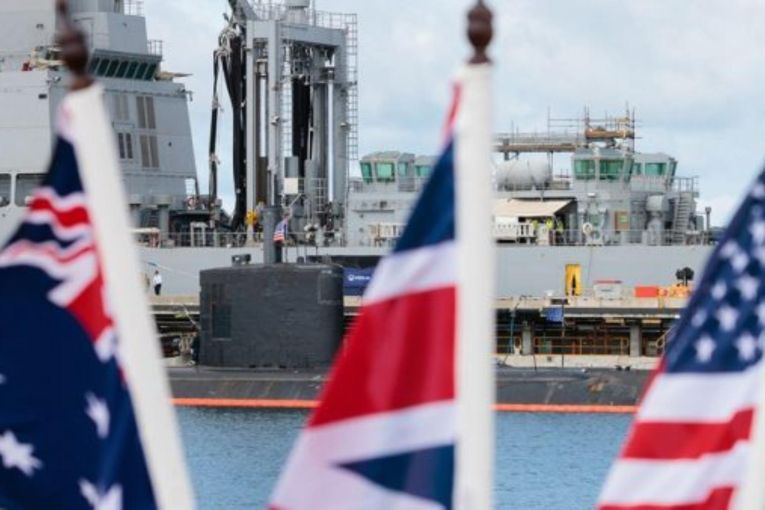
Five years into AUKUS, what do we have to show for it?
It’s been five years since AUKUS was announced, so what does Australia has have show for a program the government has said is “too big to fail”?
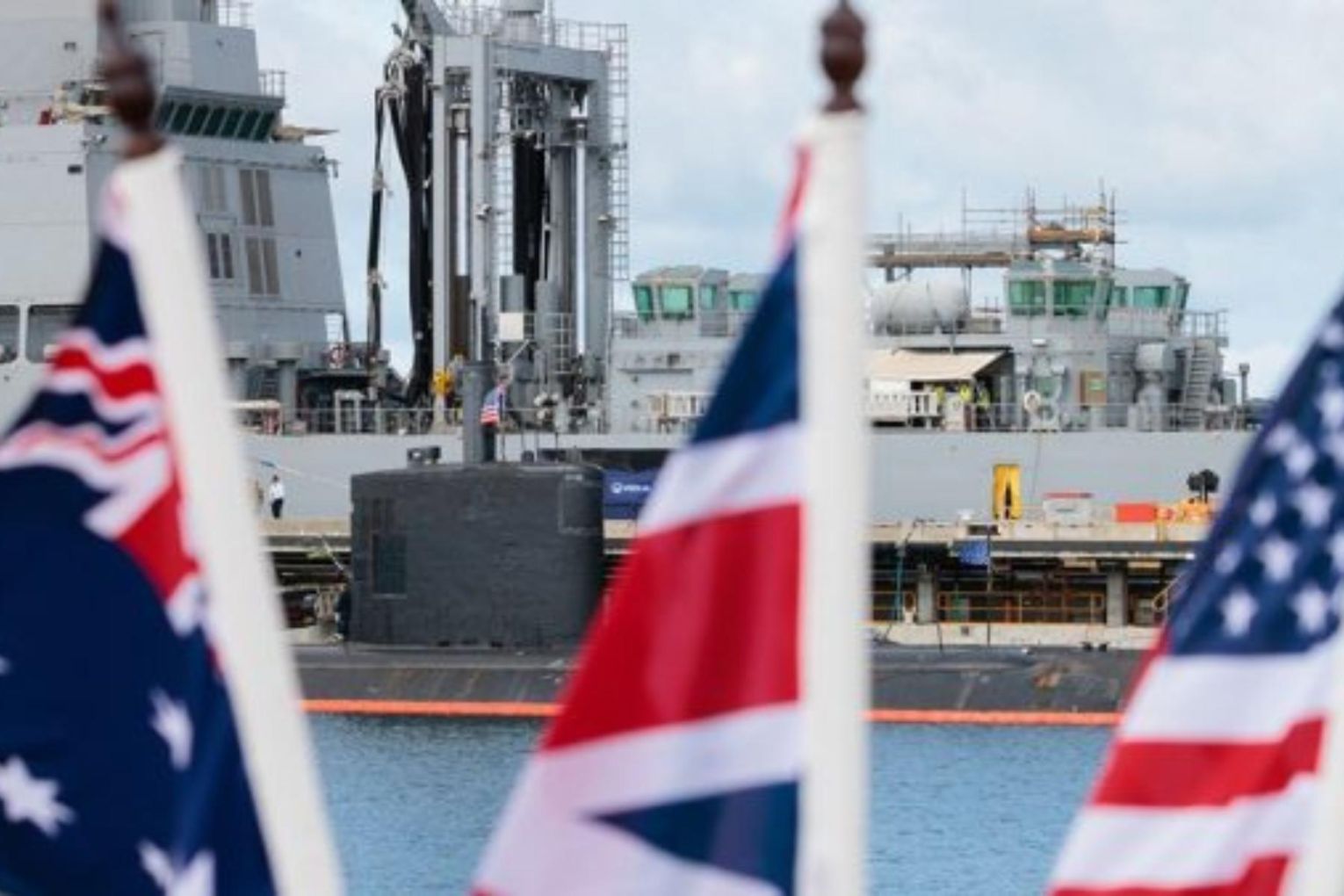
This week marks five years since US President Joe Biden, UK Prime Minister Boris Johnson and Australian Prime Minister Scott Morrison announced AUKUS, a trilateral security partnership composed of two parts: Pillar I, the nuclear-powered submarine program, and Pillar II, a collaboration on advanced defence capabilities.
You might like


Since then, AUKUS has survived multiple leadership changes and national reviews or public inquiries in all three countries. At a time of heightened geopolitical risk, the case for acquiring the subs to help protect Australia’s access to sea-lanes and contribute to regional stability has endured.
But this milestone needs to be put in context.
For one, when AUKUS was announced on September 15-16 2021, we had very few details. The actual plans for the delivery of nuclear-powered submarines to Australia came much later, in March 2023.
And AUKUS still has a way to go. We’re barely a tenth of the way into the implementation of the 30-year “Optimal Pathway” for the program in its totality.
We’re at least six years away from receiving our first US-built Virginia-class submarine, and at least 15 years from receiving the first AUKUS-class submarine, to be co-developed and co-produced here and in the United Kingdom.
Still, five years after the initial announcement, it’s worth gauging what Australia has to show for a program the government has said is “too big to fail” and is without a “Plan B”.
We’ve tried to bring clarity to this question by focusing on three indicators of progress:
- how much money Australia has invested so far
- the development of Submarine Rotational Force-West (SRF-W) in Perth
- the state of US submarine production and fleet size.
Though by no means exhaustive, these three metrics offer a snapshot of where the program stands at the moment, and the challenges that must still be overcome.
1. What Australia has spent so far
Australians are justified in wanting to know how much money their government has invested in AUKUS, and where it has gone.
When the Optimal Pathway was announced in 2023, the Albanese government costed it at 0.15 per cent of GDP annually over the life of the program. This would amount to roughly A$268 billion to A$368 billion over three decades.
Since then, the A$368 billion figure has been widely cited by the media as the ultimate price tag.
Crucially, at the time, a third of this total – around A$122.9 billion – was set aside as contingency funding to absorb the delays and cost pressures that come with a 30-year program. In other words, it may not actually be spent.
Accurately tracking Australia’s overall spending to date is difficult. Since 2023, there has been a flurry of government statements announcing or promising funding to support various aspects of AUKUS over different time frames. These figures are scattered across portfolios, and are sometimes announced and then folded into the forward estimates of the federal budget. Some are projections, rather than down payments.
Both the Liberals and Greens have pressed the government to share updated costings for AUKUS. Budget papers do not offer an itemised account nor a consolidated overall figure for the program so far.
With no central database for AUKUS spending, we set out to build one.
We went through public announcements, portfolio budget statements, annual reports and strategy documents, and attempted to trace everything that’s been spent, announced, promised or projected.
What we’ve come up with hardly qualifies as a ledger. Still, it reveals three important things.
First, the bulk of the funding announced in Australia has gone to infrastructure, across three main sites:
- A$12 billion on the Henderson Defence Precinct, a shipbuilding and submarine maintenance hub on the west coast
- A$8 billion to expand HMAS Stirling so it can host US and UK submarines under SRF-West from 2027, and Australia’s own fleet of submarines from the early 2030s
- A$8.5 billion to the Osborne Nuclear-Powered Submarine Construction Yard, where Australia’s nuclear submarines will be built.
Second, Canberra is investing in the UK and US submarine industrial bases to support the delivery of the Virginia-class and future AUKUS-class submarines to Australia. This reflects the additional demand Australia’s submarines will put on production and maintenance capacity in both countries.
This has included US$2 billion (about A$2.8 billion) to the US in three instalments, with a further US$1 billion (A$1.4 billion) in instalments pledged over the next decade.
Canberra has also paid A$310 million to the UK for components needed to build nuclear submarines and has committed an additional £2.4 billion (about A$4.6 billion) over a decade to expand the UK’s submarine production capacity.
Third, AUKUS will consume a growing share of the Australian defence budget, even if the government follows through on its commitment to increase spending to 3 per cent of GDP by 2033.
In 2023, the Parliamentary Budget Office projected annual AUKUS spending to be roughly A$2.2 billion per year over the program’s first four years, rising to more than A$8 billion annually for the next three decades. This means most of the spending is still to come.
There’s a long list of various capabilities required to meet Australia’s future defence requirements. If the Defence budget does not grow sufficiently and AUKUS eats into those programs, the overall investment in these capabilities could become lopsided.
2. A new submarine base in WA
Until the Virginia-class submarines arrive, we still need to make sure our near-term defence needs are being met. We also need to be ready for when our subs show up.
This is where Submarine Rotational Force-West comes in.
The first phase of the AUKUS program involves frequent visits by US and UK submarines to HMAS Stirling in Perth from next year. These subs won’t be formally based in Australia; they will rotate in and out.
But these aren’t mere pitstops. Australians are being trained in how to maintain the ships and handle their weapons. Some US submarines already have Australians serving onboard. These initiatives are helping to prepare Australia to maintain our own nuclear-powered submarines when they come online.
The US is also setting up local operations to provide services, logistics and operational support to these rotating submarines and their crews. This will be the only location outside US and UK territories in the Indo-Pacific where these subs can receive sophisticated maintenance support.
Crucially, these facilities will be beyond the range of most (though not all) of China’s growing missile capabilities.
Successive National Defence Strategies have emphasised that an enduring US military presence in the region is fundamental to Australia’s security and contributes to regional deterrence. This is also the view of Australia’s closest partners in the region, such as Japan.
This is why leading Australian experts have argued SRF-W is perhaps “the most significant aspect” of AUKUS for Australia’s immediate security interests.
So, even if Australia won’t have its own AUKUS submarines for years, it will become increasingly capable of operating them, while simultaneously embedding a more resilient US naval presence in our region.
As far as near-term payoffs go, this shouldn’t be understated.
3. US submarine availability
Sceptics in both the US and Australia have expressed doubt about Washington’s willingness to sell at least three submarines to Australia beginning in the 2030s, given how much it relies on them and how long it takes to build them.
Indeed, the speed of US submarine production has been under particular scrutiny. The conventional wisdom is production needs to hit around 2.33 boats per year to meet both US and Australian requirements.
There are no consistent public records for the actual production rate, but the estimates are sobering.
New builds have averaged 1.1–1.3 submarines per year since the COVID pandemic, down from a high of 1.9 per year from 2016–19. US Navy leaders anticipate reaching two subs per year by 2032 – still short of the 2.33 goal.
Yet, production rates only tell part of the story. If Australia is supposed to receive in-service submarines from the US, understanding the state and size of the existing fleet is just as important.
In 2016, the US Navy declared it needed a force of 66 submarines to counter growing Chinese and Russian threats – up from a previous requirement of 48.
But since then, the US’ submarine fleet size has gradually declined, with older submarines retiring at a marginally higher rate than their modern replacements (the Virginia-class subs) have been introduced.
This reflects the difficulties Washington has had speeding up production, even with US$15 billion (about A$21 billion) in navy investments since 2018, contributions from the Australian government, and a growing number of Australian companies supporting US shipbuilding.
What’s more, since 2016, between 25–33 per cent of the US submarine fleet has been undergoing maintenance, at significant financial and operational cost. For Australia, addressing that backlog will be as important as boosting US production rates.
Australia is already helping to ease these challenges with investments at Submarine Rotational Force-West and its own shipyards. If the AUKUS partners take full advantage of these developments, this could increase the number of boats available to the US Navy – and, by extension, to Australia.
So, while the US has a mountain to climb to boost sub production, that won’t be the only factor that determines the timeline for Australia’s AUKUS fleet.
Where does this leave Australia?
Of course, these three metrics tell only part of the AUKUS story so far.
Ultimately, however, delivering submarines to Australia is the point of the Optimal Pathway. Our analysis points to both successes and challenges, but at three years into a complex 30-year project, an incomplete picture is probably what we should expect.
Though reliably measuring progress is difficult, it would be disingenuous to say Australia has nothing to show for its investments to date. Important gains have been made in strengthening deterrence and building the workforce and industrial capacity for Australia to maintain and operate a fleet of the most advanced naval systems in the world.
Thomas Corben, Research Fellow, Foreign Policy and Defence, University of Sydney and Esther Soulard, Senior Research Associate, University of Sydney
This article is republished from The Conversation under a Creative Commons license. Read the original article.

Want to see more stories from InDaily Qld in your Google search results?
- Click here to set InDaily Qld as a preferred source.
- Tick the box next to "InDaily Qld". That's it.