Artemis II crew to hold first press conference – from space
The crew of NASA’s Artemis II mission will speak about their record-breaking trip, with a press conference to eager journalists.
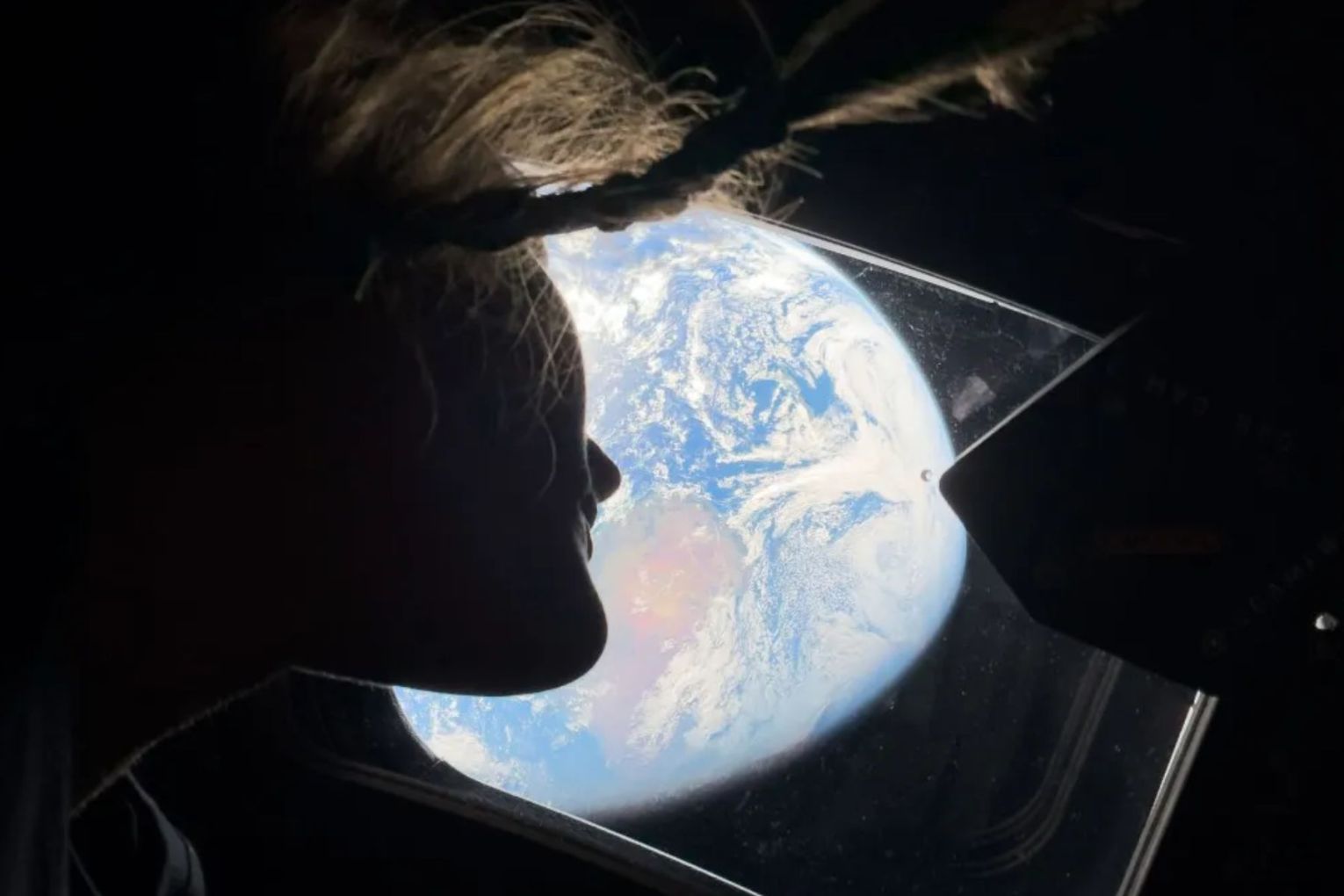
Four astronauts travelling back from the far side of the moon on NASA’s Artemis II mission will speak with reporters in their first press conference from space.
The Artemis II crew, flying in their Orion capsule since launching from Florida last week, reached the moon earlier this week while cruising along a path that took them past the shadowed, lunar far side and then on to become the farthest-flying humans in history.
NASA astronauts Reid Wiseman, Victor Glover and Christina Koch and Canadian astronaut Jeremy Hansen are the first wave of astronauts in a multibillion-dollar series of missions under the Artemis program.


It aims to return humans to the moon’s surface by 2028 before China, and establish a long-term US presence over the next decade, building a moon base for potential future missions to Mars.
Back on Earth, dozens of lunar scientists have been packed in rooms adjacent to NASA’s Mission Control Center in Houston this week, scribbling down notes and debating a steady stream of both real-time and recorded audio from the Artemis II astronaut crew in their Orion spacecraft.
Advances in lunar science have typically relied on lunar-orbiting satellites and Earth-based observations.
But the crew’s six-hour lunar flyby provided a real-time stream of scientific collections from human eyes, allowing rare back-and-forth discussions between teams on the ground and their fellow scientists more than 405,000km away in deep space.
Stay informed, daily
Scientists see NASA’s Artemis II mission as an important early step in unlocking mysteries about the solar system’s formation.
The moon, Artemis II mission specialist Koch said before launching to space last week, is a “witness plate” to the formation of our solar system.
The crew’s lunar surveying also provides initial takes on what could become future sites for robotic rovers, which NASA hopes to start flying in rapid succession starting in 2027.
The press conference is scheduled for later on Wednesday.
Want to see more stories from InDaily Qld in your Google search results?
- Click here to set InDaily Qld as a preferred source.
- Tick the box next to "InDaily Qld". That's it.