Budget won’t be bonanza for cutting red tape: minister
Business groups have urged the government to cut a raft of regulations ahead of the federal budget, but the finance minister says changes have to make sense.
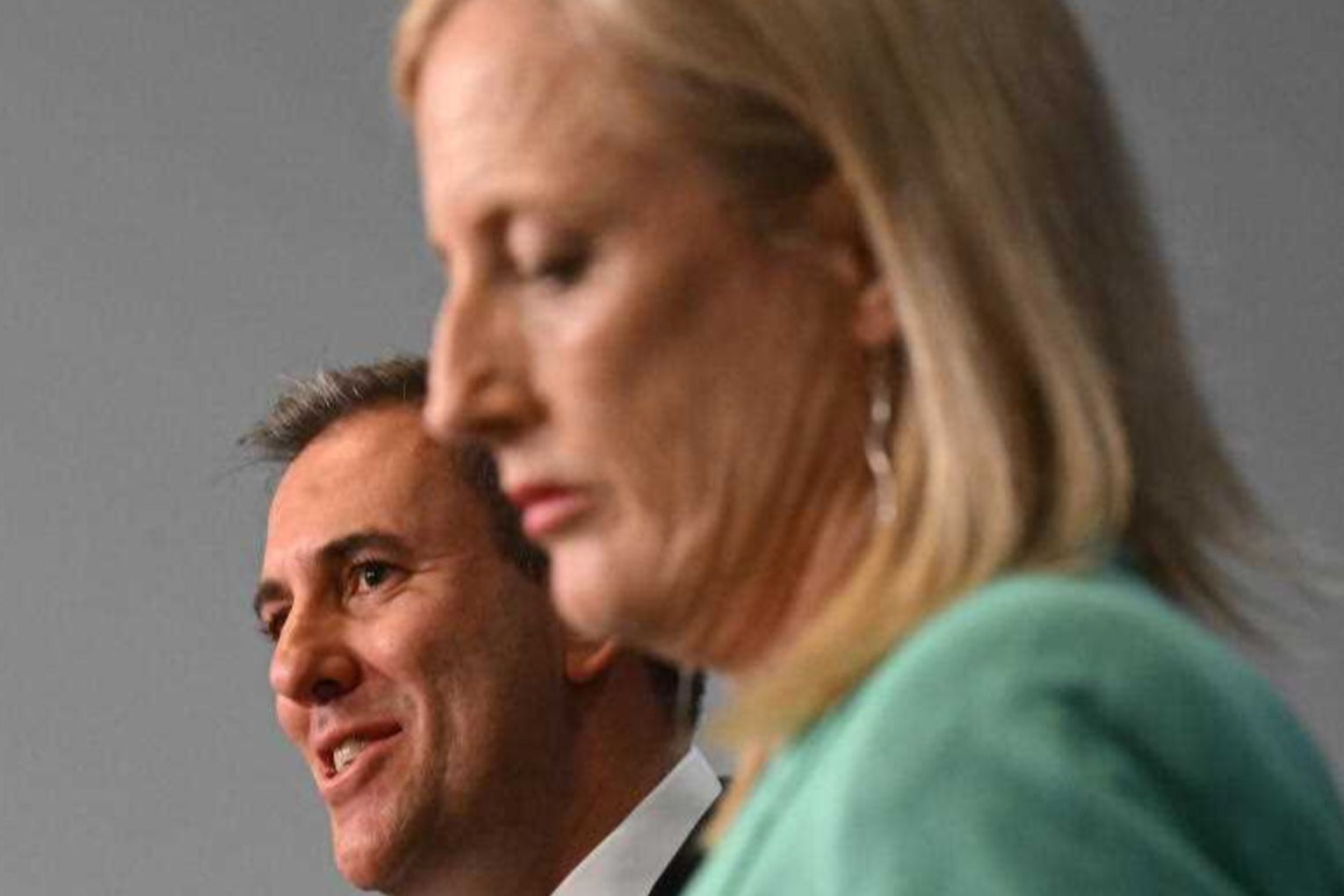
Cutting red tape will be on the agenda for the federal budget, the finance minister says, but only where it makes sense.
Ahead of the May budget, a group of peak bodies led by the Business Council of Australia called for a stocktake of existing regulations, an overhaul of planning rules and new strategies to boost research and development.
Recent research from the Australian Institute of Company Directors and consulting firm Mandala found firms were spending almost $160 billion a year to comply with federal laws.
“That kind of red tape adds cost, slows things down and makes it harder to keep goods moving and shelves stocked,” Business Council chief executive Bran Black said.
Finance Minister Katy Gallagher said the views of business groups ahead of the budget were not a surprise, but regulatory reform would be a feature of the budget.
However, it would not cut all of the regulations businesses were asking for.
You might like

“One of the things about regulatory reform is the government’s keen to do some where it makes sense, where it improves outcomes, where it delivers better regulation,” she told ABC Radio on Monday.
“It’s not just a ‘cut all regulation and see how it goes’. So we’re working with their ideas as well as ideas across government.”
Gallagher said intergenerational equality would also be a focus of the budget.
Final projections for the budget will be drawn up later than usual due to the volatile economic impacts of the war in the Middle East and closure of the Strait of Hormuz.
“We’re not immune from the impact on the global economy. We already had an inflation challenge across our economy. This war is making it harder,” she said.
“We’re working through all of those, that uncertainty, as we finalise the budget over the next few weeks.”
Stay informed, daily
Changes to recently introduced national environmental laws could make an immediate difference to supermarket prices, National Farmers Federation chief executive Mike Guerin said.
“If you particularly talk to Queensland and north Australian graziers and growers, (the new laws are) having an enormous impact on them right now, that level of uncertainty and the regulations that follow,” he said.
“It’s a real moment for thinking boldly and bravely about reform.”
While businesses want less regulation, more than 50 advocacy groups are calling for a raft of reforms including a 25 per cent levy on exported natural gas – a measure fiercely opposed by the resources sector.
The policy would raise up to $17 billion every year, allowing the government to spend more on housing, energy efficiency upgrades and support payments including JobSeeker, the coalition of organisations said.
They also want the capital gains tax discount for investment properties reduced by half and negative gearing phased out over five years.
Labor is widely tipped to pare back incentives for property investors in the budget, although details of the planned changes have not been revealed.
Australia Council of Social Service chief executive Cassandra Goldie said the current policies were not meeting the needs of the community.
“Australia is the world’s second-largest gas exporter, yet governments collect taxes at far lower rates than other resource-rich nations like Qatar,” Goldie said.
“Halving the capital gains tax discount and ending negative gearing would generate an estimated $20 billion over the first four years and significantly more over time, while easing pressure on the housing market.”
-with AAP
Want to see more stories from InDaily Qld in your Google search results?
- Click here to set InDaily Qld as a preferred source.
- Tick the box next to "InDaily Qld". That's it.