Qld island takes out top holiday spot as war, cost-of-living bites
Australians are shifting their travel focus much closer to home amid the conflict in the Middle East and concerns about cost of living.
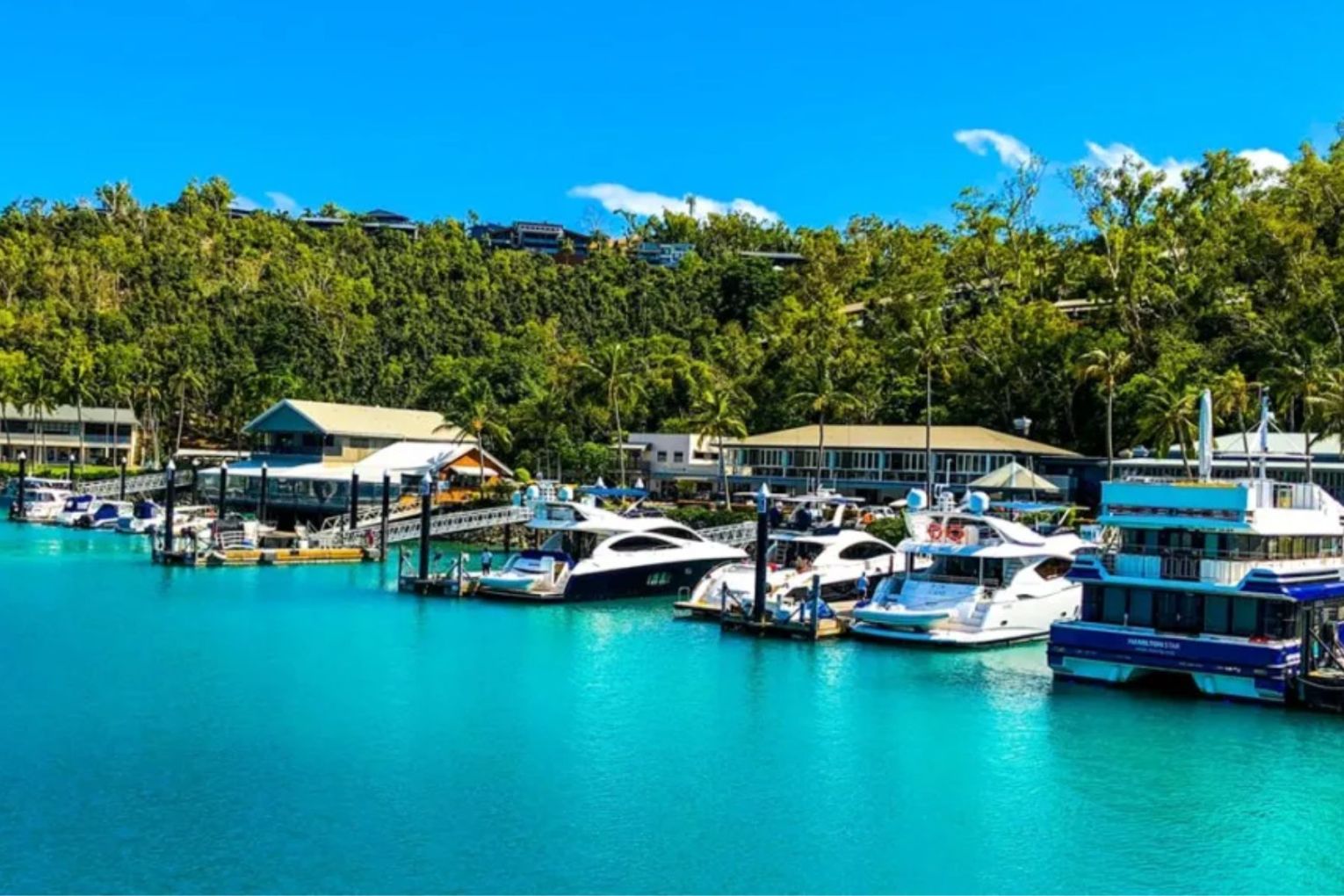
Australians are shifting their travel focus much closer to home amid the conflict in the Middle East and ongoing concerns about cost of living.
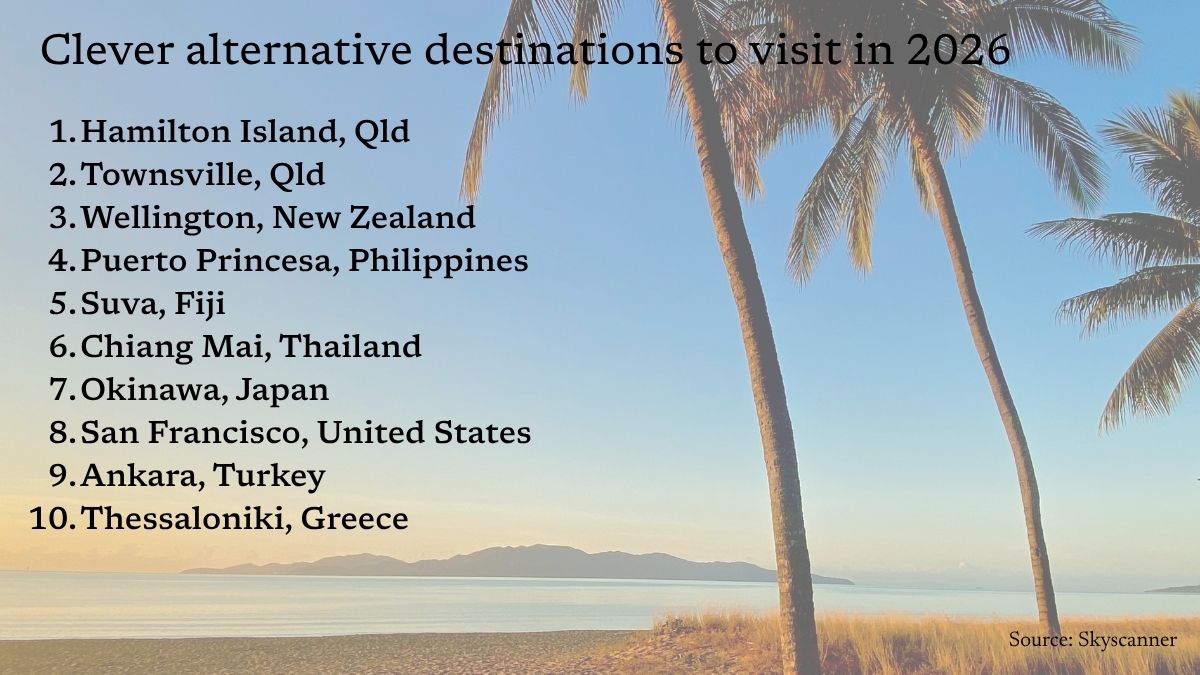
Global travel agency Skyscanner has come up with a list of under-the-radar destinations it describes as “smarter places to travel this winter”.
“With lots of people eyeing up the same places, it pays to look elsewhere,” it said in its Winter Sun Report, released on Tuesday.
“These cheaper, hand-picked alternative winter holiday destinations serve up similar sunshine, scenery or city vibes, often with lower prices, fewer crowds and a bit more room to explore.”
Crucially for Australians, many of the destinations in Skyscanner’s list are in the southern hemisphere or Asia. It is headed by Hamilton Island and Townsville, both in Queensland, with the New Zealand capital, Wellington, in third spot.
It comes amid warnings of higher Australian airfares for longer as experts predict neither of the nation’s major carriers will cut prices until war-inspired fuel-cost hikes subside.
Virgin Australia and Qantas have both announced fare increases and cuts to capacity amid rising fuel prices driven by the US-Israel war against Iran that began on February 28.
You might like

Air New Zealand, Air India, Delta Air Lines, and Lufthansa have also reduced capacity in recent weeks, citing the refining costs of jet fuel which have surged to a peak of about $US120 per barrel from $US20 before the war.
Earlier this month, Macquarie University finance professor Lurion De Mello said the higher prices would likely persist even after oil costs eventually fell.
“Fuel volatility is being cushioned through hedging, but airlines are clearly using the opportunity to lock in higher pricing rather than pass any relief back to consumers,” he said.
“Even if fuel prices normalise later, history would suggest fares are unlikely to retrace meaningfully, particularly with strong demand and a benign competitive backdrop domestically.”
Flight Centre Group, meanwhile, has urged customers to book and pay in full soon to avoid the worst of price rises.
“With the pressure on overseas travel, particularly in the tourist and holiday market, Australia domestically will do reasonably well,” chief executive Graham Turner said earlier in April.
Sydney Airport, Australia’s biggest, said on Tuesday the March quarter was its strongest for international travel in its history. It funnelled 4.57 million passengers through its terminals, up 5.8 per cent on the same quarter last year.
New Zealand and China were its largest international markets, with passenger volumes up 13.5 per cent and 14 per cent, respectively.
Travel to and from Hong Kong was also strong, up 21.4 per cent, and there was also increased traffic for Shanghai, Seoul and Kuala Lumpur.
Airport chief Scott Charlton said the growth in international traffic was a great outcome given the US war on Iran.
Stay informed, daily
“Growth across China and broader Asia is increasingly supporting travel into Europe, helping to offset softer conditions in parts of the Middle East,” he said.
Domestic passenger growth was also strong – up 2.1 per cent to 6.2 million in the quarter.
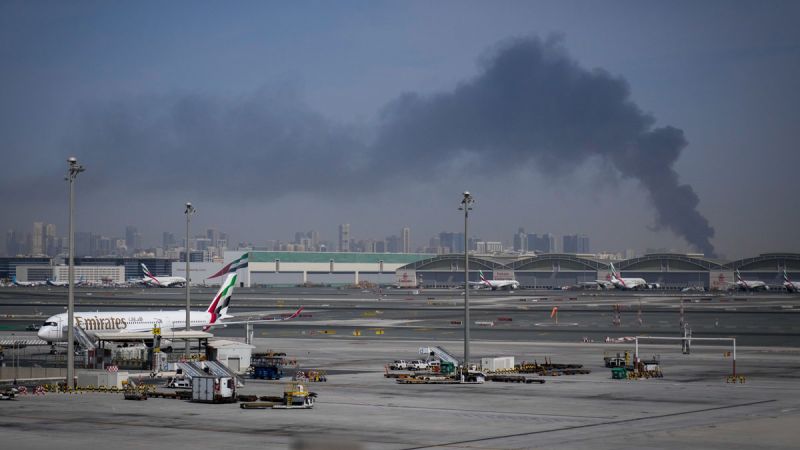
Dubai International Airport came under attack from Iran in March. Photo: AAP
‘Confidence crisis’
Sydney’s buoyant numbers came as a leading marketing agency found that many of us are still dreaming about holidays – but we’re extremely reluctant to book them.
Global travel marketer Propellic found that online travel searches surged during March even as war waged in the Middle East – while bookings in some regions plummeted to almost zero.
Sessions for the United Arab Emirates leapt an astonishing 12,766 per cent while searches for Jordan spiked by 153 per cent – but booking conversions collapsed in what Propellic labelled a “frozen pipeline”.
“Our data suggests much of the elevated traffic may reflect existing travellers checking cancellation terms and monitoring safety advisories rather than researching new trips,” it noted in an intelligence briefing released this week.
Unsurprisingly, the trend was particularly noticeable in the Middle East – where locations outside the immediate warzone also came under fire. Turkey, Saudi Arabia, Egypt, Qatar, Oman and Bahrain were among destinations with noticeable declines.
But Propellic also identified what it called a “Mediterranean sentiment spillover”. It said the confidence crisis had spread to destinations such as Greece and Spain.
Normally be seen as safer, alternative summer holidays, they instead were mirroring the trend for the Middle East.
“The data is clear,” Propellic CRO John Matson said.
“Travellers are willing to travel and are actively researching these destinations. They haven’t lost interest. They’ve lost confidence.”
Propellic’s report drew on 30 days of data across more than 60 travel brands and 27 destinations.
Just three destinations out of the 27 bucked the confidence trend – Vietnam, Thailand and Indonesia. Propellic said that was likely due to travellers’ perceptions of their distance from the conflict.
The agency also singled out a current hotspot for Australian visitors, Japan, for special mention. It said its interest and conversion rates were “substantially stronger year over year”.
Want to see more stories from InDaily Qld in your Google search results?
- Click here to set InDaily Qld as a preferred source.
- Tick the box next to "InDaily Qld". That's it.