‘Massive breakthrough’ in koala chlamydia vaccines
A new vaccine implant has been administered to a wild koala for the first time, giving new hope in the fight to protect the loved Queensland creatures.
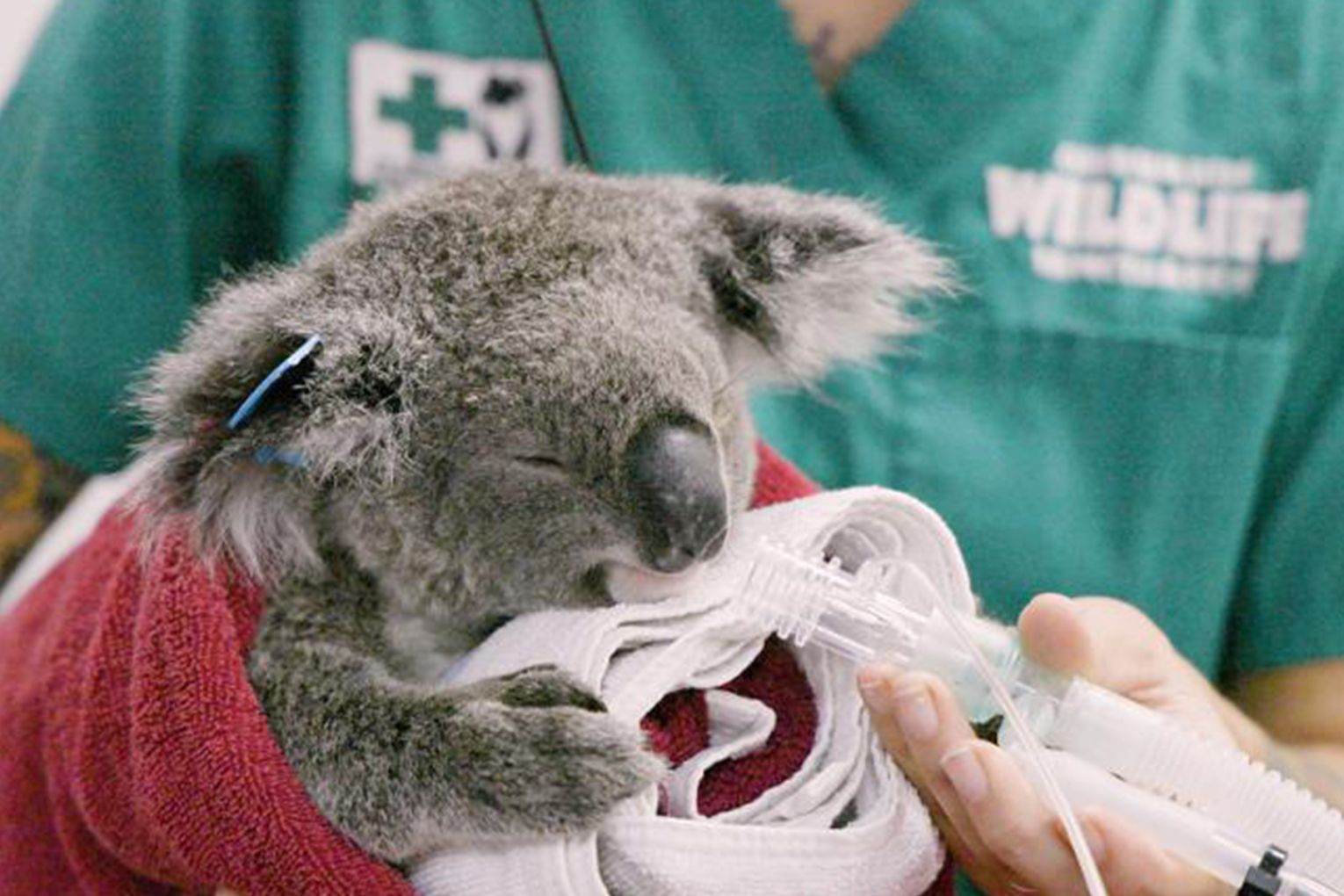
A young female koala named Bamse (Norwegian for “teddy bear”) is the first of her kind to receive Queensland University of Technology’s two-dose chlamydia vaccine implant.
The implant has been designed to break down after 30 days to deliver the second dose, removing the need for a second procedure and recapture.
The 18-month old koala was captured in Burleigh before being taken to Currumbin Wildlife Hospital (CWH), where Senior Veterinarian Dr Michael Pyne administered the dose, a university update said.
Assisted by Dr Freya Russell from the QUT School of Biomedical Sciences and Centre for Immunology and Infection Control, Payne sedated Bamse and injected her with the first vaccine dose and then inserted the implant.
Dr Freya Russell said assisting Dr Pyne with the first implant procedure was like witnessing years of research finally coming to life.
“What makes this implant so exciting is its versatility,” Russell said. “It can be adapted to a wide range of animal vaccines or medicines that would usually require multiple doses.”
You might like


This process is less stressful for the animals, requires fewer staff and resources, and makes large-scale vaccination much more practical.
“We’re in discussions with wildlife and livestock research groups,” Russell said. “Many farmers have said this technology would be life changing by reducing the effort it takes to vaccinate cattle.”
Bamse was returned to her bushland home on May 19, the same day of the procedure by the Currumbin Wildlife Sanctuary’s koala ecology team.
More than 500 koalas have already been vaccinated at CWH and the Moggill Koala Rehabilitation Centre, including more than 30 young koalas from Elanora on the Gold Coast.
This followed positive results in fighting the disease killing local koala populations, with the university researchers saying in 2020, more than 70 percent of Elanora koala’s presented to CWH were infected with chlamydia – now admissions from what was previously one of the state’s most diseased population areas have fallen 75 percent.
The Elanora population was vaccinated through a two-step process, where koalas were captured for an initial vaccine and again four weeks later for a booster shot.
Stay informed, daily
Now six koalas, including Bamse, are now wearing a GPS collar and will be monitored for at least six months to assess the implant’s effectiveness.
Bamse and one other koala have already received their one month check up and remain chlamydia-free.
Dr Michael Pyne, Senior Vet at Currumbin Wildlife Hospital, said this news was an important breakthrough after more than five years of research.
“We’ve seen such devastation from chlamydial disease in koalas in South East Queensland and New South Wales,” Pyne said. “It’s absolutely critical the vaccine is rolled out en masse to at-risk populations to protect them.”
The World Wide Fund for Nature Australia is backing the research while furniture brand Koala provides funding support.
The project, which has been led by QUT and CWH, has reached a major milestone by beginning implantation procedures on wild koalas.
Tanya Pritchard, Senior Manager of Koala Recovery at World Wide Fund for Nature Australia said Australians want a solution for the disease harming our national icon.
“WWF is working to protect and restore habitat at scale, but if sick and unhealthy koalas are moving into these areas, it’s a problem,” Pritchard said.
“We need to tackle chlamydia and restore and protect their habitats if we’re going to bring koalas back from the brink of extinction.”
Dr Lyndal Hulse, Postdoctoral Research Fellow from the University of Queensland recommends that Somerset-South Burnett, Redland City, Logan City, Western SEQ and Moreton Bay should be prioritised for vaccination due to high disease burden.
“It would be quite beneficial if we could actually roll out the vaccine in those regions in South East Queensland with the highest prevalence of infection and disease,” Hulse said.
She adds that with chlamydia pecorum strains (the most common strain among koalas) changing every year, the vaccine needs to keep changing too.
“So it’s one of the things that we need to monitor into the future to make sure the vaccine keeps working.”
Want to see more stories from InDaily Qld in your Google search results?
- Click here to set InDaily Qld as a preferred source.
- Tick the box next to "InDaily Qld". That's it.