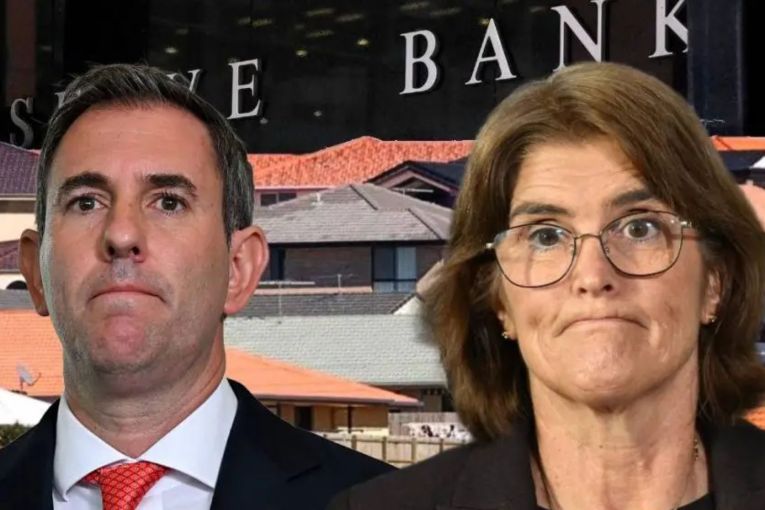
RBA delivers fifth interest rate hike in bid to battle inflation
Mortgage holders face more pain as the Reserve Bank makes its Cup Day call on rates.
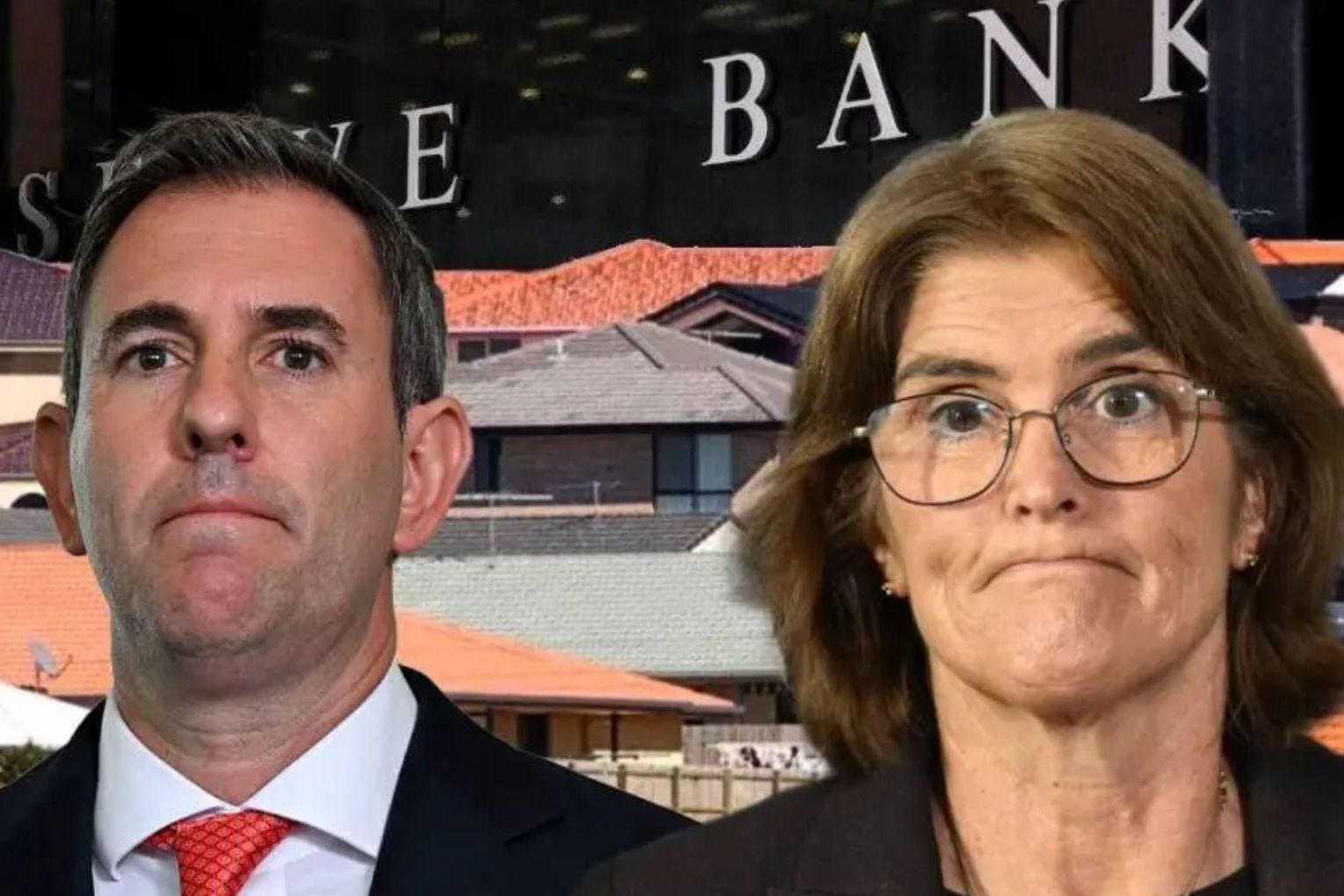
- The Reserve Bank of Australia (RBA) has lifted interest rates for a fifth time this year, to 4.85 per cent.
- Today’s hike would see the average Australian borrower having to find an extra $500 a month since the hiking cycle began in February.
- The RBA board said a hike was necessary to quell the danger of high inflation becoming entrenched in the Australian economy.
The Reserve Bank of Australia (RBA) has delivered a fifth interest rate hike for 2026, adding more pain for variable-rate borrowers.
Announcing its decision this afternoon, the RBA board said it would lift the cash rate target by 25 basis points, from 4.6 per cent to 4.85 per cent.
Australia’s official cash rate target is now at the same level it was in November 2008, when the world was recovering from the Global Financial Crisis.
Today’s hike will see the average owner-occupier with $600,000 remaining on their mortgage forced to find an extra $100 a month.
Since February, that same borrower now needs to find a cumulative $500 per month in order to meet their repayments.
In its monetary statement, the RBA board said it was necessary to clamp down on inflation before it became an expected part of the economy.
“Capacity pressures appear a little tighter than previously estimated and there are indications that higher fuel prices are being passed through to prices of other goods and services,” the board said inits statement.
You might like


“Inflation is now expected to remain above 3 per cent for the coming year and there is an increasing risk that higher inflation expectations will become embedded.
“The Board is conscious of the period in which inflation has been too high.
“Given the revised inflation outlook and the continuing upside risks, the Board judged that a further tightening in financial conditions is warranted to support the return of inflation to target.”
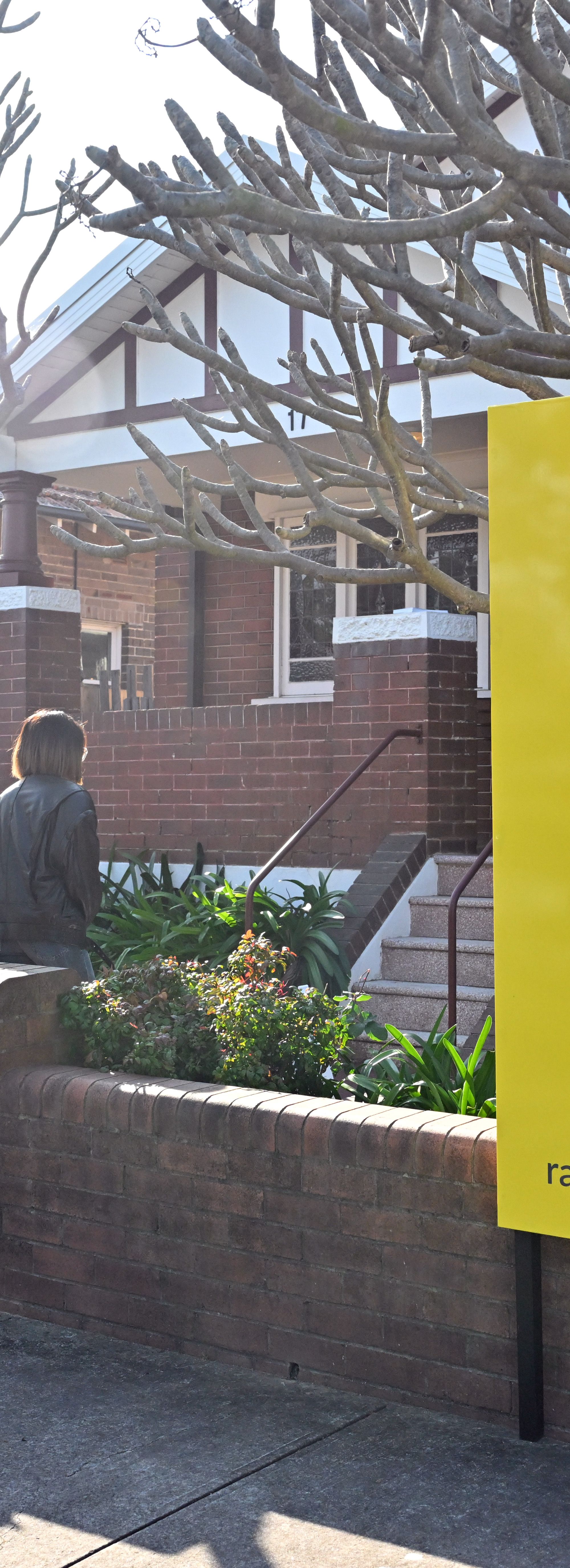
Since February, the average borrower now needs to find an extra $500 a month. Photo: AAP
Jen Richardson, founder of accounting firm 123 Financial, told The Money Edition that today’s hike will profoundly affect households across the country.
“This hike comes at the most expensive time of year,” she said.
“It’s on top of the higher prices we’re already paying for groceries, fuel, power, and insurance. People aren’t starting from zero.
“They’re starting from a budget that is already pushed to the limit.”
Ron Hodge, CEO of digital wealth platform InvestSMART, told The Money Edition that today’s rate hike could prompt investors to pull money into safer investments.
“With inflation rising to 4.3 per cent in September, the RBA clearly isn’t ready to take its foot off the brake. But another rate rise is tough news for already stretched households,” Hodge said.
Stay informed, daily
“For investors, higher rates are making cash and fixed-income investments more attractive, and Australians are responding.
“Our analysis of ASX data shows $8.1 billion flowed into fixed-income ETFs in the first nine months of 2026, with quarterly inflows almost doubling from $2 billion in March to $3.8 billion in September.”
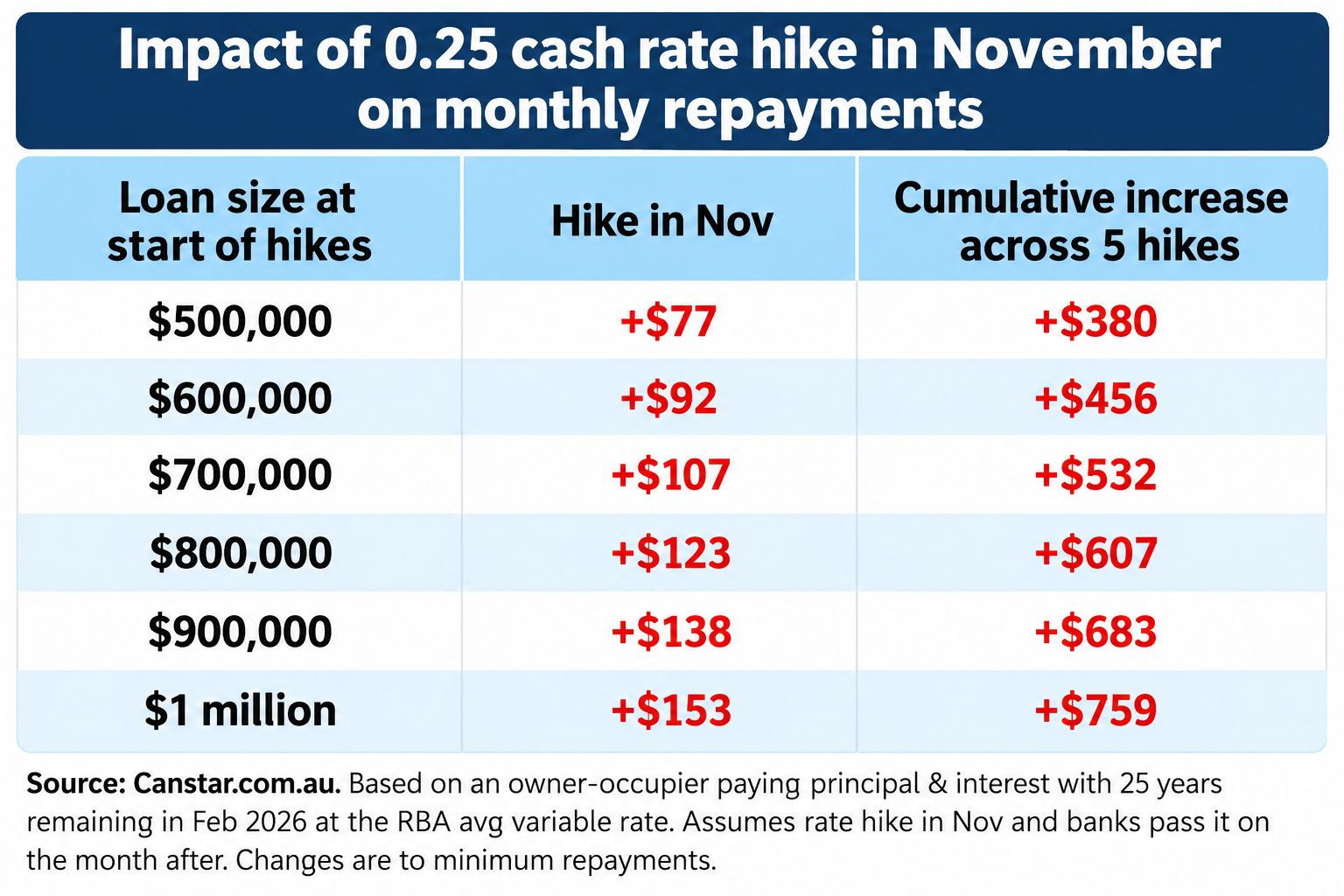
How much today’s interest rate hike will cost you, depending on the size of your mortgage. Canstar/The Money Edition
What to do if your budget is already stretched to the limit
If your household budget was already under strain, today’s rate hike might come as a shock.
You can take steps to manage your finances — and avoid some traps, too.
“The first place I see hardship play out is on the credit card. Nobody sits down and decides to live on credit,” Richardson said.
“But when the mortgage goes up, the groceries still need buying, so they go on the credit card. One tap at a time, the card has become the household’s lifeline, and before long, using it for everyday spending is just the norm.
“Then they are paying for this week’s groceries at around 20 per cent interest for months.”

Households are urged not to rely on credit cards for everyday expenses. Photo: TND
She advises that households sit down and carefully review their expenses, from large items to small subscription costs.
“Most people, when they do decide to cut back, go looking for the big savings, but those tend to be one-off decisions, and whilst they are beneficial, they only get to be made once or twice,” she said.
“The real difference usually comes from the small regular cuts that keep happening every week.
“The insurance that auto-renewed without anyone reviewing the price, the extra trips to the supermarket because there wasn’t a plan in place.”
If you do all that and still find yourself short, Richardson says it’s time to contact your lender.
“Of course if you are struggling, call your lender before you miss a payment,” she said.
“Make the call to see if they have a better rate that is more competitive, because loyal customers often pay more than new ones.”
Want to see more stories from InDaily Qld in your Google search results?
- Click here to set InDaily Qld as a preferred source.
- Tick the box next to "InDaily Qld". That's it.