Hidden planet could answer space mysteries, Qld research suggests
An undiscovered ninth planet could explain “strange” orbits in our solar system, Queensland researchers suggest.
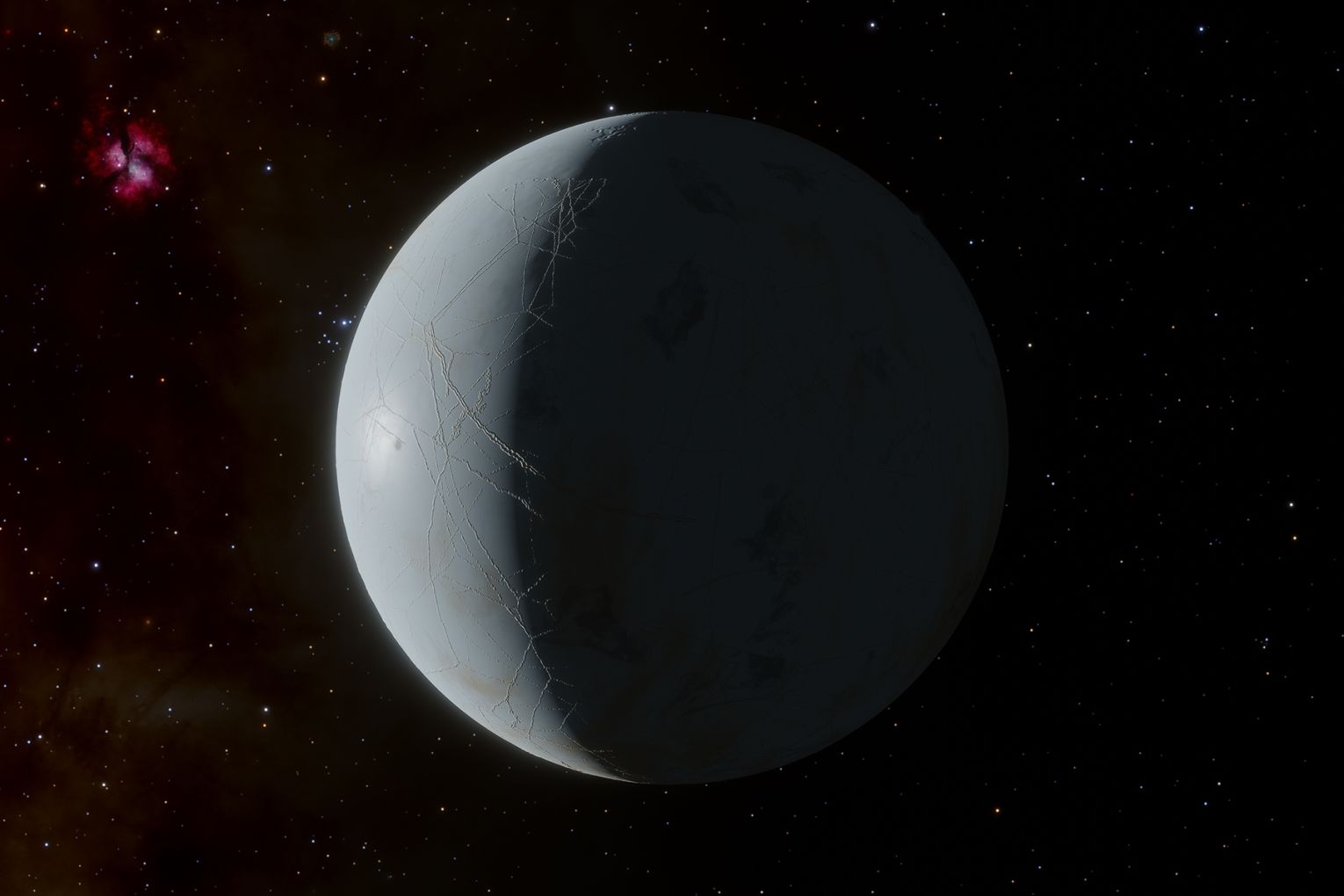
A ninth planet could be hidden behind Neptune, new computer modelling by Queensland researchers suggests.
Astrophysicists from the University of Southern Queensland (USQ) and Japan’s Kindai University suggested the planet, named named X2, could be double the size of Earth.
The gravity of he hypothetical plant could explain some of the unusual orbits of icy objects far beyond Neptune, UniSQ Adjunct Associate Professor Patryk Sofia Lykawka explained.
According to Professor Lykawka, the existence of X2 remains hypothetical – but could change how we understand the history of our Solar System.
“Imagine discovering, after decades of mapping our Solar System, that another planet has been hiding from us all this time,” Associate Professor Lykawka said.
You might like


Using information gathered by the ongoing survey of the sky conducted by Vera C. Rubin Observatory in Chile, astronomers were able to test the theory of the hidden planet.
The research published earlier this week in Monthly Notices of the Royal Astronomical Society, offers a new way to investigate a bast region beyond Neptune that has baffled astronomers for the last two decades.
The region is populated by icy bodies known as trans-Neptunian objects, most of which are part of the Edgeworth-Kuiper Belt, orbiting in a broad disk between 38 and 50 times the distance from Earth to the Sun.
A growing population of more distant objects moving on usually tilted or elongated orbits have been difficult for researchers to explain through the gravitational influences of known planets.
Stay informed, daily
Computer simulations spanning the 4.5 billion years of the Solar System’s evolution, researchers have studied whether a distant ninth planet might explain these unusual patterns.
“Our model reproduces several of the unusual orbital patterns observed among distant icy objects, although there are still differences between the model and observations that we need to investigate further,” Professor Lykawka said.
The model suggests X2 could have an elliptical orbit with a semi-major axis – a measure of the size of its orbit – of around 350 to 500 astronomical units and located at least 200 astronomical units from the Sun.
This search for a hidden planet behind Neptune isn’t new. Back in 1930, Percival Lowell’s search for the hypothetical planet led to the discovery of Pluto – though the planet is too small to explain the unusual movements that prompted the research.
The search has been recently revived in the last twenty years as the unusual dynamics of the broader trans-Neptunian region have been more closely observed.

UniSQ Professor Jonti Horner, a co-author of the study, said future observations could help researchers test predictions about the distant Solar System and search for an undiscovered planet.
“The exciting thing is that we now have an opportunity to put this idea to the test,” Professor Horner said.
“As the Rubin Observatory surveys the sky, we will find new clues that help us understand the distant reaches of the Solar System – and whether another planet is still waiting to be discovered.”
The study was co-authored by Associate Professor Patryk Sofia Lykawka (Kindai University, UniSQ, and National Astronomical Observatory of Japan), Assistant Professor Pedro Bernardinelli (University of Washington and University of São Paulo), and Professor Jonti Horner (UniSQ).
Want to see more stories from InDaily Qld in your Google search results?
- Click here to set InDaily Qld as a preferred source.
- Tick the box next to "InDaily Qld". That's it.