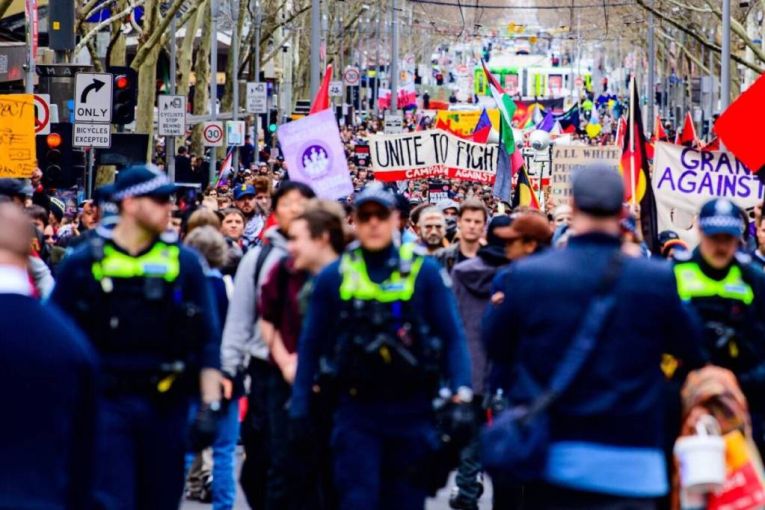
Why a federal royal commission into the Bondi atrocity isn’t the right option
Former federal Labor government minister Craig Emerson tells why he thinks a royal commission into the Bondi Beach massacre would be the wrong call.
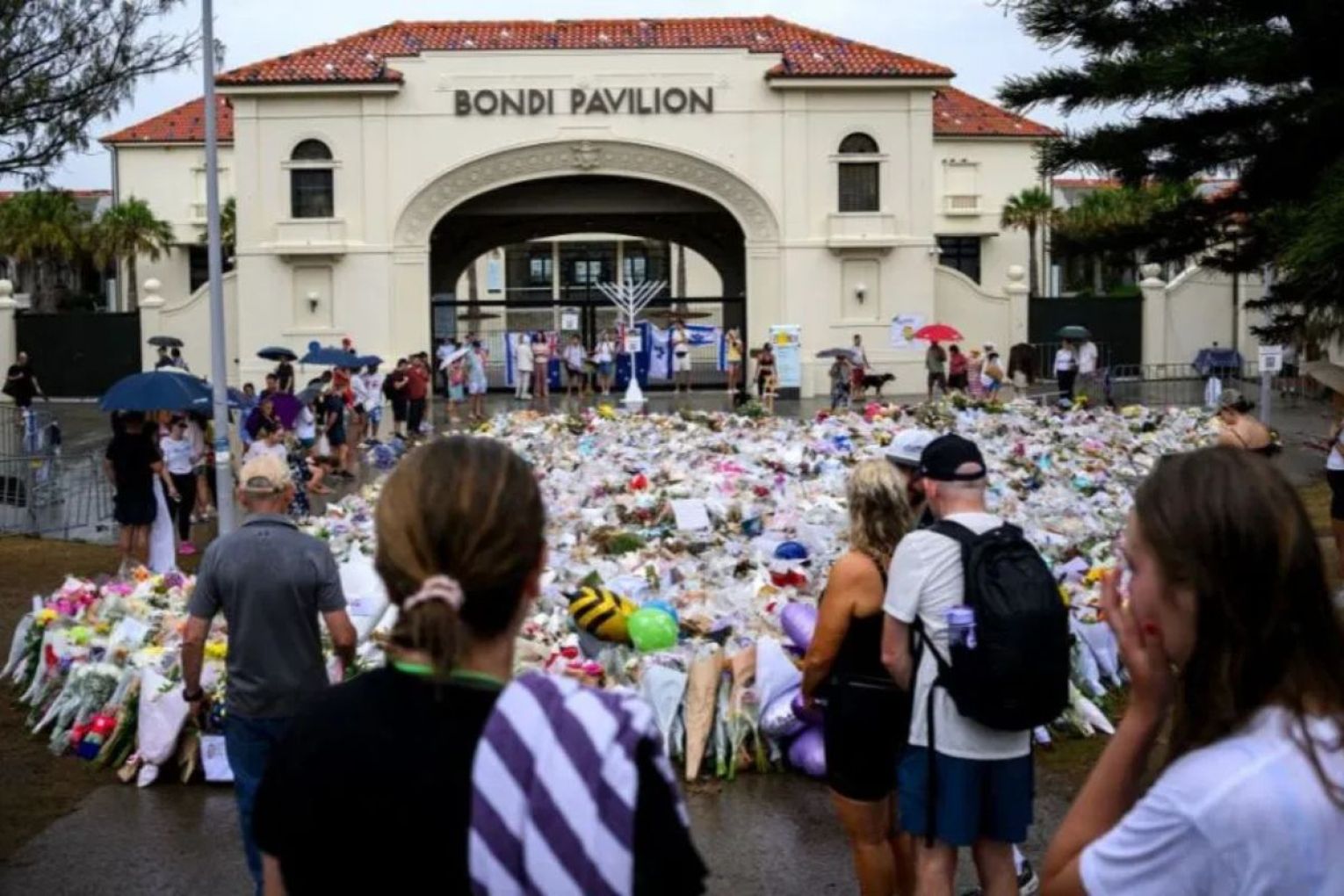
Understandably, many of the Jewish faith are calling for a federal royal commission into the Bondi atrocity. So is the federal opposition. But is it the best option? Would it truly serve the interests of Jewish community and the general public?
This must be the test, not the number of people demanding it and the vociferousness of their demands.
Within a few days of the atrocity, we knew a lot about the accused gunmen. The son had come to the attention of ASIO in 2019 and in October of that year ASIO began assessing him because of his connection to members of a NSW Islamic State cell. About two years later, ASIO advised NSW Police that the son had been associating with Islamic extremists – well before police granted a gun licence to his father and accomplice.
The son was placed on a “known entity management list” around 2021. Yet NSW Police issued his father a gun licence in 2023.
For most of November 2025, father and son travelled to southern Mindanao in the Philippines, a place known for its Islamic jihadist activity, about two weeks ahead of their alleged attack.
Some advocating a royal commission argue that federal security agencies and the NSW Police should have pieced together this information. But that will be tested by the inquiry announced by Prime Minister Anthony Albanese and led by former defence departmental secretary and ASIO chief Dennis Richardson.
You might like

If a federal royal commission were established to examine the effectiveness of the relevant federal agencies, predominantly ASIO and the Australian Federal Police, most of it would need to be conducted behind closed doors.
Then, allegations of cover-ups would fly every day, led by the Coalition and the media.
A federal royal commission running parallel with the Richardson inquiry would create confusion, frustration and inordinate delay. The reporting date of the Richardson inquiry is the end of April. A federal royal commission would only be getting warmed up by then.
Meanwhile, a state royal commission, established by the NSW government, will be well under way. Experts and Jewish community representatives invited to give evidence to the NSW royal commission would travel to Canberra to give the same evidence to a federal royal commission.
Perhaps some advocates of a royal commission might expect it would hold the perpetrators to account. But that’s the role of the courts.
Other advocates of a federal royal commission argue it would make recommendations relating to antisemitism. But the Albanese government has already acted on recommendations of a report on antisemitism that it commissioned special envoy Jillian Segal to prepare.
Stay informed, daily
If the argument is that the government has been too slow in responding to the other recommendations of that report, then a protracted royal commission wouldn’t hasten that response; it could only delay it. In fact, the Prime Minister has committed to accelerating the government’s response to the remaining recommendations of the Segal report.
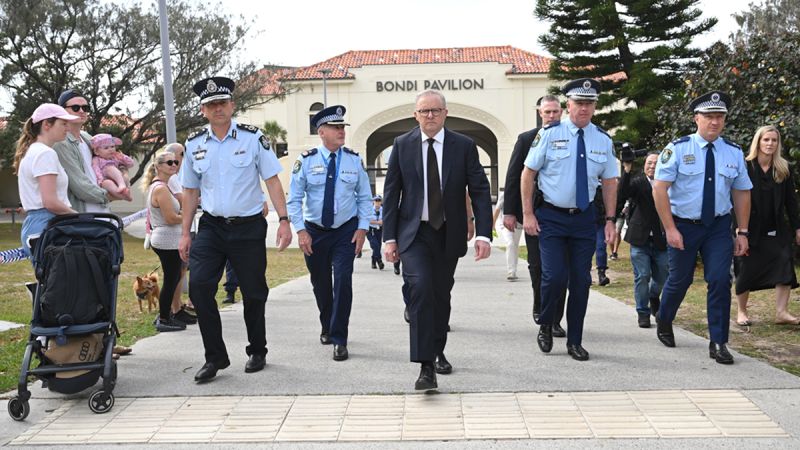
Prime Minister Anthony Albanese at Bondi in the days after the mass shooting. Photo: AAP
If Albanese acquiesced to critics demanding a federal royal commission, they and others claiming that the whole inquiry process in response to the Bondi shootings had become a dog’s breakfast would have a pretty strong case.
Perhaps that’s why the Coalition is so insistent on a federal royal commission. Frontbenchers would have ready-made daily media opportunities to claim the whole inquiry process was a shambles.
We don’t need a federal royal commission to recommend that Nazi symbols and salutes be made unlawful in Australia. They already are. Inciting violence and engaging in hate speech is unlawful in various jurisdictions. Strengthening those provisions can be considered without the need for a federal royal commission.
NSW Premier Chris Minns is moving to make it illegal in NSW to publicly display flags and other symbols of listed terrorist organisations, including Islamic State, al-Qaeda, Hamas and Hezbollah. Federal laws already prohibit such displays.
A federal royal commission isn’t needed to determine whether these laws are adequate or should be strengthened. Swifter action is needed.
Many advocates of a federal royal commission are sincere in their demands. Others see political advantage in it.
More importantly, the Albanese government has a responsibility to examine the degree of cooperation between security agencies and the police, which it is doing through the Richardson inquiry, and to deal with expressions of antisemitism through violence and protests.
But that doesn’t require condoning all actions of the Netanyahu government in Gaza or the West Bank or resiling from the Albanese government’s decision to join 150 other countries in support of Palestinian statehood.
Violence against Jews, instilling fear into Jewish children when attending school and the atrocity of the Bondi shootings demand a swift response. A protracted federal royal commission would not achieve that.
Craig Emerson is managing director of Emerson Economics and was trade minister in the previous Labor government and an adviser to former Prime Minister Bob Hawke
Want to see more stories from InDaily Qld in your Google search results?
- Click here to set InDaily Qld as a preferred source.
- Tick the box next to "InDaily Qld". That's it.