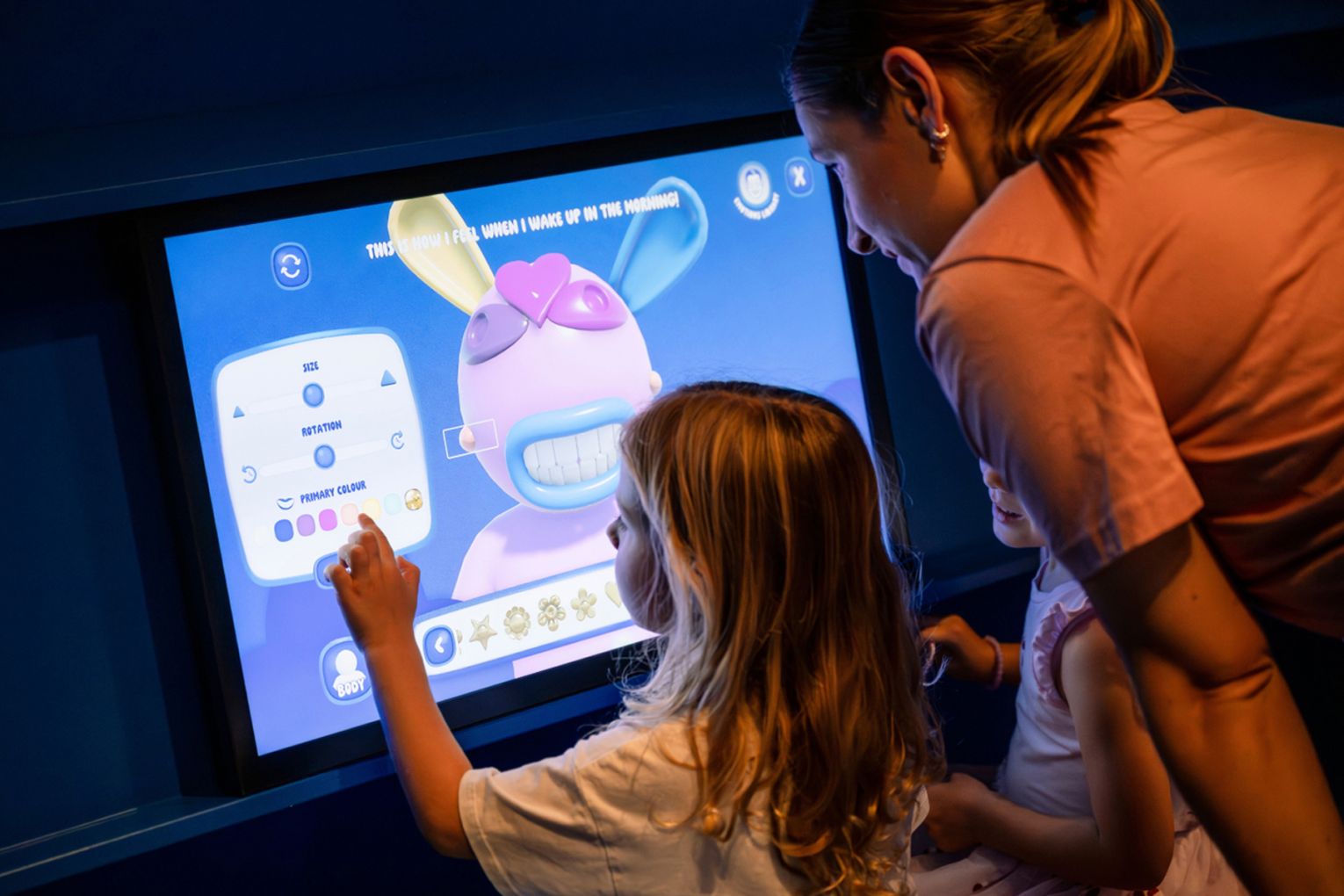


This project includes a return of your Garden of Love (2021) activity alongside a series of new interactive elements. What was important to revisit, and what did you want to do differently this time?
Garden of Love invited visitors to contribute directly to the artwork. I loved seeing how each person added their own thoughts and feelings, slowly growing the piece into a shared garden. For this exhibition, it felt meaningful to bring that spirit back, but also expand the experience with new activities and technologies. This version gives children the opportunity to express their love and appreciation for those they hold dear.
Your work is often filled with joyful characters and bright colours. How do those playful visual elements help audiences, particularly children, engage?
Playfulness helps people feel welcome. Bright colours and friendly characters can immediately capture a child’s attention and make the space feel safe and inviting. Once that connection is made, it becomes easier to explore deeper ideas about feelings and self-expression. The playful elements act as a doorway into the experience.
What role did creativity play in your own childhood, and have those early experiences shaped the way you approach making art for young audiences?
I have loved to make something using my hands since I was a child. Making things gave me a way to imagine different worlds and express myself. Those experiences stayed with me and shaped how I think about art today. When I create work for young audiences, I try to remember that sense of curiosity and freedom.
Children experience emotions very directly and honestly. What have you learned by watching how younger audiences respond to your art?
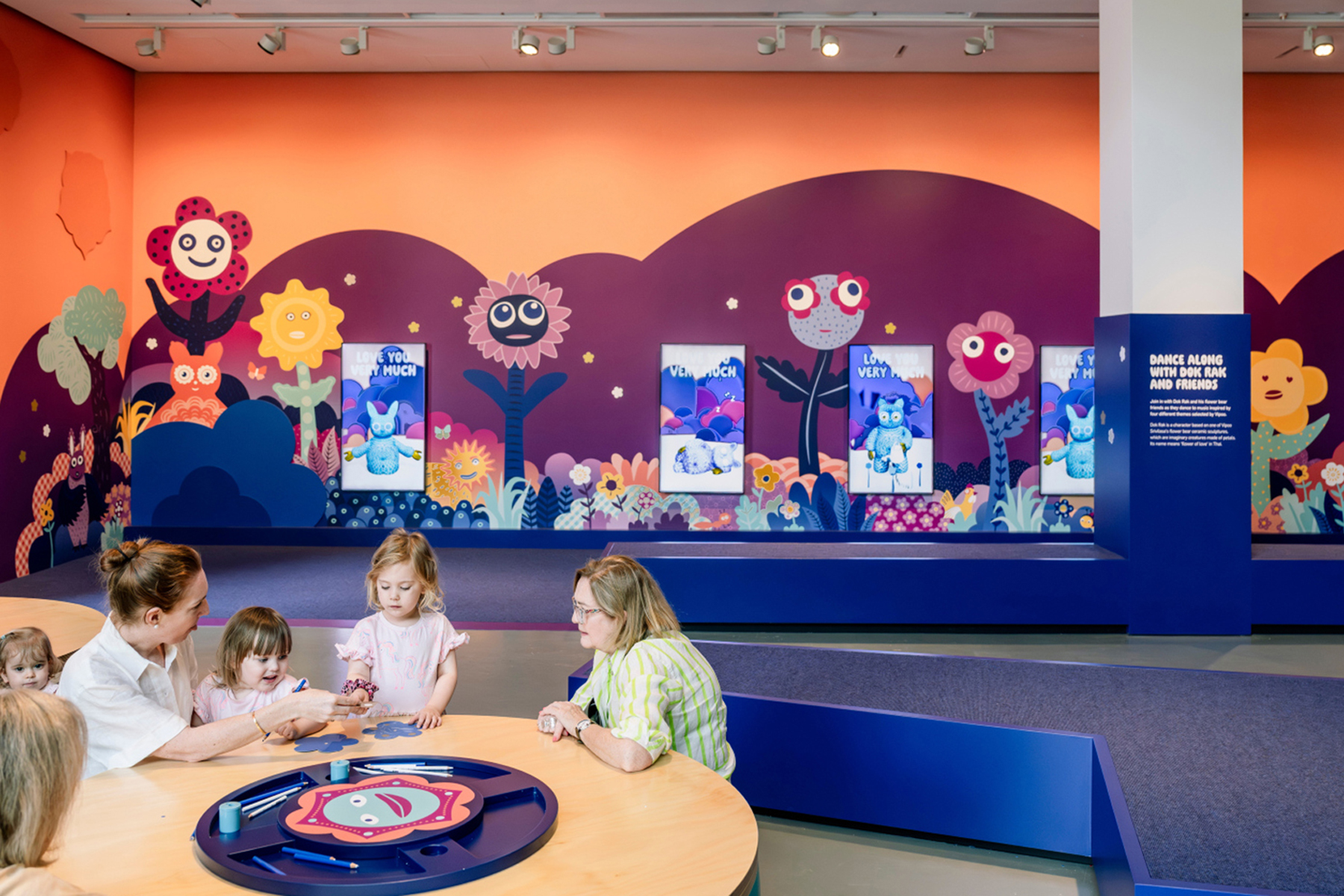
Children respond with remarkable honesty. They often say exactly what they feel without overthinking it. Watching them interact with the work reminds me that emotions don’t have to be complicated or hidden. Their openness is something adults can learn from.
Positivity and accessibility are key aspects of your practice. How do you design an exhibition that speaks to children while still resonating with adults?
I try to create experiences that operate on different levels. Children might respond to the colours, characters and activities, while adults may connect with the ideas behind them. Emotions are universal, so everyone can find something meaningful in the experience. Ideally, the exhibition becomes a space where families can share the experience together.
There’s a lot of joy and fun in your work, but emotions aren’t always simple or happy. How do you balance lightness with the deeper emotional ideas behind the exhibition?
With difficulty! It’s a very fine balance. I often begin with beauty and playfulness because they invite people in. When something feels welcoming, people are more open to reflecting on deeper emotions. The joyful surface creates a safe environment where more complex feelings can be explored. For me, both aspects are equally important.
What do you hope children and their parents or carers take away from the experience after spending time in the exhibition?
I hope the exhibition encourages conversations about feelings. Children are often very comfortable expressing emotions, while adults sometimes need a reminder that it is okay to talk about them openly. If families leave feeling more connected and more willing to share how they feel, that would make me very happy.
What’s your favourite moment when watching visitors – especially children – interact with your work?
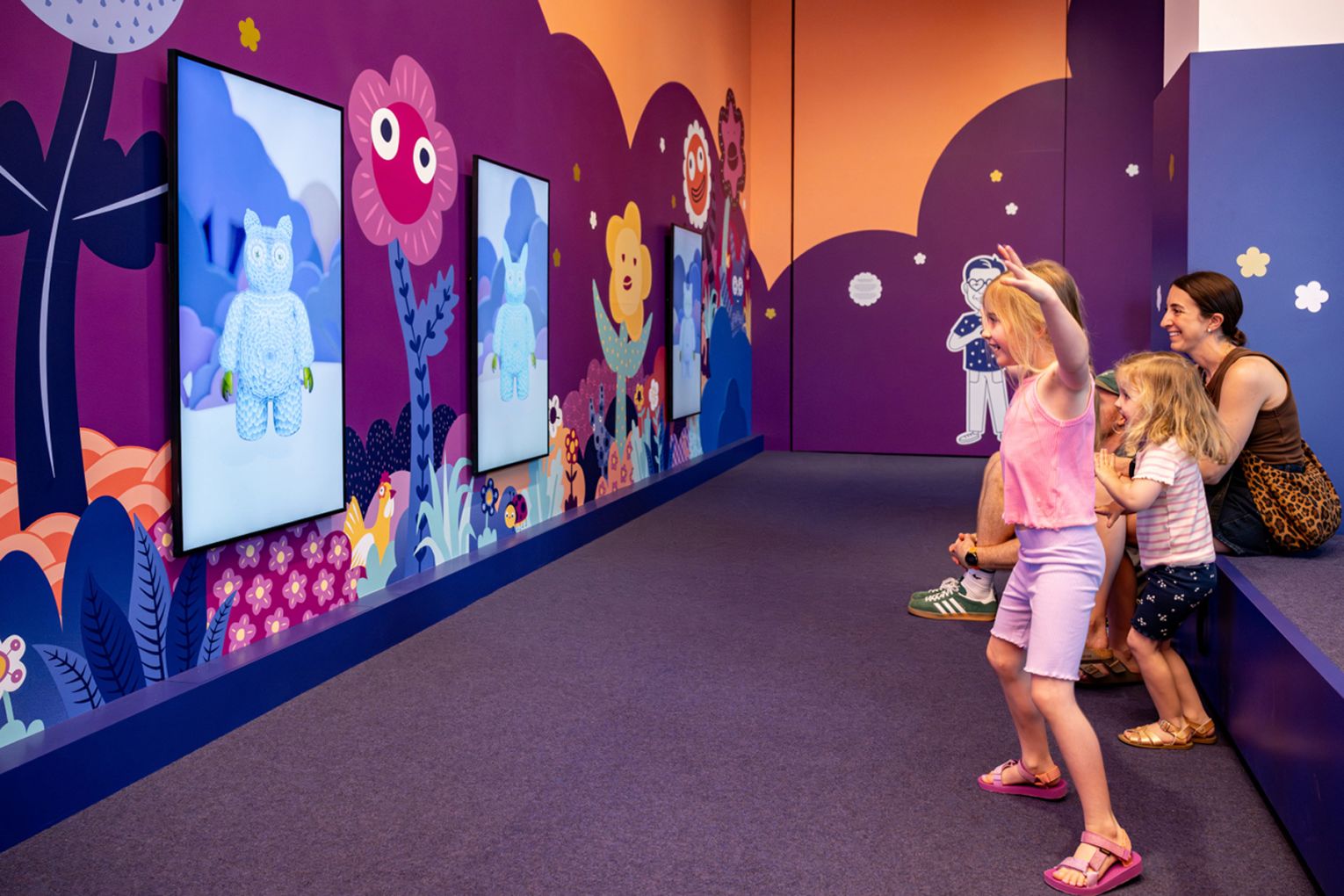
Reading the comments and messages on my social media about how visitors and their children enjoy the show always makes me smile. They forget that they are in a gallery and simply respond to the experience. I also love hearing that my friend and his dad dance along with Dok Rak. Moments like these remind me that art can be playful, meaningful and shared all at the same time.
Vipoo Srivilasa’s Express Yourself exhibition is open daily at QAGOMA’s Children’s Art Centre until Sunday September 13. Entry is free. Visit the website for details.
This article was written in partnership with our good friends at QAGOMA.