Teals in talks to form new political party: Report
Independent MPs say they are open to the teals forming their own political party, but have so far declined to say how far talks have progressed.
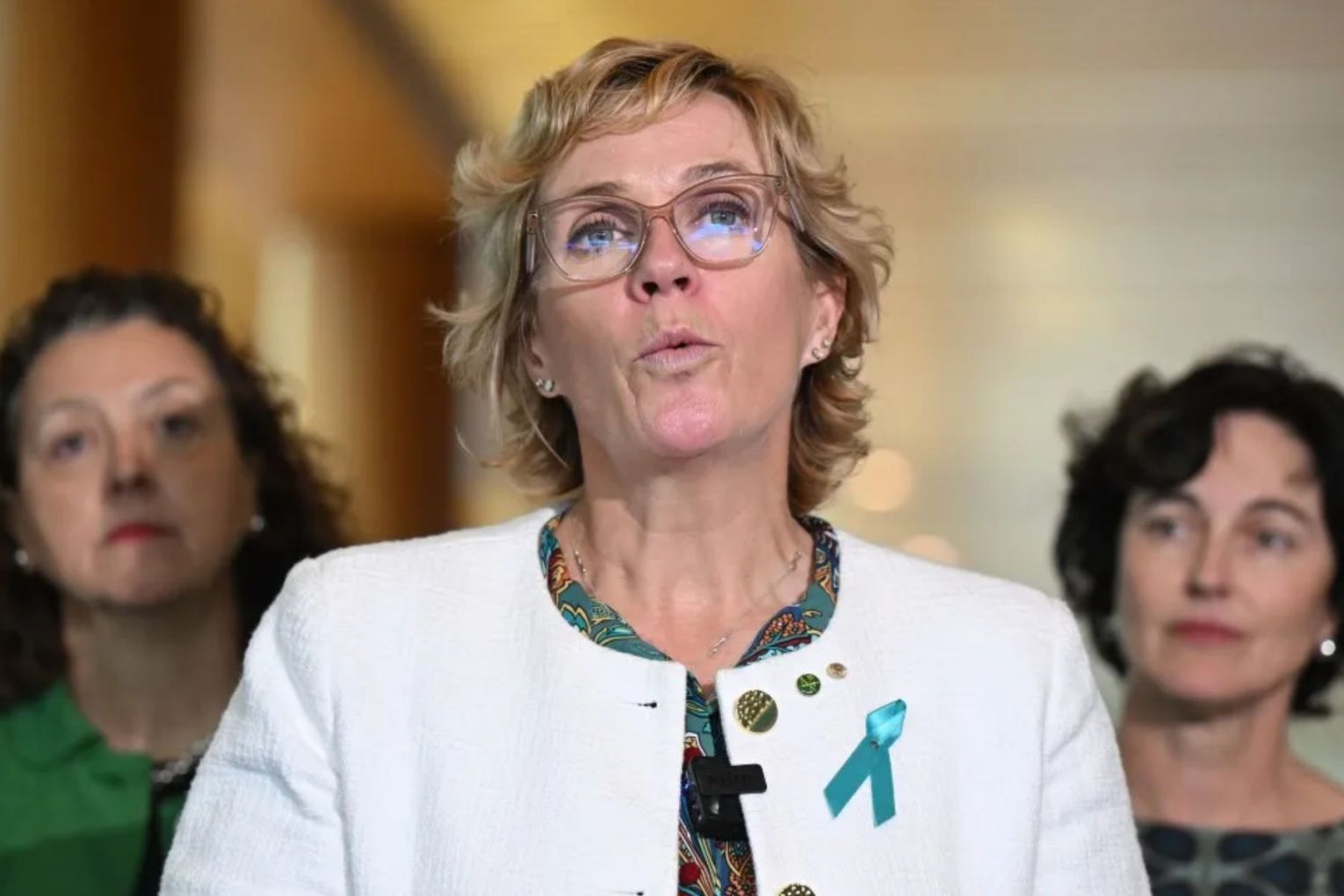
Teal independents are reportedly in talks to form a new political party amid voter disillusionment that has sparked the resurgence of One Nation.
The Nine newspapers report on Monday that teal MPs Allegra Spender and Zali Steggall are leading the push that may be announced within weeks.
Several sources told the papers that planning had been under way for months, including deciding a name and policy positions.
Senior moderate Liberals inside and outside parliament have been approached, but reportedly have so far refused the invites.
Former prime minister Malcolm Turnbull was reportedly one of the people making approaches.
It comes as independent senator David Pocock did not rule out teaming up with others to form a political party when asked if it was time for like-minded representatives to band together.
The former Wallabies rugby player told the ABC’s Insiders that he was engaged in conversations about Australia’s future.
“It’s a big question,” he said on Sunday. “There’s plenty of conversations happening all the time.
You might like

“We’re in a real time of flux politically … as to what that looks like in the future, who knows? Currently in the Senate, there is plenty to do, and that is my focus.”
In a statement to Nine, Steggall, who won former prime minister Tony Abbott’s seat of Warringah in 2019, said independents were “always talking about how we can collaborate more effectively and find efficiencies”.
“I’m open to exploring new ways for the movement to evolve and strengthen its influence on policy and the national conversation,” she said.
“I don’t think the community independents can approach the question of forming a party in the traditional sense.
“Communities and independence must remain at the heart of everything we do.”
Steggall said Australian did not need another model like the Labor Party, where members were “constrained by caucus discipline and unable to speak freely”.
“The challenge is to build something that expands our impact while preserving the independence and community-first values that define us,” she said.
Meanwhile, Pauline Hanson has offered an olive branch to the Coalition over a potential team-up but has rejected compromising One Nation’s right-wing policies to strike a deal.
Polling from RedBridge Group and Accent Research shows One Nation could win up to 59 lower house seats if a federal election were held today.
The result would leave Hanson’s anti-immigration party as the official opposition, reducing the Coalition to a handful of seats and forcing Labor into minority government.
Stay informed, daily
But RedBridge analyst Alex Fein said people should reject the “reflexive interpretation” that the poll — backed up by others showing a surge of support for One Nation — was lurching towards the far right.
Rather, many people were enduring deteriorating living standards and public services, while trust in institutions such as government, media and businesses had collapsed.
The anti-establishment sentiment left a void to be filled and a vote for Hanson was seen as giving the major political parties a “kick up the bum”, Fein said.
Asked if she would form a partnership with the Coalition to form government, Hanson said her message was “let’s just work together”.
“The problem with [Liberal leader] Angus Taylor, he’s got a bunch of moderates, progressives in his own party,” she told Sky News on Sunday.
“I’m not going to tie myself to that dog that will not be able to follow through on his promises to the Australian people.”
RedBridge’s core prediction was for One Nation to take 53 seats, based on its current polling, reducing the Coalition to just 12 and Labor to a slender majority at 76.
Opposition housing spokesman Andrew Bragg said he believed voters wanted an “economic revolution”, but it wasn’t the time to concede the Coalition would have to partner with One Nation.
“What it shows is there’s a huge amount of grievance in the Australian community and I think we have not done a good job in the last 10 years on economic policy,” he said.
“That’s my main takeaway … we should have done more on tax, more on industrial relations, more on super, more on budget stuff and we’ve just been too similar to Labor over a long period of time.”
Labor cabinet secretary Andrew Charlton said the government needed to focus on presenting solutions to voters’ concerns and demonstrating it was tackling those issues.
“One Nation is expressing the grievances that people have, but they’re not providing the solutions that those people need to those grievances,” he said.
“Every opportunity they get … they vote against things that will benefit Australian families and workers.”
Alarm has been rising within the Coalition, particularly among Nationals facing a strong challenge in regional and rural seats. But former party leader David Littleproud played down the research.
“To have that 6000 poll across 17 million votes and then be able to make those assumptions is a little courageous,” he said.
One Nation’s David Farley wrested the regional NSW seat of Farrer from the Liberals at a recent byelection. It was the party’s first win in the lower house.
-with AAP
Want to see more stories from InDaily Qld in your Google search results?
- Click here to set InDaily Qld as a preferred source.
- Tick the box next to "InDaily Qld". That's it.